



The role of the manufacturer in gourmet refrigeration projects is to act as a specialised refrigeration technical support, not as a complete project manager. When the distributor/installer sends a clear information package (plan + environment + use + priorities), the typical problems of visible cooling can be anticipated: ventilation, heat, openings, maintenance and stability. The usual result: fewer surprises during commissioning and less avoidable after-sales.
Quick summary
- In gourmet refrigeration, some recurring problems often come from environment and actual use, not the equipment itself.
- The manufacturer assists in particular in cooling installation requirements, The following are the most important aspects of the system: performance limits and prevention of repeated occurrences.
- It scales up to a factory when the cold is the protagonist, the product is sensitive or the premises have conditioning factors (warmth, space, aesthetics).
- Have a real project idea standard avoids back and forth and improves the recommendation.
If you are an end customer: how it is channelled
CORECO no direct salesa. If you have a project, it is usually managed through a distributor/installer in your area, who leads the installation and support. If you contact us, we can recommend and put you in touch with the distribution network.
Why gourmet refrigeration must be adjusted
Environment + actual use + aesthetics
In gourmet, cold often has three jobs at once: to preserve, to display and to fit into the design. And that introduces friction:
- Environment: shop windows, spotlights, open kitchen, lack of ventilation, low ceilings.
- Actual use: doors, replenishment, peaks, turnover, staffing, habits.
- AestheticsThe following aspects should be taken into account: room integration, perceived noise, warm air, visual cleanliness.
Mini-table of typical risks (for quick diagnosis)
| If you see this... | It usually comes from... | What to order/validate |
|---|---|---|
| Oscillates or “does not stabilise”.” | heat + openings + location | real environment + usage pattern + ventilation |
| Higher than expected consumption | poor ventilation / boxed in | installation margins + access + cleaning |
| Repeated alarms | unplanned operation | schedules/peaks/repositioning + basic training |
| Drop in performance | insufficient maintenance | maintainability (access, filters, cleaning) |
For the general and legal framework of where the future will go and why you should be aware of these issues that may arise, you can read our article on FGAS regulation
When it makes sense to scale up to the manufacturer
It may be an option to turn to the role of the manufacturer in gourmet refrigeration in one of these cases:
Sensitive project signals (criteria)
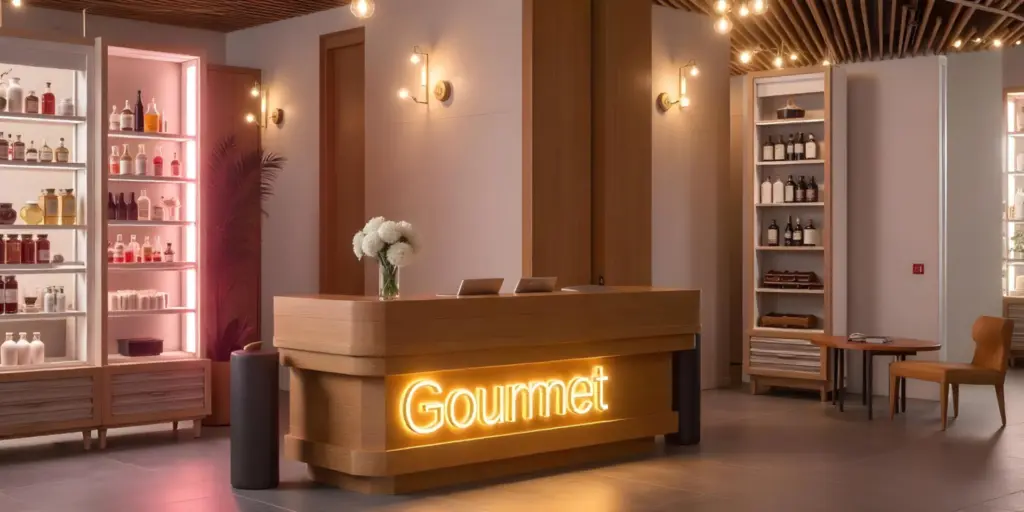
- The cold will be highly visibleThe showcases are the stars of the show, the cellars on view, the murals in the room.
- Product sensitive or high valueWine, fine patisserie, premium charcuterie, special meats.
- Demanding interior design: intense lighting, materials, “made-to-measure” integration.
- Replicable project (2-5 sites): it is important to standardise so as not to reinvent each time.
Operational risk signals (criteria)
- Hot“ premises (direct sun, shop window, open kitchen, spotlights).
- Little physical space: corners, columns, recesses, difficult access.
- Long hours or heavy peaks (weekends/campaigns).
- Difficult maintenance conditions (no access, difficult cleaning).
Practical rule: if the likely risk is in environment/use/maintainability, an early consultation on the cold part usually avoids a lot of iteration.
The project pack that accelerates responses (copyable template)
Minimum information checklist
Copy/paste this checklist to standardise.
- Concepttype of business and what you want to “show” (what the customer sees).
- Critical product: the one that cannot fail + sensitivity (if known).
- Map (even if it is simple): actual measurements and heights.
- Photos (6-12): showcase, spotlights, hot spots, intended locations.
- Proposed location of the cold + how staff move around.
- Timetable and peaks (data or estimate marked as Assumption).
- Operational: replenishment, frequency of gates, loading moments.
- Priorities in orderAesthetics / consumption / capacity / maintenance / budget.
- Installation conditionsVentilation available, heat dissipation, acceptable noise.
- Maintenanceexpected accesses and expected level of service.
Common mistakes when sending information (and how to avoid them)
- “I only tell you linear metres” → lack of environment, use and priorities.
- Flat without heights/access → then equipment does not enter or is not maintained.
- Not saying priorities → “everything at once” is proposed and the project becomes more expensive or fails on a day-to-day basis.
- Do not describe peaks → the equipment is chosen for a use that does not exist.
6-step method for coordinating channel + manufacturer
A short, repeatable and realistic method for the role of the manufacturer in gourmet refrigeration can be helpful:
- Defining the cold target (conserve, display, both) and the critical product.
- Pick up the project pack (checklist above) in a single mailing.
- Technical pre-validation of the cold partrisks and installation conditions.
- Proposal A/B (if applicable):
- A: prioritises aesthetics/visibility
- B: prioritise operation/consumption/maintenance
- Closing with clear conditionsInstallation, ventilation, access, commissioning.
- Start-up + brief guide for personnel (doors, loading, cleaning, alarms).
How to make the case for the solution even if it involves a little more investment
In gourmet refrigeration projects, we recommend evaluating the decision on the total cost and not just the initial price. A solution that is well sized for the actual environment (heat, ventilation, openings and replenishment) and that leaves clear access for maintenance tends to give a more stable and predictable performance.
This translates into fewer start-up adjustments, fewer incidents, less product loss and more controlled consumption. If the investment difference exists, it is usually justified by operation and reliability; if it does not, the objective is the same: to choose the option that reduces risk and corrective work during use.
Mini-table “visible cost vs real cost”.”
| Visible cost | Actual cost (if cold is not well thought out) |
|---|---|
| Purchase difference | shrinkage, extra consumption, downtime, technician hours, reputation |
| “Saving” by fitting in anywhere | worse performance due to heat/ventilation, alarms, unstable product |
| Cutting maintenance access | performance degradation + repeat occurrences |
How to tell the customer in a non-technical way:
“This solution is designed to perform well with your environment and your actual usage. Otherwise, you pay for cheapness in consumption, gender and downtime”.”
Common mistakes (and how to prevent them)
Ventilation and heat (steps)
- Identify hot spots: sun, spotlights, open kitchen, neighbouring equipment.
- Validates real ventilation: if it is boxed in, performance drops.
- Ensures access: cleaning and servicing without “dismantling the premises”.
- If hot air bothers the customer, treat it as a requirement (not as a detail).
Doors, replenishment and rotation (criteria)
- How many actual openings are there at peak times? (fact or assumption)
- Is product replenished at different temperatures?
- Are staff in the habit of “leaving the door open”?
- Does the rotation require constant loading and unloading?
Simple measurement: a mini operational guide (1 page) reduces alarms and losses.
Maintainability and cleanliness (checklist)
- Can it be cleaned without moving the furniture?
- Is there access for reviews?
- Does the aesthetic design not block ventilation and maintenance?
- Does the customer understand what alarms matter and what to do?
Final checklist (copyable)
- Clear scope: manufacturer enters as support only in the cold part.
- Complete project pack (plan + photos + use + priorities).
- Revised environment (heat, ventilation, location, noise, hot air).
- Defined actual usage (gates, replenishment, peaks) as data or Assumption.
- Maintenance accesses foreseen from design.
- Proposal with clear installation and commissioning conditions.
- Mini user guide for staff (doors, loading, cleaning, alarms).
- Defence with TCO (consumption + wastage + downtime), not with “marketing”.
Frequently asked questions about the role of the manufacturer in gourmet refrigeration (FAQ)
1) Does this mean that the manufacturer “leads” the project?
No. The project is led by the distributor/installer. The manufacturer supports the cooling part: selection, requirements and risk prevention.
2) When is it not necessary to upgrade to a factory?
When the project is standard, the environment is controlled and you already have a clear history of similar installations.
3) What minimum information does the 80% avoid back and forth?
Plan with measurements, photos of the environment, pattern of use (even if estimated) and priorities in order.
4) Which errors trigger consumption and after-sales?
Boxing without ventilation, direct heat, impossible access, unintended actual use (doors/peaks) and lack of cleaning/maintenance.
5) How do I talk about efficiency without promising figures?
Talk about “efficiency in real conditions” and what factors break it (heat, ventilation, doors, maintenance). Avoid numbers if they are not measured.
6) What is the role of connectivity or temperature logging?
It depends on the customer, but more and more preparation for control and traceability is demanded. For context, see the trend pillar. gourmetcoreco.com
7) What deliverable should come out of the technical consultation?
A recommended solution (and alternative if applicable) + installation conditions + critical start-up points.
8) I am an end customer: who do I call?
To your distributor/installer. CORECO does not sell direct; the project is channelled through the network to ensure installation and support.
Glossary (10 terms)
- Project pack: minimum orderly information to recommend well (plan, photos, use, priorities).
- TCO: total cost of ownership (purchase + energy + maintenance + incidents + downtime).
- Thermal load: “actual ”stress" on the equipment (environment, product, apertures, light).
- Thermal stability: ability to maintain temperature with little oscillation in real use.
- Commissioning: adjustments with the installed equipment and actual product; key to preventing problems.
- Installation ventilation: conditions to dissipate heat and maintain performance.
- Maintainability: easy to clean, service and repair without physical blockages.
- Door openings: operational factor impacting stability and consumption.
- Decline: loss of product due to inadequate preservation or instability.
- Traceability: ability to record and demonstrate preservation conditions over time.
Block Distributors and Installers + Final CTA
What to ask the customer (to size up the cooling part)
- What product is critical and how it is presented (visible/non-visible).
- Schedules, peaks, replenishment and habits (data or Assumption).
- Plan + photos of the surroundings (sun, spotlights, open kitchen, ventilation).
- Priorities in order (aesthetics, consumption, capacity, maintenance, budget).
- Expectation of maintenance (access and level of service).
How to approach it (quick method)
- Unify information in a single shipment (pack).
- Validate environmental risks and installation conditions formerly to close the offer.
- Agree on start-up with checklist + brief user guide.
CTA (without direct selling)
CORECO does not sell direct. If you have a gourmet project where cold is the protagonist and the margin for error is small, please discuss this with your CORECO dealer/installer of choice.. If necessary, to be escalated with the technical team to validate installation and commissioning requirements. in the cooling part and thus reduce avoidable after-sales.