



The Law 1/2025 on the Prevention of Food Losses and Food Waste, better known by the Food Waste Act requires many operators in Spain to prevent wastage and manage surpluses according to a hierarchy: prevent first; if there is a suitable surplus, prioritise human consumption. In practice, compliance is supported by processes, stable storage and, where applicable, operational evidence (records and traceability), not just a document.
Main points of Law 1/2025 on Food Waste
- The law affects a large part of the chain: production, industry, distribution, retail, hotels/restaurants, collectivities and donation organisations.
- Article 6 of this law concentrates operational obligations (hierarchy, prevention, and in certain cases donation agreements).
- In catering/restaurants, Article 8 obliges to make it easier for the customer to take away uneaten food (with exceptions such as free buffet).
- Key date: MAPA (Ministry of Agriculture, Fisheries and Food) clarifies that Article 6 measures must be implemented one year after publication: 3 April 2026.
- For CORECO (via distributors/installers), the credible role is to help “operational compliance”: keep better, record better and anticipate deviations with alarms. .
Updated: March 2026.
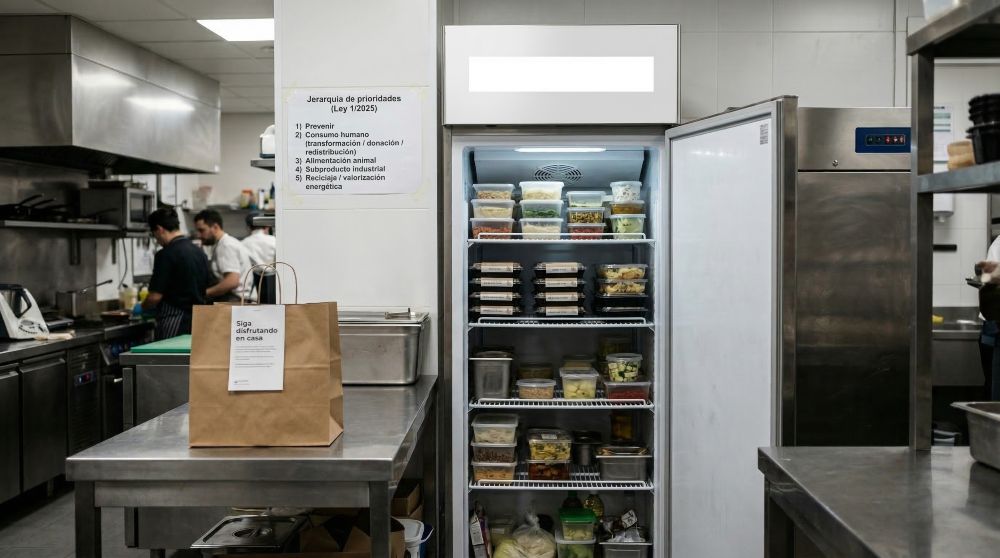
Why does this Food Waste bill change the Professional Cold Conversation?
Law 1/2025 seeks to reduce losses and waste throughout the food chain and establishes a hierarchy of priorities for action.
This affects day-to-day operations because many shrinkages do not arise from bad intentions: they arise from actual operation (openings, replenishment, overproduction), irregular storage and lack of evidence when inspections, audits or donations are carried out.
Coreco, as a professional refrigeration manufacturer working with distributors and installers, what we see in the field is quite consistent: when the cooling works stably and the operation is orderly, avoidable shrinkage goes down. And when there is also registration and alarms, In this way, it is easier to detect deviations before they become a major problem.
“This law is not about a piece of paper: it's about preventing depletion and being able to demonstrate a stable process when needed.”
1) Who is really affected (and why should it be checked)?
The law applies to activities carried out in Spain by operators in the food chain, including hotel/restaurant and other food service providers (collectivities).
For a practical reading in terms of HORECA and food, they tend to be more exposed:
- Food retail (supermarkets, shops)
- HORECA (bars, restaurants, hotels)
- Catering and collectivities (central kitchens, school canteens, hospitals, residential homes)
- Receiving entities and redistribution (food banks, social organisations)
- Food industry (storage, dispatch, processing)
Diagnostic questions (quick and useful)
- Where does the shrinkage appear: reception, camera, exhibition, service, returns?
- Is there a recurrent eligible surplus (and could it be redirected to human consumption)?
- What evidence exists today: temperature records, incidents, donation entries/exits?
- Is the cooling equipment maintainable (access, ventilation, cleaning) or is it “forced”?
What to ask for in order not to decide blindly
- Pattern of openings and replenishments at peak times
- Simple flow map: receiving → storage → preparation → service → service
- Photos of equipment location (heat sources, air outlets, access)
- Actual cleaning/maintenance routine (who, when, how)
2) What does Food Waste Law 1/2025 really require?.
2.1 Article 6: General obligations in operational mode
The law requires prioritising prevention and applying a hierarchy of actions, and pushes for a preventive approach and, in certain cases, promoting agreements to donate suitable surpluses (or justifying non-viability).
In practice, this translates into a verifiable system:
- identifying points of loss
- reduce losses in purchasing/receiving/warehousing/servicing
- define what is to be done with eligible surplus
- have minimum records and accountabilities
2.2 Article 8: Hotels and restaurants
In catering/restaurants, Article 8 obliges to make it easier for the customer to take away uneaten food, to clearly inform the customer and to use suitable packaging (with exceptions such as the free buffet).
In operation, the key is the flow: where it is prepared, who manages it and how surplus is prevented from being “born” by poor forecasting or poor rotation.
If you want to know the full extent and the rest of the articles, here is a link to the full law.
3) Key dates in 2026: why it matters to talk about timing
This issue depends on the timeframe. The law was published in the BOE in April 2025.
And MAPA clarifies that Article 6 measures should be implemented one year after publication: 3 April 2026.
“2026 is the year to move from intention to process: prevention, surplus order, registration and traceability.”
4) How to realistically deliver: from “plan” to a system that holds up
The typical mistake is to write a plan and leave it in a drawer. What holds up is a system with routines and responsibilities.
4.1 Minimum compliance structure (7 steps)
- Wasting map (where value is lost)
- Internal rules to apply the hierarchy (what is prevented, what is redirected)
- Prevention plan with measures per phase (purchasing, receiving, storage, preparation, service)
- Eligible surplus protocol (internal transformation / donation / redistribution)
- Basic registers (few, but useful)
- Operational training (minimal routine, no technicalities)
- Documentary evidence for inspection, auditing or specifications
4.2 What should the plan “really” contain?
- scope (centres and activities)
- responsible
- causes of shrinkage (2-3 main causes)
- preventive measures by phase
- criteria for eligible surplus (when to separate and how to keep it)
- simple indicators (2-3)
- periodic review and archiving of evidence
Common mistakes (and how to avoid them)
- Too complex → is not maintained in actual operation.
- No responsible parties → no one executes or reviews.
- No maintainability → the equipment loses performance and avoidable shrinkage rises.
- Registration without decision → it is measured, but not acted upon.
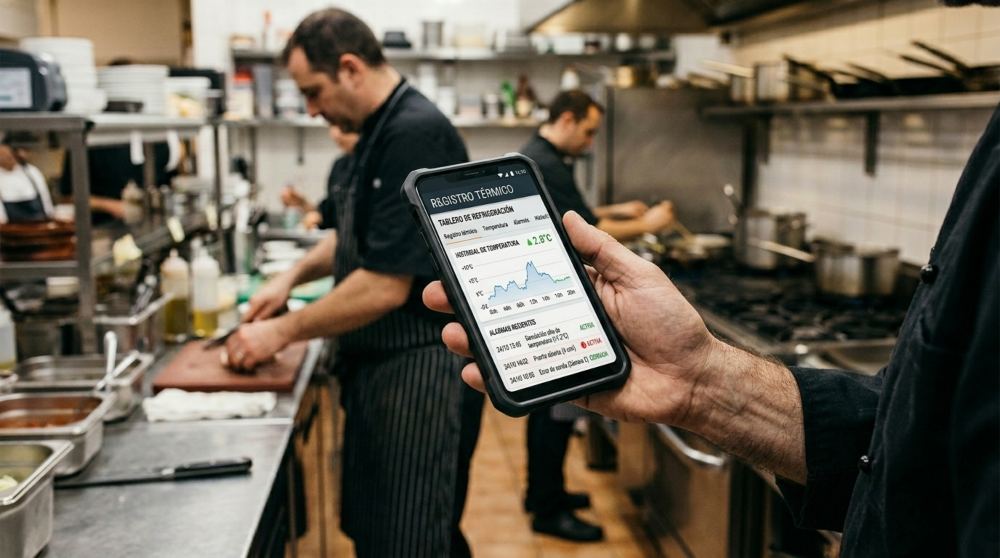
5) Where the Professional Cold makes a difference and how to argue for it
It pays to be literal here: Professional refrigerators are not there to comply with the Food Waste Act on their own. Professional refrigeration supports processes that help to deliver.
5.1 Prevention: better conservation reduces avoidable shrinkage
In real operation, they usually weigh:
- thermal stability
- recovery after openings
- conservation uniformity
- load order and rotation (FEFO where applicable)
- access and cleanliness (maintainability)
“If the cold recovers well after openings and is kept clean, the product loses less value before it is sold or served”.”
5.2 Donation and redistribution: consolidation point, timing and registration
When a venue generates surplus on a recurring basis, the problem is rarely “not wanting to donate”. What usually goes wrong is the operation: the surplus stays on a table, passes through several hands, is not separated in time and nobody knows how long it has been out or at what temperature it has been.
This is why it helps to create a consolidation pointa fixed place where the suitable surplus is separates, labels and preserves until harvesting. If the food requires refrigeration, that point must be refrigerated. In addition, it is appropriate to set maximum times (when it comes in, when it goes out) and to keep a simple registration (input/output and destination). This makes the donation repeatable, secure and easy to prove.
Diagnostic questions
- When is it decided that something is surplus to requirements?
- Where does it consolidate and how long before collection?
- What is recorded (even if minimal)?
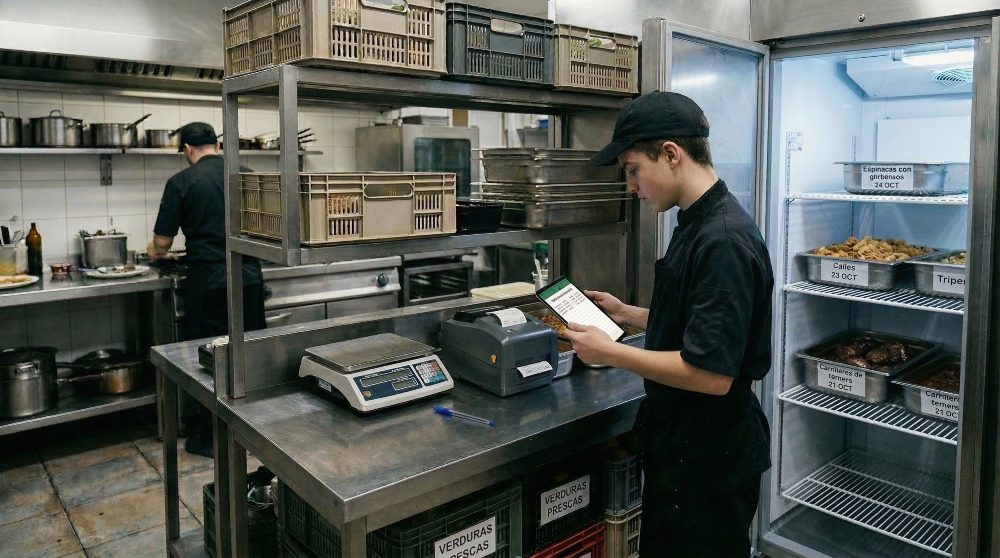
6) What a team with logging and alarms brings: control, evidence and fewer surprises.
Here is the key point: it is not “more technology” for the sake of it. It is less uncertainty. A team with thermal register, alarms and, where applicable, connectivity, The "audit trail" helps to sustain day-to-day control and to leave evidence of what has happened if there is an audit, donation or internal review.
A team with thermal recording, alarms and connectivity brings three practical things to the table:
A) Detecting diversions earlier (operational anticipation)
- door open too long
- temperature out of range more than expected
- repeated occurrences at certain times of the day (peak operations)
- faults that recur after cleaning or after repositioning
Factual benefit: action is taken before there is product deterioration or a major impact.
(This is not a legal guarantee; it is a reduction of operational risk by early detection).
B) Demonstrating control (evidence)
- temperature history
- logging of alarms/incidents and corrective actions
- support for audits, donations and especially document-controlled contracts/services
“If tomorrow you are asked for evidence of control, you don't rely on memory: you have traces of what happened and when”.”
C) Improving decisions (useful data, not bureaucracy)
- identifying “hardest hit” teams”
- adjusting routines: openings, replenishment, preventive maintenance
- prioritise investment where it really reduces waste
What to ask for in order not to decide blindly
- Who will receive alarms and what will they do with them?
- What thresholds are reasonable at that location (without false alarms)?
- How is evidence archived (monthly/quarterly)?
At Coreco, we understand that if you want to move from “reacting when something goes wrong” to "reacting when something goes wrong". detect deviations in time, In the case of the professional refrigeration connected in HORECA kitchensAutomatic thermal logging, configurable alarms and an incident history that makes it easy to document corrective actions. It does not replace the operator's responsibility, but it does make it easier to sustain daily control and leave evidence when there are audits, donations or internal reviews.
Professional Cold Ecosystem
When we talk about law, it is tempting to think of “a requirement”. In practice, the result depends on the ecosystem: equipment + installation + operation + maintenance. If your organisation already works that logic (e.g. in the HORECA cold ecosystem pillar), this law reinforces it: operational compliance is sustained in actual use, not in ideal conditions.
What changes for HORECA in practice with Law 1/2025 on Food Waste
- Prevention (rotation, portions, forecasting) becomes part of the cold and flow design.
- Suitable surplus needs rules: when it is separated, how it is kept, how it is recorded.
- Donation and redistribution (where applicable) push for cold chain and basic traceability.
- The local authorities and the public sector are gaining documentary pressure from specifications and audits.
- Minimum preventive maintenance is no longer “optional” if you want stability and less wastage.
- Logging and alarms (where applicable) help to detect deviations and sustain evidence.
- Formal exemption does not eliminate the economic interest: less waste usually means less cost.
- The distributor/installer gains weight as an operational process coordinator (without entering into legal advice).
FAQ on Law 1/2025 on the Prevention of Food Losses and Food Waste
1) What is Food Waste Law 1/2025?
It is the Spanish framework to prevent losses and waste in the food chain and to organise the management of surplus, prioritising prevention and human consumption when the surplus is suitable.
2) Who does it apply to in HORECA and collectivities?
Applies to hotel/restaurant and other food service providers (e.g. canteen or catering facilities).
3) What does Article 6 imply in practice?
Landing prevention and hierarchy in a system: mapping of wastage, measures per phase, responsible parties and minimum evidence; and, where appropriate, channelling suitable surpluses.
4) What is the key date of Article 6?
MAPA clarifies that Article 6 measures are to be implemented one year after publication in the BOE: 3 April 2026.
5) What does Article 8 require in restaurants?
Make it easy for the customer to take away uneaten food, make it visible and use suitable packaging, with exceptions such as the free buffet.
6) Does the law require the purchase of new equipment?
No. It forces operational results. Teams help when they support stability, maintainability and evidence.
7) What is the contribution of thermal recording and alarms?
They help to detect deviations earlier, document incidents and sustain operational evidence (audit/donation/contract). They do not replace the operator's responsibility.
8) What minimum records are usually useful?
Shrinkage by cause, conservation incidents and, if donated, entries/exits and conservation conditions.
9) What role can CORECO play without promising “guaranteed legal compliance”?
Provide technical means and functional documentation (via distributors/installers) to facilitate better conservation, better recording and more controlled operation.
Glossary of terms
- Food waste: food intended for human consumption that ends up as waste due to avoidable causes.
- Food losses: upstream losses (production/processing/logistics).
- Hierarchy of priorities: order of action that prioritises prevention and, if there is a suitable surplus, human consumption.
- Suitable surplus: safe food that can be redirected to human consumption through processing/donation/redistribution.
- Prevention plan: measures, responsible parties and review to reduce losses and waste.
- Cold chain: maintenance of appropriate thermal conditions during storage and transfer where applicable.
- Traceability: ability to record inputs/outputs and associated conditions where appropriate.
- Thermal register: temperature and event history (manual or connected).
- Alarms: warnings for deviations (temperature, door, incidents) to act in time.
- Corrective action: documented action on an incident (e.g. process adjustment, review, recall).
- Maintainability: real ease of cleaning, accessing and maintaining equipment to sustain performance.
If you are reviewing how to land Law 1/2025 in your operation, it often works to start with a shrinkage map, a minimum routine and a simple evidence system. To size stable storage solutions, thermal logging and alarms, consult your dealer and check the installation with your usual installer.
This article is informative and practical. Each company should confirm which obligations apply to it in its particular case and, if necessary, check with its advisor.