



Las cavas de vino para restaurantes y tiendas gourmet no deberían elegirse solo por estética o por capacidad. Cuando el vino forma parte de la propuesta del negocio, importa cómo se conserva, cómo se organiza y cómo llega al servicio. Por eso, una buena decisión no empieza en el modelo, sino en el uso real.
En hostelería y retail gourmet, una cava puede ayudar a conservar mejor el vino, ordenar el stock, facilitar el servicio y reforzar la percepción de calidad. Pero eso solo ocurre cuando el equipo encaja con la rotación, el espacio, el tipo de carta y la operativa diaria.
Lo esencial en pocas líneas
Cavas de vino para restaurantes y tiendas gourmet: qué son y para qué sirven
Las cavas de vino para restaurantes y tiendas gourmet son equipos diseñados para conservar botellas en condiciones más estables que las de un frigorífico generalista o un botellero pensado para servicio rápido. Su valor no está solo en enfriar, sino en ayudar a mantener mejor la temperatura, proteger el producto y ordenar la gestión del vino en el negocio
.En la práctica, suelen cumplir tres funciones principales:
Conviene dejar una diferencia clara desde el principio: no es lo mismo conservar vino que tenerlo listo para servicio inmediato. Tampoco es lo mismo una cava específica para vino que un botellero de barra o un frigorífico convencional. Si quieres profundizar en esa comparación, puedes verlo en conservar el vino en botellero o frigorífico.
Conservación del vino en cavas refrigeradas
La conservación del vino en cavas refrigeradas importa porque el vino es sensible al entorno. Cuando se almacena con oscilaciones, aperturas constantes o condiciones poco estables, puede perder parte de su expresión y llegar al servicio en condiciones menos consistentes.
La Temperatura: la variable que más condiciona el resultado
La temperatura es la referencia más visible cuando se habla de vino, pero conviene no simplificarla. No todos los vinos se trabajan igual y no siempre se busca lo mismo: una cosa es conservar y otra servir. Por eso, cuando el surtido es variado, puede tener sentido revisar si basta una sola zona o si el negocio necesita una configuración más flexible.
Si quieres afinar esta parte, puedes ampliar con la guía sobre temperatura óptima del vino en cavas refrigeradas.
La Humedad: importante, pero dentro de un sistema estable
El vino no depende solo del frío. También importa que el entorno no sea excesivamente seco ni desordenado. En botellas con corcho, una conservación poco cuidada puede perjudicar el cierre y afectar al producto con el tiempo. No hace falta convertir esta guía en un manual enológico, pero sí recordar que la cava debe ayudar a reducir desviaciones, no a multiplicarlas.
La Luz: una ventaja visual no debe ir contra el producto
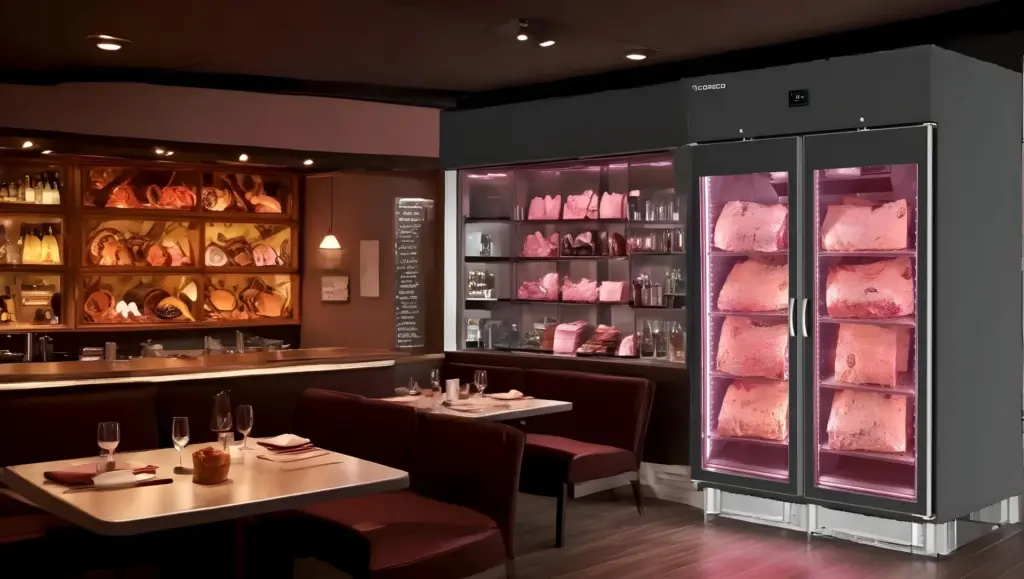
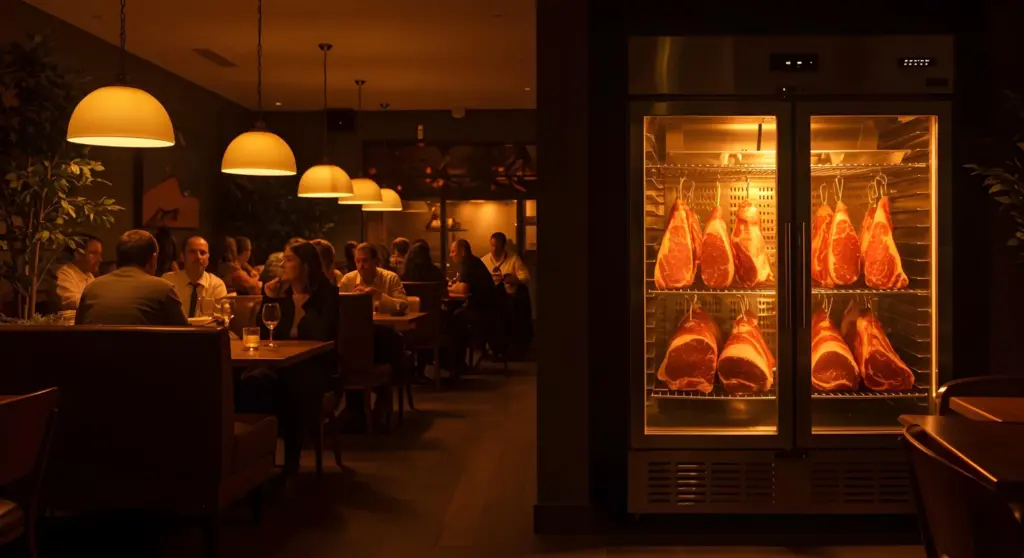
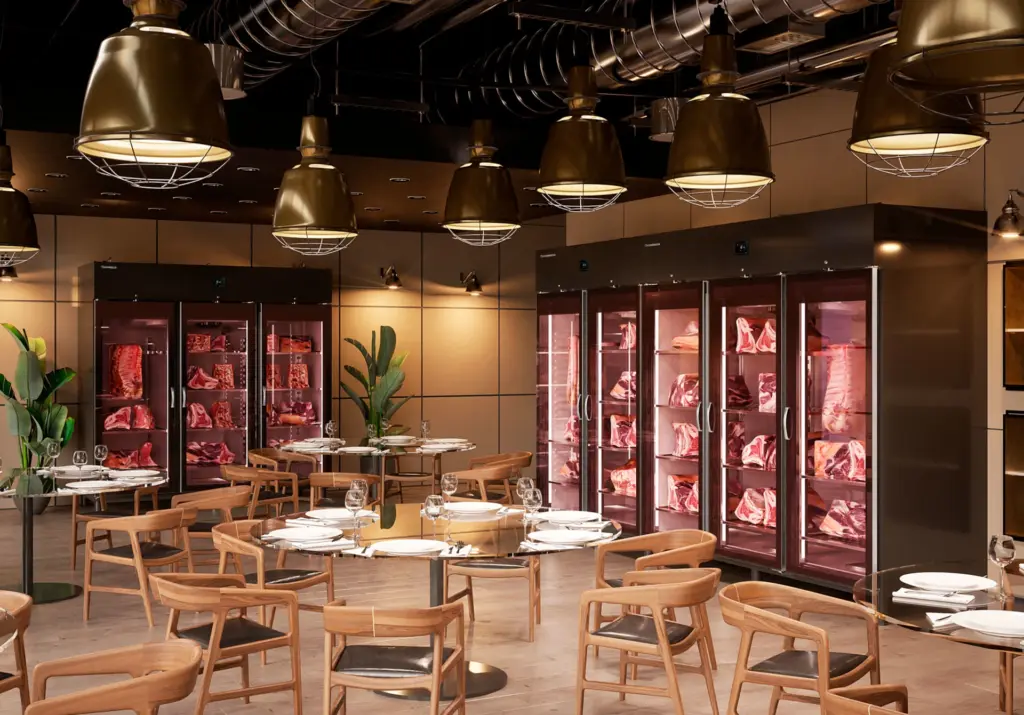
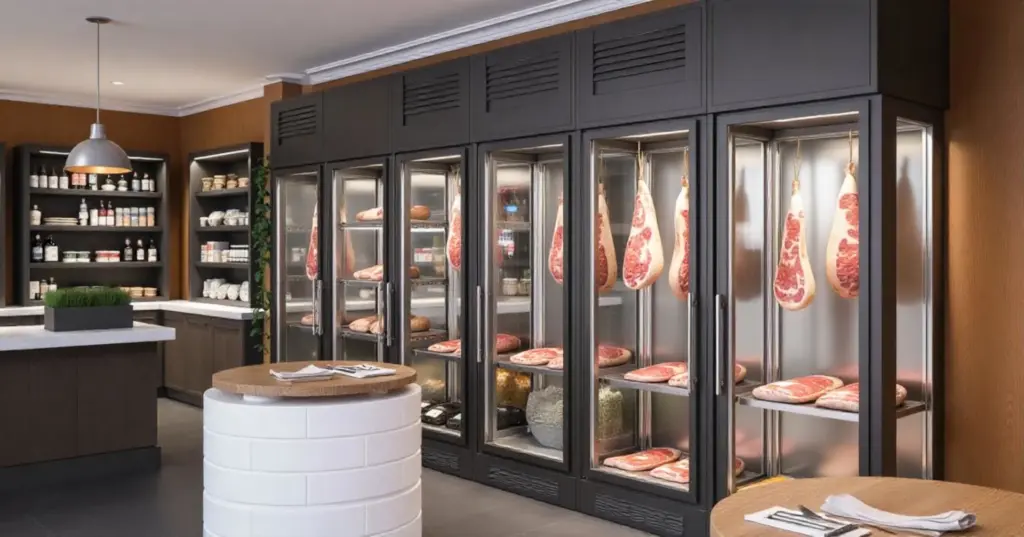
En un restaurante o tienda gourmet, una cava visible puede aportar valor comercial y reforzar la imagen del negocio. Pero esa ventaja visual debe convivir con la función de conservación. Si se elige una cava solo por presencia estética y no por uso real, el resultado suele quedarse corto.
La importancia de una conservación adecuada del vino
Una buena conservación no solo protege el vino. También protege la coherencia de la propuesta del negocio.
En un restaurante, influye en:
En una tienda gourmet, puede influir en:
Cuando el vino forma parte activa del negocio, improvisar su conservación suele salir caro. A veces no en averías ni en una incidencia visible, sino en pequeños fallos acumulados: botellas mal ubicadas, rotación confusa, referencias olvidadas o servicio poco consistente.
Beneficios de usar cavas de vino refrigeradas en restaurantes y tiendas gourmet
Los beneficios reales de una cava bien elegida no se limitan a “tener mejor vino”. En operación diaria, una buena decisión puede ayudar a varias cosas a la vez.
| Beneficio | Qué Aporta En La Práctica |
| Mejor Conservación | Ayuda a mantener condiciones más estables para el vino |
| Más Orden | Facilita la organización del stock y la rotación de botellas |
| Servicio Más Coherente | Permite trabajar mejor el vino que sale con más frecuencia |
| Mejor Presentación | Refuerza imagen de calidad en sala o en tienda |
| Más Criterio Comercial | Ayuda a trabajar referencias premium con más seguridad |
Mejora la experiencia del cliente
Cuando el vino se sirve en mejores condiciones, la percepción del cliente también cambia. No se trata solo de temperatura, sino de consistencia y cuidado.
Ayuda a ordenar la carta y el stock
Una cava bien usada puede simplificar el acceso a referencias, evitar botellas olvidadas y hacer más clara la gestión del inventario operativo.
Refuerza la imagen del negocio
En entornos gourmet, el vino también comunica. Una cava integrada con sentido transmite orden, especialización y cuidado del producto.
Durabilidad y bajo mantenimiento
Las cavas de vino de Coreco Gourmet están construidas para durar. Utilizamos materiales de alta calidad que garantizan una larga vida útil y un bajo requerimiento de mantenimiento. Esto significa que los propietarios de restaurantes y tiendas pueden concentrarse en lo que mejor saben hacer: ofrecer una excelente experiencia a sus clientes, sin preocuparse por el mantenimiento de su equipo de refrigeración y conservación de vinos.
Aporta más criterio para ampliar la oferta
Cuando la conservación está mejor resuelta, resulta más fácil trabajar una selección algo más ambiciosa sin improvisar el almacenamiento.
Novedades de la gama Wine en 2026
En 2026, la gama CORECO Wine se amplía con una lógica más clara de uso y proyecto. La novedad no está solo en incorporar nuevas referencias, sino en ordenar la propuesta en tres líneas complementarias: Vinotecas LUX para espacios donde la conservación y la presencia visual del vino tienen un papel importante, armarios expositores de vino para reforzar la visibilidad del producto, y recintos vinoteca para proyectos donde conservación, exposición e integración en el local deben convivir en una misma solución.
Dentro de esa evolución, las Vinotecas LUX aportan una propuesta más versátil para restauración, wine bars y retail gourmet: trabajan en un rango de +5 °C a +18 °C, están disponibles en dos alturas, permiten configurar la capacidad según el tipo de estante y ofrecen opción bi-temperatura con separador y controlador independiente. A eso se suma una construcción pensada para mejorar la lectura visual del producto, con iluminación LED perimetral y distintas soluciones de estantería según cómo se quiera conservar y presentar la botella.
Cómo elegir la cava de vino ideal
Elegir bien una cava empieza por definir la necesidad. No por mirar fichas técnicas aisladas.
Preguntas de diagnóstico antes de decidir
Antes de comparar modelos, conviene responder a esto:
Qué información conviene reunir antes de elegir
| Dato | Por Qué Importa |
| Número De Referencias | Define la amplitud real de la carta |
| Volumen De Botellas | Ayuda a calcular capacidad útil |
| Tipos De Vino | Afecta al criterio de conservación y servicio |
| Rotación Media | Marca si prima acceso rápido o conservación más estable |
| Ubicación | Condiciona aperturas, visibilidad y uso |
| Espacio Disponible | Evita elegir una solución que luego no encaja |
| Prioridad Del Negocio | Ayuda a decidir si pesa más la conservación, el servicio o la exposición |
Capacidad útil frente a capacidad teórica
Uno de los errores más frecuentes es mirar solo el número teórico de botellas. En operación real, importa mucho cómo se organiza el interior, qué formatos se manejan y qué accesibilidad necesita el equipo. Una cava muy grande mal usada puede rendir peor que una más ajustada, pero bien planteada.
Una zona o varias
No siempre hace falta complicar la decisión. Pero si el negocio trabaja varios tipos de vino o combina conservación y servicio con cierta intensidad, sí conviene revisar si una única configuración es suficiente.
Consejos para maximizar el uso de una cava de vino
Una cava bien elegida puede rendir mal si se usa como un almacén improvisado. Por eso conviene bajar la teoría a rutinas concretas.
En el día a día
Cada semana
Cada cierto tiempo
Errores frecuentes al usar cavas de vino en restaurantes y tiendas gourmet
| Problema | Causa Probable | Qué Revisar | Acción Recomendada |
| La Cava Se Elige Solo Por Estética | Se prioriza imagen sobre uso | Función real del equipo | Revisar si la cava está pensada para conservar, servir o exponer |
| El Stock Está Desordenado | No hay criterio de rotación | Distribución interior | Reorganizar por uso y frecuencia de salida |
| El Equipo Se Queda Corto O Sobra Capacidad | Se eligió sin datos | Referencias, volumen y espacio | Redimensionar con información real |
| Se Usa Como Sustituto De Un Botellero O Frigorífico | Se mezclan funciones | Tipo de servicio y conservación | Diferenciar claramente conservación y servicio |
| La Operación No Acompaña | Falta rutina de uso | Frecuencia de apertura, orden, reposición | Definir responsables y pautas básicas |
Rentabilidad desde el principio
Bloque distribuidores
Cómo explicarlo al cliente profesional
Qué información pedir para dimensionar bien
Checklist rápido antes de decidir
Preguntas frecuentes sobre cavas de vino para restaurantes y tiendas gourmet
No. Pueden coincidir en parte del uso, pero no responden igual a conservación, servicio y estabilidad. Si quieres profundizar en esa diferencia, puedes verlo en conservar el vino en botellero o frigorífico.
Depende del surtido y del uso. Cuando el mix es variado, conviene revisar configuración y criterio térmico.
Sí, si el vino forma parte de la experiencia del cliente y si la operación acompaña esa decisión.
Las dos cosas importan. Una sin la otra suele dar una solución mediocre.
Sí, especialmente si quiere trabajar mejor el producto y reforzar percepción de especialización.
Elegir el equipo sin haber definido antes la función real que debe cumplir.
Glosario básico
Cava De Vino
Equipo pensado para conservar vino en condiciones más estables.
Conservación
Mantenimiento del vino en un entorno adecuado durante su almacenamiento. Equipo pensado para conservar vino en condiciones más estables
Servicio
Preparación del vino para consumo o venta inmediata. Equipo pensado para conservar vino en condiciones más estables
Rotación
Ritmo de entrada y salida de botellas.
Zona Térmica
Espacio o rango del equipo configurado para una temperatura concreta.
Capacidad Útil
Espacio realmente aprovechable en operación diaria.
Exposición
Uso de la cava como parte visible de la oferta.
Estabilidad
Capacidad del equipo para mantener condiciones consistentes.
Qué conviene tener claro antes de decidir
En una carta de vinos o en una tienda gourmet, una cava no debería elegirse solo por diseño o por número de botellas. Lo que marca la diferencia es que encaje con el uso real del negocio: tipo de vino, rotación, espacio, servicio y nivel de exposición al cliente.
Desde CORECO Gourmet vemos con frecuencia que, cuando esa decisión se toma con criterio desde el principio, es más fácil conservar mejor el vino, ordenar la operación y dar más coherencia a la propuesta del negocio. Si además quieres revisar la parte más específica de temperatura, puedes ampliar en temperatura óptima del vino en cavas refrigeradas. Y si quieres ver la familia de producto relacionada, puedes consultar refrigerado de vinos.
Antes de decidir una solución, conviene revisar estos datos con tu distribuidor o instalador. Si la necesidad está bien definida, también es más fácil acertar en capacidad, configuración y forma de uso.