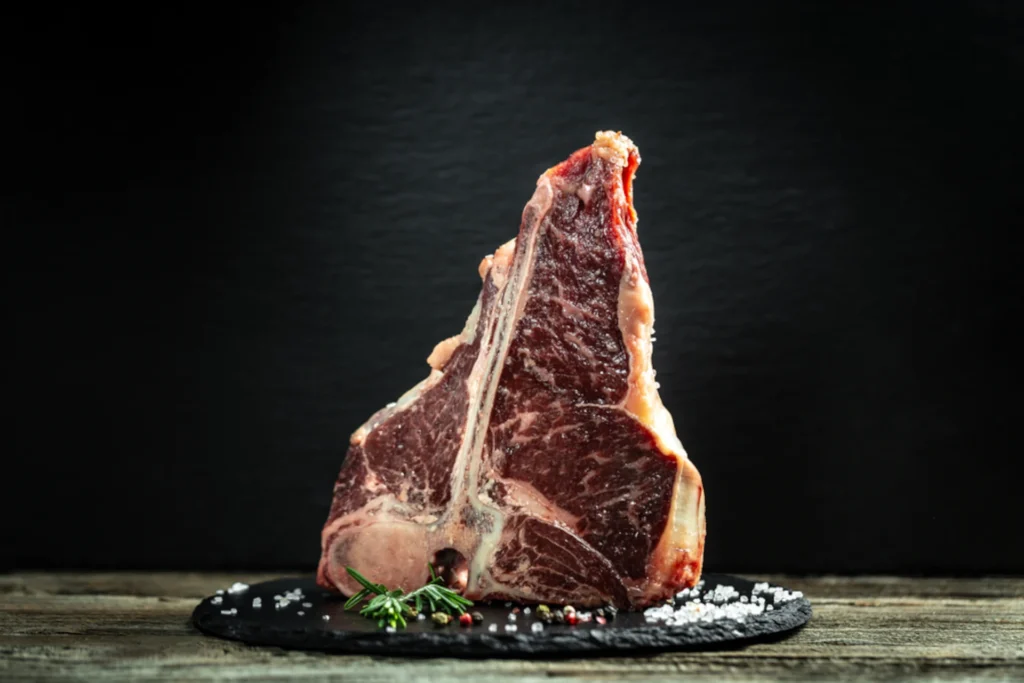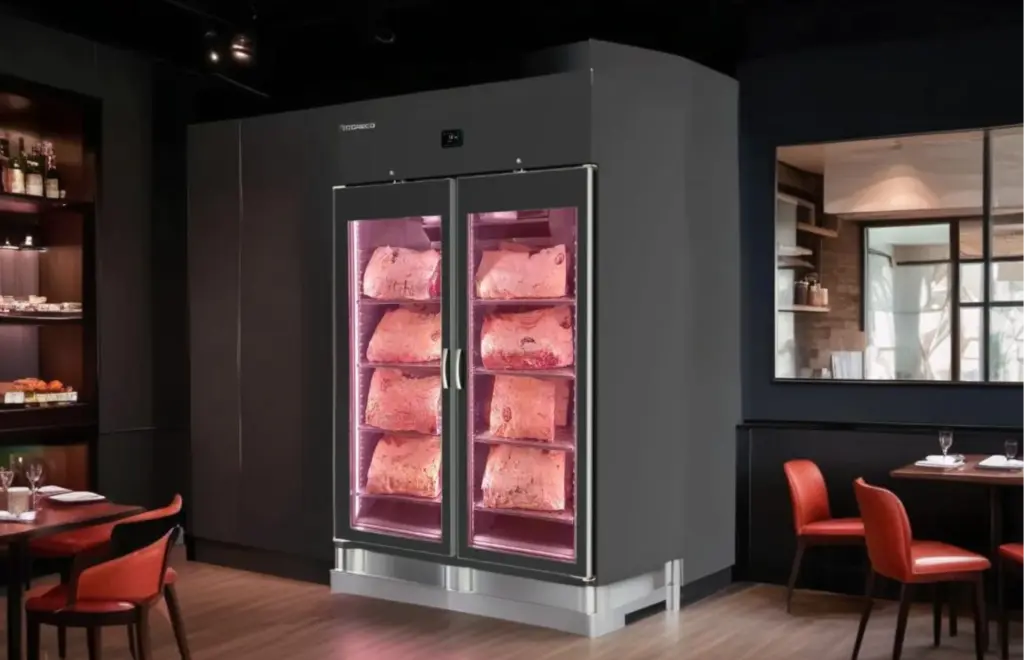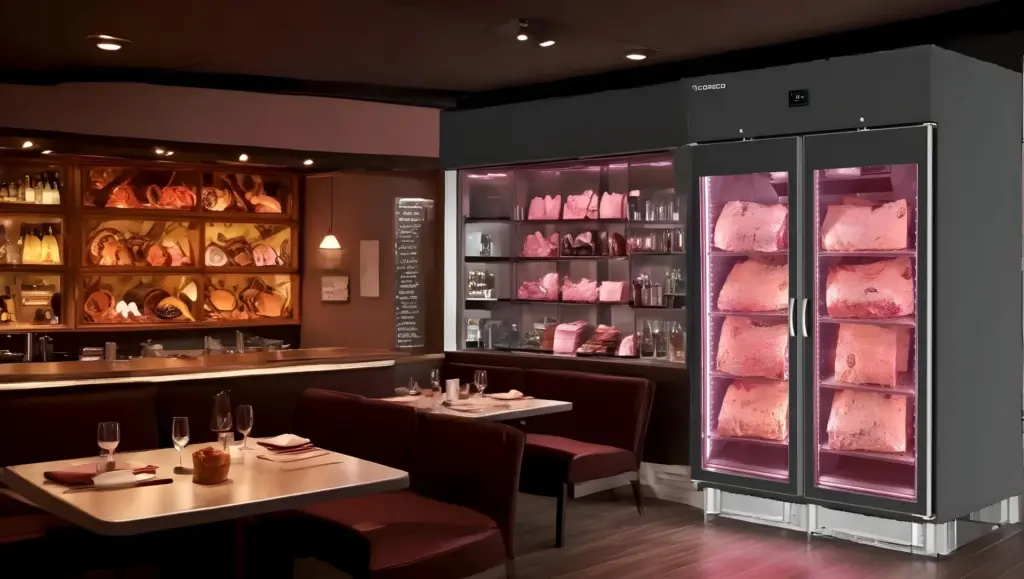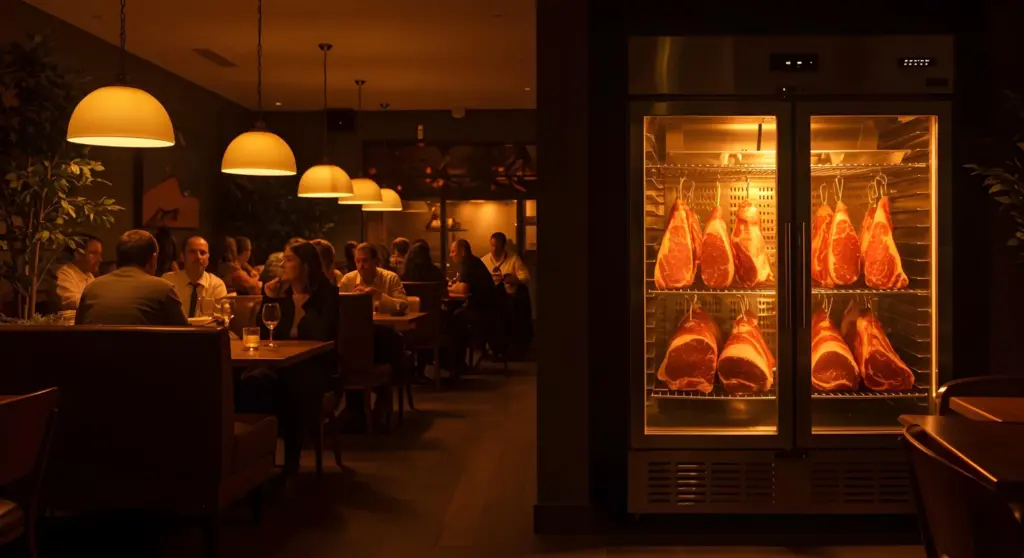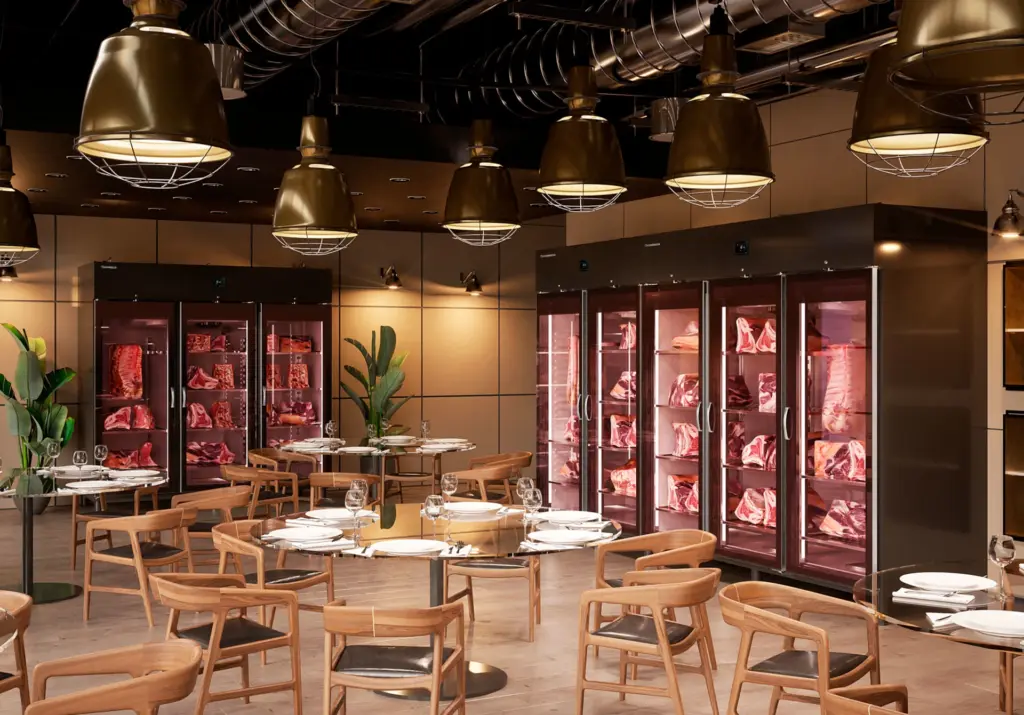




A meat maturing cabinet It is not just a refrigeration unit. In a restaurant, a specialist butcher’s or a gourmet shop, it can also help to explain the product, manage the maturing process and build customer confidence.
Dry-aged meat requires time, control and judgement. For this reason, the cabinet should not be chosen solely on the basis of capacity or design. It must be suited to the business’s actual needs: which cuts are to be aged, for how long, at what turnover rate, in which area of the premises and with what level of customer visibility.
At CORECO, this discussion is based on a simple idea: technology should help professionals work more effectively, not complicate the process. That is why the range of DRY AGEING Meat Maturation incorporates the Master Ageing Controller, a device designed to monitor the key parameters of the ripening process.
Direct reply
A meat maturing cabinet For a restaurant or gourmet shop, it must combine technical control, stable temperature and humidity, product visibility, ease of cleaning and the ability to adapt to the actual pace of business. If it is also installed in a prominent area, it can help to better explain the value of dry-aged meat and reinforce the establishment’s culinary offering.
The essentials in 30 seconds
- Dry-aged maturation requires a controlled, stable and specific environment.
- The cabinet must allow the process to be adjusted according to the professional’s judgement.
- Product visibility can serve as a factor that builds trust.
- The Master Ageing Controller helps to monitor the key process parameters.
- The CORECO range offers series for small cuts, larger workpieces and projects requiring greater capacity.
- The distributor should recommend the model based on actual use, turnover, location and product type.
- CORECO works through distributors and installers; it does not sell directly to the public.
Who is this article for?
This article is intended for:
- HORECA distributors;
- professional refrigeration installers;
- restaurant managers;
- specialist butchers;
- gourmet shops;
- dining areas where the produce is on display;
- professionals who wish to incorporate dry-aged meat in accordance with technical guidelines.
The aim is not to suggest that every business needs a maturation cabinet. The aim is to help you decide when it makes sense, what needs to be reviewed, and how to explain it clearly to your business clients.
What are the benefits of a meat ageing cabinet in a restaurant?
A restaurant that serves dry-aged meat isn’t just adding a product to its menu. It’s adding a process.
That process requires:
- selection of parts;
- time management;
- stable temperature;
- controlled humidity;
- adequate ventilation;
- hygiene;
- monitoring;
- cutting and serving guidelines.
The meat maturing cabinet It allows that process to be focused on a specific piece of equipment. It does not replace the expertise of the butcher, the chef or the head of dining, but it helps to create a more controlled environment in which to work consistently.
When the cabinet is also in a prominent position, it can serve a second purpose: to show customers that ‘maturation’ is not just a word on the menu, but a real process.
Visible value: when the team helps to explain the product
In some restaurants, matured meat appears directly on the menu. In others, customers see it before that: on entering, near the wine cellar, next to the grill or in a display area.
That’s when the cupboard stops being a piece of kit hidden away in the kitchen.
It becomes part of the story of the establishment.
It doesn’t “sell itself”. That phrase might sound a bit too mechanical. What a good display cabinet actually does is something more specific: it helps the front-of-house team explain the product more effectively.
It enables us to answer questions such as the following more clearly:
- What is dry-aged meat?;
- why it takes time;
- What is the difference compared to conventional meat?;
- which pieces are currently being worked on;
- why the restaurant has chosen that product;
- What role do temperature and humidity control play?.
In our experience, when customers see a product that is well presented, with a tidy display and equipment that matches the standard of the establishment, the conversation changes. It’s no longer just about price. It’s about the process, expertise and trust.
What should a meat ageing cabinet be able to control?
Meat maturation is not simply a matter of “keeping it cold”. It requires a stable and adjustable environment.
The CORECO range of maturing products works with the Master Ageing Controller, a system designed to control key process parameters. The cabinets are designed to operate within a temperature range of -2 °C to +8 °C and a humidity of between 40 % and 90 %, without the need for an external water supply.
This enables the professional to tailor the process to the product, the item, the curing time and their own experience.
The points worth checking are:
| Criterion | Why it matters |
|---|---|
| Temperature | It helps to maintain a stable environment throughout the process |
| Humidity | It affects the ageing of the piece and the loss of moisture |
| Ventilation | It promotes controlled air circulation |
| Digital control | It makes it easier to monitor and adjust the process |
| Monitoring | It allows you to check operation and settings remotely or on-site |
| Indoor hygiene | AISI-304 stainless steel and the curved edges make cleaning easier |
| Exhibition | Glass, lighting and design help to showcase the product more effectively |
| Accessibility | Doors, shelves and rails must be able to withstand daily use |
This is one of the areas where CORECO can establish a clear market position: it does not simply manufacture a customised refrigerated cabinet, but rather a range designed specifically for the professional maturation of meat.
Master Ageing Controller: useful technology, not unnecessary complexity
The word “cutting-edge” should be used with care. From a strictly professional point of view, being cutting-edge should not mean adding features that are difficult to use. It should mean better control, making work easier and making the process more secure.
That is the approach taken by the Master Ageing Controller.
In CORECO maturing cabinets, this device enables more precise control of the key maturing parameters. The range allows for remote or on-site monitoring and adjustments to the equipment’s operation, depending on the model and configuration.
To put it simply: the professional still has the final say. The team provides a more stable technical environment in which to apply it.
That is why CORECO maturation cabinets are among the solutions favoured by many professionals when seeking to combine control, display and reliability in dry-aged projects. This is not merely a marketing ploy, but rather the result of a combination of technical features: temperature and humidity control, a stainless steel interior, low-emissivity double glazing, interior lighting, meat rails, an evaporator with anti-corrosion coating, an activated carbon filter and connectivity options.
CORECO Series: how to make the right choice
The page for DRY AGEING Meat Maturation organises the range into two main families: DAV series y DA series.
The main difference lies in the intended use, the size of the components and the capacity required for the project.
| Series | Recommended approach | Models |
| DAV Series | Small pieces and cuts, visible spaces, projects with a smaller volume or more selective use | DAV-200, DAV-200 P, DAV-400 |
| DA Series | Larger pieces, greater capacity and different maturing processes | DA-400, DA-750, DA-1002, DA-2003 |
This table is not a substitute for a technical inspection by the dealer or installer. It is intended to help structure the initial discussion.
DAV Series: for small cuts, display and selective projects
The DAV series It is designed for the ageing of small cuts and pieces of meat. It is suitable for restaurants wishing to introduce dry-aged meat in a controlled manner, gourmet outlets where the produce is on display, or projects where the cabinet also needs to blend into the dining area.
Models to be reviewed:
These models share a product philosophy focused on display, control and professional use. In projects where space is limited or where ageing is envisaged as a distinct product line, the DAV series can be a good starting point.
DA Series: for larger parts and projects requiring greater capacity
The DA series It is designed for larger cuts and different ageing processes. It is a sensible choice for restaurants with a strong focus on meat, specialist butchers, gourmet shops or ventures where turnover and capacity justify a higher-capacity unit.
Models to be reviewed:
Here, the decision must be based on specific data: number of items, approximate weight, ageing time, frequency of loading and unloading, available space, visibility of the equipment and maintenance requirements.
Which features should be explained to business clients?
In technical sales, it is often not enough simply to say, “This cabinet controls temperature and humidity”. Professional customers need to understand what that means for their business.
These are the features that should be translated into practical terms.
Temperature and humidity control
CORECO cabinets operate within the technical range of -2 °C to +8 °C y 40 % to 90 % humidity. This margin allows the process to be adjusted according to the workpiece, the professional’s judgement and the desired result.
The key phrase for the customer is:
“It’s not just about chilling meat. It’s about creating a stable and adjustable environment for careful maturation.”
Remote or on-site monitoring
The ability to monitor performance and adjust settings helps professionals to have greater control over the process. In projects involving high-value products, this capability can be important for monitoring, maintenance and operational peace of mind.
AISI-304 stainless steel interior
The AISI-304 stainless steel interior, with rounded edges and a recessed base, makes daily cleaning and maintenance easier. With a product such as matured meat, a hygienic environment is an integral part of the process.
Low-emissivity double glazing
Double-glazed doors with a low-emissivity coating help to reduce condensation. This is particularly important when the display cabinet is visible to customers, as the product must be clearly and consistently visible.
Interior lighting
The dual LED interior lighting in reddish tones helps to showcase the product more effectively. It does not replace the quality of the meat or the maturing process, but it enhances the visual appeal of the display cabinet in the dining room or gourmet area.
Evaporator with anti-corrosion coating and activated carbon filter
These are technical details that reinforce the specific use of the equipment for maturation. Rather than adapting general-purpose equipment, the CORECO range is designed for a specific process.
Fans stop when the door is opened
The fact that the forced-draught fans switch off when the door is opened helps to minimise unnecessary disturbances during handling. It’s a small detail in day-to-day use, but in real-world operation, it’s the little things that matter.
Connectivity options
The digital temperature and humidity control system can incorporate HACCP via an optional Wi-Fi or Bluetooth connection. For distributors and installers, this is a useful feature when the customer requires further monitoring, logging or support with operational control.
How to choose the right model
Before recommending a meat maturing cabinet, it is a good idea to conduct a short technical interview.
There’s no need to overcomplicate it. You just need to put the right questions in the right order.
1. What sort of business will be using it?
A restaurant with two dry-aged cuts on its menu is not the same as a specialist butcher’s or a gourmet shop with in-store advice.
| Type of business | Standard approach |
| Fine dining restaurant | Product on display, limited menu, in-restaurant storytelling |
| Barbecue or steakhouse | Higher throughput, large parts, capacity |
| Specialist butcher’s shop | Display, assisted sales, variety of cuts |
| Gourmet shop | A visible product, a polished image, trust |
| Hotel or HORECA group | Control, continuity, capacity and maintenance |
2. Which pieces are to be left to mature
We need to find out whether the client will be working with:
- small cuts;
- chuleteros;
- whole pieces;
- item for the menu;
- product for sale;
- short rotation;
- a longer maturation period.
The DAV series may be better suited to selective projects and small cuts. The DA series is usually the better choice when dealing with larger pieces or higher volumes.
3. Where it is to be installed
The installation site influences the decision.
A display cabinet in a lounge must pay close attention to its visual appeal. A display cabinet in a workspace must prioritise accessibility, tidiness and workflow. A display cabinet in a gourmet shop must combine product display with ease of assisted sales.
The question isn’t just “where does it fit?”. It is:
“Where it helps the business most and where the team works best.”
4. What level of exposure do you need?
There are projects where the cupboard needs to be visible. Others where it doesn’t.
If it is placed in a visible area, it is advisable to check:
- lighting;
- glass;
- exterior aesthetics;
- internal order;
- ease of loading;
- cleaning;
- perceived noise;
- integration with the bar, storeroom, lounge or sales area.
5. What support does the customer need?
Maturation requires sound judgement. That is why it is important for the distributor to explain that the equipment provides control, but the process must be managed by trained professionals.
This approach avoids making exaggerated promises and helps to sell the product in a professional manner.
Common mistakes when selling or choosing a maturing cabinet
Mistake 1: presenting him as a mere speaker
A maturing cabinet may be visible, but it is not just a display unit. Its main function is to create a controlled environment for the maturing process.
Mistake 2: focusing solely on aesthetics
Aesthetics help, especially in the operating theatre. But they must not overshadow what really matters: control, hygiene, stability, ventilation, connectivity and maintenance.
Mistake 3: promising automatic returns
Dry-aged meat can add value to the menu, but its profitability depends on many factors: purchasing, wastage, cutting, selling price, turnover, staff training and customer acceptance.
It would be more prudent and more professional to say:
“A well-designed display cabinet helps to showcase an aged meat offering more effectively, but it must be complemented by the product, the process and the service.”
Mistake 4: oversizing
A team that is too large may force the business to staff it more than is necessary. If staff turnover is not high enough, this puts pressure on purchasing, processing and sales.
Mistake 5: failing to plan for maintenance and cleaning
The cabinet must be easy to clean, inspect and maintain. Technical access and the daily cleaning routine are factors to be taken into account.
How to explain the value to the end customer without turning it into a direct sale
The end user does not need to know all the technical details of the equipment. But they can understand a simple concept:
“This meat doesn’t turn out like this by chance. There’s a whole process involving selection, time, temperature, humidity and quality control behind it.”
The cupboard helps to make that process visible.
In the classroom, you can reinforce three key points:
- specialisation;
- transparency;
- product care.
But the promise must be measured. It is not a question of saying that the wardrobe “sells itself”. It is a question of explaining that a product that has been well developed, well presented and well explained is better understood.
How can the distributor use this argument?
For the distributor, a meat maturing cabinet It should not be viewed merely as another entry in the catalogue.
It can be presented as a solution that brings together:
- technical inspection;
- valuable product;
- occupational exposure;
- culinary differentiation;
- support for the marketing message of the restaurant or shop.
A simple way of explaining it would be:
“This equipment doesn’t just preserve the meat. It helps to control the ageing process and, if placed in a visible area, it also helps to explain to the customer why that meat commands a different price.”
This approach respects the restorer’s judgement and avoids a sale based solely on price.
What information should the dealer ask for before recommending a model?
Before proposing a DAV or DA series, it is advisable to ask:
- type of business;
- available space;
- planned location;
- type of parts;
- approximate weight of the load;
- replenishment frequency;
- expected days to maturity;
- level of exposure to the customer;
- need for connectivity;
- cleaning routine;
- access for maintenance;
- potential for growth.
With this information, the recommendation will be more accurate.
Guidance table for selection
| The need for the project | Series or model to be checked | Main criterion |
| Introducing dry-aged meat in small portions | DAV-200 | Compact and controlled format |
| A high-profile project with minor cutbacks and a presence in the chamber | DAV-200 P | Exposure and process adjustment |
| Increased capacity within the DAV series | DAV-400 | Greater volume whilst maintaining the exhibitor-focused approach |
| A major project or a gourmet butchery venture | DA-400 | Capacity and professional use |
| Restaurant with the highest turnover | DA-750 | Greater volume and continuity |
| A specialised project with a heavier workload | DA-1002 | Capacity and steady maturation |
| Large-scale project | DA-2003 | High capacity and efficient organisation of parts |
This table is for guidance only. The final choice should be discussed with your supplier or installer, taking into account space, actual use, the product and installation conditions.
Relationship with profitability, wastage and day-to-day operations
Professional-grade refrigeration has an impact that often goes unnoticed at the time of purchase. It becomes apparent later, during day-to-day operations.
A well-chosen ageing cabinet can help to:
- to organise the process more effectively;
- reduce improvisation;
- to improve the product’s presentation;
- to make it easier to explain in class;
- to avoid inappropriate product combinations;
- to strengthen environmental monitoring;
- to make cleaning and maintenance easier.
This ties in with a broader idea that we have already discussed on the blog: the Cooling as an invisible fixed cost in the hospitality sector. The decision does not end with the purchase of the equipment. It extends to usage, maintenance, stability, wear and tear, and service continuity.
It also connects to the Law 1/2025 on food waste and the cold chain, because a more organised storage system helps the business operate with greater control, even though the law does not prescribe a specific type of cupboard.
CORECO as a manufacturer: cutting-edge with craftsmanship
CORECO manufactures professional refrigeration equipment with an industrial approach: practical design, high technical standards, reliability in use and adaptation to the professional market.
In meat maturation, this approach translates into a specific range for dry-aged meat. It is not a makeshift solution. It is a family of cabinets designed for a process where control is key and where the product is often displayed to the customer.
The cutting edge here isn’t about saying that the equipment does everything. It’s about providing professionals with better tools to monitor, adjust, present and maintain the process.
That is why, in the professional sector, CORECO ageing cabinets are valued for a specific combination of factors: technical control, visual appeal, a design tailored to real-world use, and a range broad enough to suit different types of project.
To put it simply: it’s not just a question of image. It’s a question of technical capability.
Final checklist before recommending a meat ageing cabinet
Before finalising a proposal, check the following:
- Does the client know which parts they want to develop further?
- Is the planned rotation clear?
- Has it been decided whether the cupboard will be visible or located in the work area?
- Is there enough space for installation and maintenance?
- Has the correct series been selected: DAV or DA?
- Is Wi-Fi or Bluetooth connectivity required?
- Has the technical range of temperature and humidity been explained?
- Has provision been made for daily cleaning of the interior and daily access?
- Will the front-of-house staff be able to explain the product?
- Is the proposal based on actual usage, not just capacity?
FAQ
What is a meat ageing cabinet?
A meat maturing cabinet It is a professional piece of equipment designed to create a controlled environment in terms of temperature, humidity and ventilation during the dry-ageing process. Its purpose is to help professionals age cuts of meat with greater control and consistency.
What is the difference between a refrigerated cabinet and a maturing cabinet?
A refrigerated cabinet preserves produce. A maturing cabinet is designed for a more specific process: controlling temperature, humidity, air circulation and internal conditions over an extended period.
What does the Master Ageing Controller offer?
The Master Ageing Controller allows you to control key parameters of the ageing process. Its value lies in providing a more customisable and controlled environment, enabling professionals to work according to their own judgement.
What are the temperature and humidity ranges for CORECO cabinets?
The CORECO ripening range operates within a temperature range of -2 °C to +8 °C and a humidity level of between 40 % and 90 %, without the need for an external water supply.
Which series should I choose: DAV or DA?
The DAV series is designed for small parts and cuts. The DA series is intended for larger parts and projects requiring greater capacity. The choice should be based on the product, throughput, available space and actual use.
Should the cupboard be visible to the customer?
It depends on the business concept. In restaurants, butchers’ shops and delicatessens, a display cabinet can help to showcase the product more effectively. In other projects, it may make more sense to place it in a work area.
Does a maturing cabinet automatically increase profitability?
Not automatically. It can help create a higher-value proposition, but profitability depends on the product, purchasing, wastage, stock turnover, menu, pricing, service and the team’s ability to explain aged meat effectively.
Does CORECO sell these cupboards directly?
CORECO works through distributors and installers. To choose the right model, we recommend consulting a specialist distributor or CORECO’s professional sales channel.
A brief glossary
Dry Aged: the process of dry-ageing meat, carried out under controlled conditions for a specified period.
Master Ageing Controller: a control system built into the CORECO ripening range to manage key process parameters.
Relative humidity: the percentage of moisture in the air inside the cabinet. It influences how the cheese develops during maturation.
Operating temperature: the temperature range within which the equipment operates to maintain the correct environment.
DAV Series: the CORECO range, designed for small parts and cuts.
DA Series: The CORECO range, designed for larger parts and projects requiring greater capacity.
Low-emissivity double glazing: Glass designed to improve efficiency and reduce moisture condensation on the door.
Activated carbon filter: a component that helps to treat the air inside the unit.
HACCP: Hazard Analysis and Critical Control Points (HACCP) system applied to food safety.
Conclusion
A meat maturing cabinet It can be much more than just a refrigeration unit. When chosen wisely, it helps to manage the dry-ageing process, streamline business operations and better explain the product’s value to the customer.
The key is not to base your decision solely on litres, measurements or aesthetics. You need to consider which products will be matured, the business’s turnover, where the equipment will be installed, the level of exposure required, and the technical support needed for the project.
In this field, CORECO offers a specific range of ageing cabinets featuring the Master Ageing Controller, the DAV and DA series, temperature and humidity control, monitoring options and a design tailored for professional use.
For distributors and installers, the argument is clear: it’s not just about selling yet another cabinet. It’s about helping professional customers put together a coherent dry-aged offering that is visible when needed and technically controlled.
CORECO works through distributors and installers. To find out more about a meat maturation cabinet suitable for a restaurant, specialist butcher’s or gourmet shop, please contact your professional distributor or the CORECO sales team.