







At Coreco Gourmet, we start with a clear foundation: The distributor of our equipment knows how to sell. For years, we’ve been working alongside professionals who know the Horeca sector inside and out, who have closed complex deals, and who know how to adapt to each client. This article isn’t meant to teach them what they already know. Quite the opposite: it stems from respect for that experience. What we want is to offer new tools, to highlight approaches that may be more necessary today than ever before, and to reinforce—with current arguments—what has always worked: selling based on value. Because in an increasingly competitive market, even the best product needs to be presented with intelligence, business acumen, and a message that resonates. And that’s where a technical specification sheet, on its own, is no longer enough. Selling industrial refrigeration equipment requires translating every technical detail into a benefit for the customer.
Selling industrial refrigeration equipment today involves much more than simply listing technical specifications. In an increasingly competitive market—whether gourmet or standard—commercial success is achieved when each piece of information is translated into a tangible promise for the customer. The technical specifications build trust, but the real value comes from the user experience and the concrete benefits the equipment provides in the dining room, kitchen, or point of sale.
Not everything is covered in the technical documentation
For years, the sale of industrial refrigeration equipment has relied on technical documents: data sheets, drawings, energy consumption figures, dimensions, and refrigerants. And while that information remains essential, it is no longer sufficient today. The hospitality industry has changed. Now they demand solutions, focus on the brand, value design, seek sustainability, and, above all, need to be inspired before making a decision.
To sell industrial refrigeration equipment effectively, it’s essential to tailor your pitch to the type of customer. A chef isn’t looking for the same things as a purchasing manager or an installer. That’s why, beyond the technical specifications, the real challenge lies in crafting a compelling sales pitch that transforms data into visual, emotional, and functional solutions.
This article is intended for distributors, sales engineers, and sales teams who work with premium equipment in the Horeca sector. Here, you won't learn to recite specifications, but rather to translate specifications into real benefits. You'll learn how to connect with clients on both an emotional and practical level, how to identify their true fears and motivations, and how to use the product spec sheet only as a supplement, not as your main selling point.
Selling Industrial Refrigeration Equipment: Why a Technical Specification Sheet Is No Longer Enough
In the premium industrial refrigeration sector, purchasing decisions are no longer based solely on data. They are driven by perceptions, emotions, brand image, and perceived reputation. A unit may have all the necessary certifications and optimal performance metrics, but if it doesn't connect with the client's desire, pain, or ambition, the transaction is not completed.
And this isn't just an opinion. According to a Harvard Business Review study on decision-making in complex B2B environments:
🔎 “According to the 71% survey of B2B buyers, they value an emotional connection with the supplier more than purely functional differentiation.”
What does this mean for professional refrigeration? It's not enough to say that the unit has triple-pane glass or natural refrigerant. You have to to explain what the customer gets With that: higher margins, greater prestige, faster product turnover, or fewer future risks.
What Really Sells? The Combination of the Functional and the Emotional
In many of the cases we’ve documented, the difference between simply presenting industrial refrigeration equipment and actually selling it has come down to how the story behind the equipment was told. Showing how it fits into the space, explaining the real savings it provides, or connecting with the customer’s values—these are what made the difference, not the power specifications or the temperature range.
Decisions regarding investments in gourmet industrial refrigeration are made at three levels:
- Rational: consumption, regulations, durability, capacity.
- Functional: Ease of cleaning, maintenance, and real cost-effectiveness.
- Emotional: image, trust, product visibility, pride in displaying it.
🎯 Example of an actual translation:
| Technical Specifications | Emotional and Functional Translation |
|---|---|
| Triple-pane glass with inert gas | “Your products are always visible, without fogging up. They look just as they should.” |
| Inverter-driven compressor | “Quiet. It doesn’t disturb others in the room or disrupt the customer experience.” |
| R290 (natural refrigerant) | “You won’t have to replace your equipment because of the new regulations. Your investment is protected.” |
| Decline <10% with Master Ageing Controller | “You earn more with every cut of meat. You’re selling quality, but also profitability.” |
How to Turn Specifications into Sales-Closing Arguments
Here's a simple method for turning any product spec sheet into a more effective sales conversation:
1. Detect the type of customer
| Customer Type | What's on your mind? | How You Should Approach Your Speech |
|---|---|---|
| Chef or gourmet restaurant owner | Experience, flavor, presentation | It's about visibility, maturity, and excellence |
| Technical Chain Buyer | Regulations, Standardization, Maintenance | Focuses on efficiency, connectivity, and compliance |
| Local distributor | Rotation, ease of installation, support | Highlights advantages in inventory, after-sales service, and brand |
| Gourmet retail / butcher shop | Profit Margin by Product, Store Aesthetics | It discusses visibility, exposure, and profitability per square meter |
2. Translate each feature into a practical benefit
| Technical Specifications | Functional benefit | Emotional benefit |
|---|---|---|
| LED Lighting | Energy savings, better-lit product | The customer finds the product more appealing |
| AISI-304 steel | Hygiene, easy to clean | An image of professionalism and quality |
| Digital HACCP Control | Guaranteed food security | It instills confidence in consumers |
| Open design with glass doors | Improve the presentation | Increase the perceived average check |
How to Create a Dynamic Sales Pitch (and Avoid Getting Stuck with a Generic One)
Many sales teams continue to operate with standard sales scripts, static, PDF documents that become outdated as quickly as the client’s priorities change. Well-crafted phrases, but ones that are repeated over and over. Competitive advantages that everyone touts these days. The problem isn’t having a sales pitch. The problem is that it isn't evolving.
In this section, we propose a practical methodology so that you, as a distributor or sales representative, can build and maintain a live sales script, adaptable, customizable, and always in line with Coreco Gourmet's values: precision, efficiency, design, sustainability, and profitability.
At Coreco Gourmet, we know that selling industrial refrigeration equipment isn't just about performance and compliance with regulations—it's about conveying value, design, and sustainability. And that can only be achieved through a sales pitch that connects with what the customer truly values.
What is a dynamic sales script?
A living sales script is a dynamic tool, designed to evolve with the market and with customers’ real needs. Its goal is not to recite technical specifications, but to provide an adaptable guide that helps sell industrial refrigeration equipment in changing contexts, with messages that resonate on both a rational and emotional level. This type of sales script is built on the distributor’s day-to-day experience and is informed by real-world cases, up-to-date regulations, and customers’ most frequently asked questions.
It is a system of messages, key ideas, and comparisons that:
- It adapts to the type of customer
- Evolve with the product and the market
- It incorporates real-world cases, new regulations, and trends
- It is built based on real-world usage, not on technical theory
It is not a static document, but rather a resource that is continuously updated, adjusted, and refined.
Basic Structure of a Dynamic Sales Pitch for Gourmet Industrial Refrigeration
| Sales Pitch Section | Key Content | What It Should Include |
|---|---|---|
| 1. Common Customer Issues | Real pain, a common complaint, a need that isn't being met | «I can't justify the price of the product,» «It won't fit in my room,» «It's too loud,» «It doesn't comply with regulations» |
| 2. Clear commitments from the team | A tangible, concrete, credible solution | “Reduce shrinkage,” “Display the product attractively,” “Comply with F-Gas 2024” |
| 3. Real-world example | Customer case, data, similar experience | “A butcher in Bilbao increased his average ticket by 18 % by installing the DAV-400 in the sales area” |
| 4. A question or visualization that engages the client | It inspires reflection and desire | “What if this were the first thing your customer saw upon entering?” |
| 5. Anticipated objection + strong response | “It’s expensive,” “Doesn’t it use a lot of power?” “What if it breaks?” | Solutions based on ROI, compliance, efficiency, and design |
How to Build It With Your Team (Step by Step)
To sell industrial refrigeration equipment effectively, your sales team needs more than just technical training: they need to learn how to communicate the benefits. Building a dynamic sales pitch starts with gathering real objections, translating features into tangible value, and adapting messages to the customer’s language. Engage your team in hands-on sessions, role-plays, and ongoing refresher training so that every sales representative has at their fingertips not only data but also arguments that resonate and persuade.
- Brainstorm real objections that have brought you customers this year.
- Collect phrases that have worked in actual sales closings.
- Rewrite the product promises in everyday language, not a file.
- Create different versions for each type of customer or channel.
- Update it every 6 months featuring technical updates, new cases, and regulatory changes.
- Practice using the sales script in role-playing exercises.
How does your team benefit from a dynamic sales script?
Having a dynamic sales script not only boosts the sales team’s confidence, but also speeds up deal closures and strengthens customer relationships. When every team member knows how to sell industrial refrigeration equipment by understanding what the customer needs—rather than just repeating what’s in the spec sheet—the result is a more fluid, persuasive, and effective conversation. Trust grows, objections are quickly resolved, and the product’s value is communicated in a memorable way.
- A More Natural Approach to Sales Conversations
- Respond to objections more quickly without having to improvise
- True differentiation from competitors with generic messaging
- Greater customer confidence that “you’re speaking directly to them,” not to everyone
Real-life example: a brief, live sales pitch for the DAV-400 (maturation)
| Target Customer | Pain | Promise | Real-world test | Common objection | Answer |
|---|---|---|---|---|---|
| Gourmet Butcher Shop | “I don’t think the price of dry-aged meat is justified” | “With this equipment, you can monitor the process and reduce waste to 9 %.” | “A customer in Valencia increased its sales of dry-aged meat by 22 % in 6 months” | “That’s too much for my space” | “It’s 68 cm deep. It fits where a camera won’t.” |
| Premium Restaurant | “My customers don’t understand the value of the product” | “When they see it come to fruition, they understand the value without needing an explanation.” | “In Porto, a chef put it on display and doubled his meat orders.” | “What if I don’t always fill it up?” | “You can start with just one piece. You don’t need volume; you need visibility.” |
Conclusion: Selling is about interpreting, not reciting
A technical fact sheet can provide information.
A good salesperson with a lively sales pitch convert.
And in a gourmet market where everything changes quickly, Those who keep their arguments up to date win the customer's trust before discussing price.
Common Mistakes When Selling Using Product Specifications (and How to Avoid Them)
Although technical arguments are essential in any sales process involving professional equipment, It's easy to fall into routines that limit your connection with the customer. In many cases, a valuable opportunity is lost by presenting the equipment as a list of features rather than as a strategic solution. This section highlights the most common mistakes we see in day-to-day distribution and, more importantly, proposes practical alternatives to turn them into strengths of business discourse.
| ❌ Error | 🚫 Why It Fails | ✅ Effective alternative |
|---|---|---|
| Start with the technical specifications | It creates distance between the company and the customer | Start with the client's context and what they're looking for |
| Use only technical jargon | It only connects with highly technical profiles | Use language that describes specific benefits |
| Ignore aesthetics | Gourmet customers value design | Shows photos of real-life integration in the classroom |
| Not Explaining Sustainability | It is a crucial factor today | It discusses regulatory compliance and eco-friendly gases |
Techniques for Selling Industrial Refrigeration Equipment by Sales Channel
Not all customers have the same goals, needs, or priorities. Selling to a chef with a signature style is not the same as talking to the purchasing manager of an international chain. That's why tailoring your approach to the type of channel isn't just recommended—it's essential if you want to close deals effectively. In this section, you'll find Specific tips for tailoring your message to each profile, focusing on the points that have the greatest impact based on the business model you're dealing with.
🧑🍳 Independent restaurants
- Show the impact on the chart: “With this cabinet, you can add a ”Dry Aged’ section and set yourself apart.”
- Highlight the in-theater experience: “Your customers will see it, and they’ll associate it with your kitchen. There’s no better marketing.”
🏬 Restaurant chains
- It emphasizes standardization: “The same result, the same temperature, and the same quality at any location around the world.”
- Rely on regulations and efficiency: “Equipment ready for F-Gas 2024. No surprises down the road.”
🛍 Gourmet shops or premium butcher shops
- It refers to active exposure: “Your display case doesn’t just preserve—it drives sales.”
- Explain average ticket size and turnover: “Every kilo of aged cheese is worth more and is better justified.”
Template: From Technical Data to Emotional Appeal
The best way to prepare for an effective sale is not to memorize the product specifications, but rather knowing how to translate each specification into a benefit that the customer can visualize, experience, or measure in their business. That’s why, in this section, we’re offering you a practical tool: a template that lets you turn technical data into a sales pitch using a simple, straightforward structure. It’s a guide you can use internally or turn into a training exercise for your team.
| Technical Specifications | What does it do? | How do you say that? |
|---|---|---|
| Low-emissivity glass | Prevent condensation | “It will always look clear, even in humid conditions. Your product will always take center stage.” |
| Quiet Compressor | Reduces ambient noise | “You can’t even hear it. It doesn’t disturb the atmosphere in your living room.” |
| HACCP Touch Panel | Control and Traceability | “If an inspector comes in, you have all the information at your fingertips.” |
| Specific interior LED | Improved product lighting | “Every piece shines. Literally.” |
| R290 Gas | Eco-efficiency | “It complies with the most stringent European regulations. Your investment is secure.” |
Real-Life Examples: How Sales Were Closed Without Relying Solely on the Product Specifications
Nothing reinforces learning as much as see how others have successfully applied the same approach. In this section, we’ve compiled several real-life cases—based on the experiences of distributors, installers, and end customers—that illustrate how deals can be closed without relying solely on product sheets. We’ll show you what was said, how it was presented, and what the outcome was. Because when your arguments resonate with the customer, the sale flows.
🥩 Boutique butcher shop in Valencia
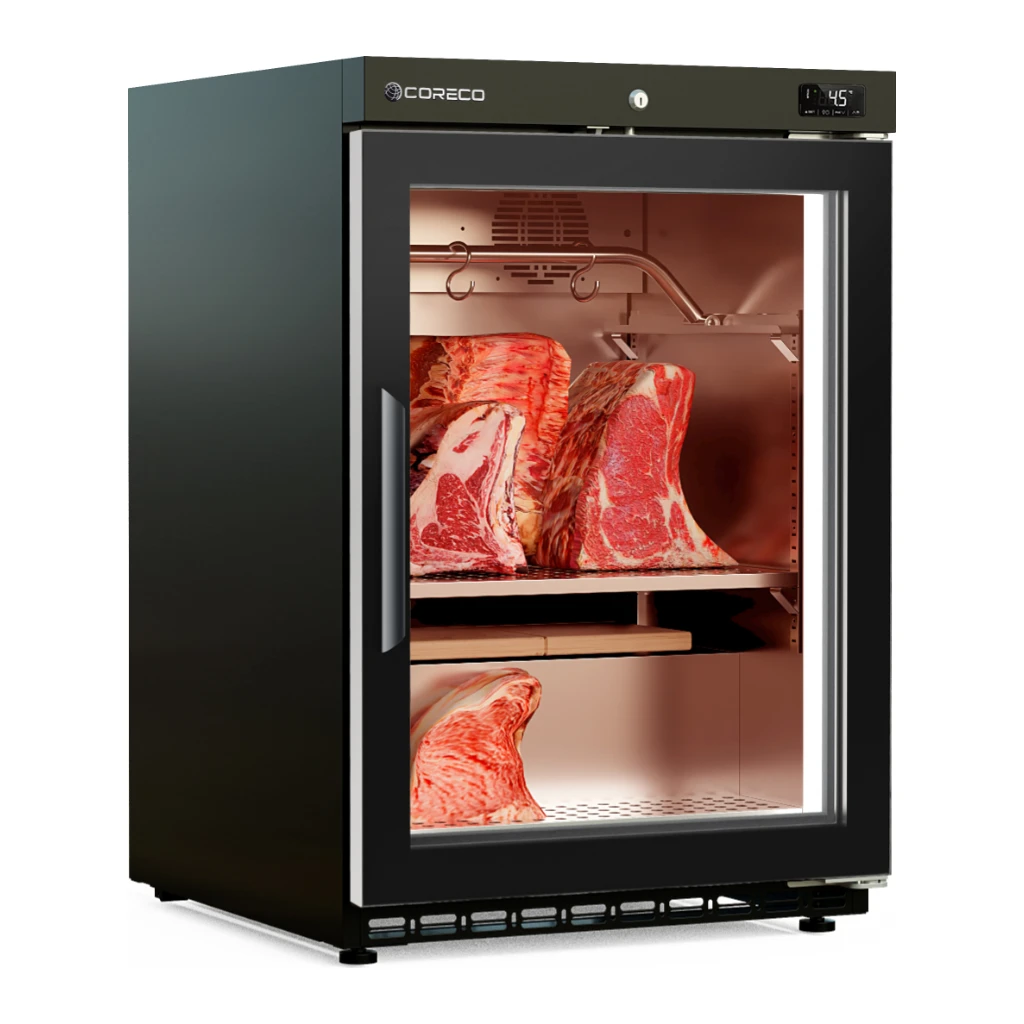
Product: DAV-400 for Dry-Aged Maturation
Technique: Display the equipment in the room, with simulated lighting and an actual exposure shot.
Key phrase: “This isn’t just a camera. It’s your best showcase.”
Result: A 22% increase in sales of premium cuts from Q1 to Q3 over a 6-month period.
🍷 High-end restaurant in Porto
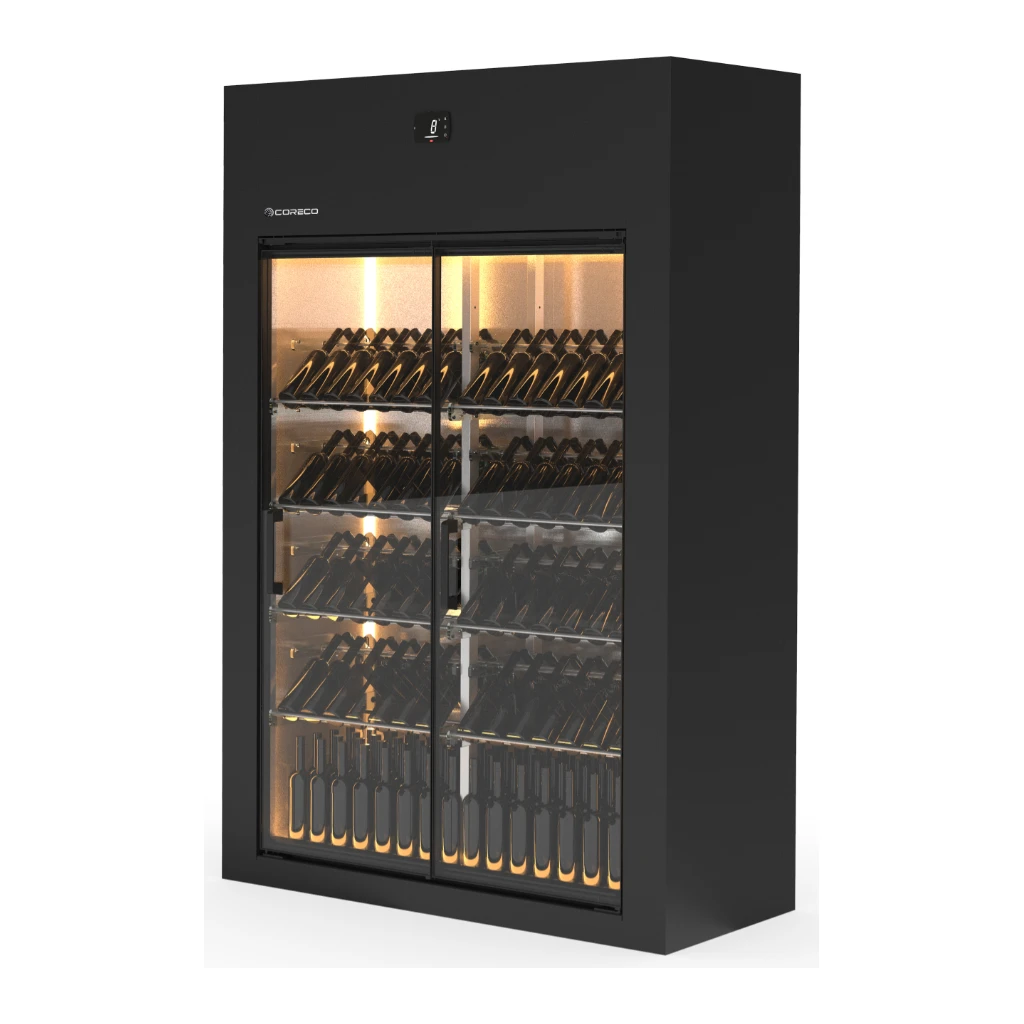
Product: DAW-200 Wine Cellar
Technique: Integrated design in the floor plan + wine storytelling.
Key phrase: “Every bottle tells a story. It starts here.”
Result: Implementation at four restaurants in the group.
🧊 5-star hotel in Madrid
Product: GAB-10P Blast Chiller
Technique: Explanation from the perspective of food safety + saving time in the kitchen
Key phrase: “In 90 minutes, you gain time, flavor, and peace of mind. All in one.”
Result: Replacement of old blast chillers with the entire Coreco line.
How to Train Your Sales Team in Sales Pitches That Sell
Having a technically well-prepared team is a solid foundation, but Training him to sell value—not just a product—is what sets the premium sector apart. This section offers a practical approach to training your team in interpreting sales pitches, using visual aids, handling objections, and connecting with customers from their perspective—not the manufacturer’s. Because every sale involves much more than just a piece of equipment: it’s about building a relationship.
- Conduct sales simulations without a product spec sheet: They should learn to talk about the benefits first.
- Rewrite the fact sheets using business language: Each piece of data should have a corresponding translation.
- Take guided tours with storytelling: shows how the equipment performs in a room or store.
- Create visual comparisons: before/after, visibility, noise, average ticket price.
- Practice Responding to Real Objections: noise, price, regulations, return. Provide answers based on impact, not just performance.
Conclusion: The spec sheet provides information. But it doesn't make you fall in love with it.
And no one buys a premium device without feeling confident, convinced, and connected to their choice. Today, selling industrial refrigeration also means selling image, profitability, and reputation.
That’s why, at Coreco Gourmet, we design technologies that speak for themselves. But we know that a good salesperson doesn’t just describe them: turns them into value for the customer.
“A product spec sheet doesn’t sell on its own. What sells is how you present it so the customer can see what problems it solves for them.”
As a manufacturer, at Coreco We provide the distributor with all the necessary documentation and product training.




 Español
 English
 Français
 Deutsch
 Italiano