







For decades, industrial refrigeration was viewed as a functional, invisible, and purely technical element. Its role was limited to preserving, cooling, and storing. However, the gourmet market—more demanding than ever in terms of quality, sustainability, and customer experience—has completely transformed this perception and paved the way for premium industrial refrigeration lines.
Today, industrial refrigeration is not just part of the logistics of a professional kitchen: It is a strategic tool that communicates, inspires, and sells. It is a form of engineering applied to flavor. A key element in the narrative of modern gastronomic luxury.
This article explores how design, technology, and performance come together in state-of-the-art, premium industrial refrigeration equipment, and how these features can serve as unique selling points for distributors, sales representatives, and decision-makers in the hospitality industry.
How has industrial refrigeration evolved? From being out of sight to taking center stage
The cultural and aesthetic shift that the hospitality industry has undergone over the past decade has made open kitchens, visible processes, and operational transparency a necessity. Today’s customers want to know what they’re eating, how the ingredients have been prepared, and who is behind each decision.
Studies such as the one published in the International Journal of Retail & Distribution Managementconfirm that The visible design of refrigeration equipment directly influences perceptions of quality, customer engagement time, and point-of-sale conversion.
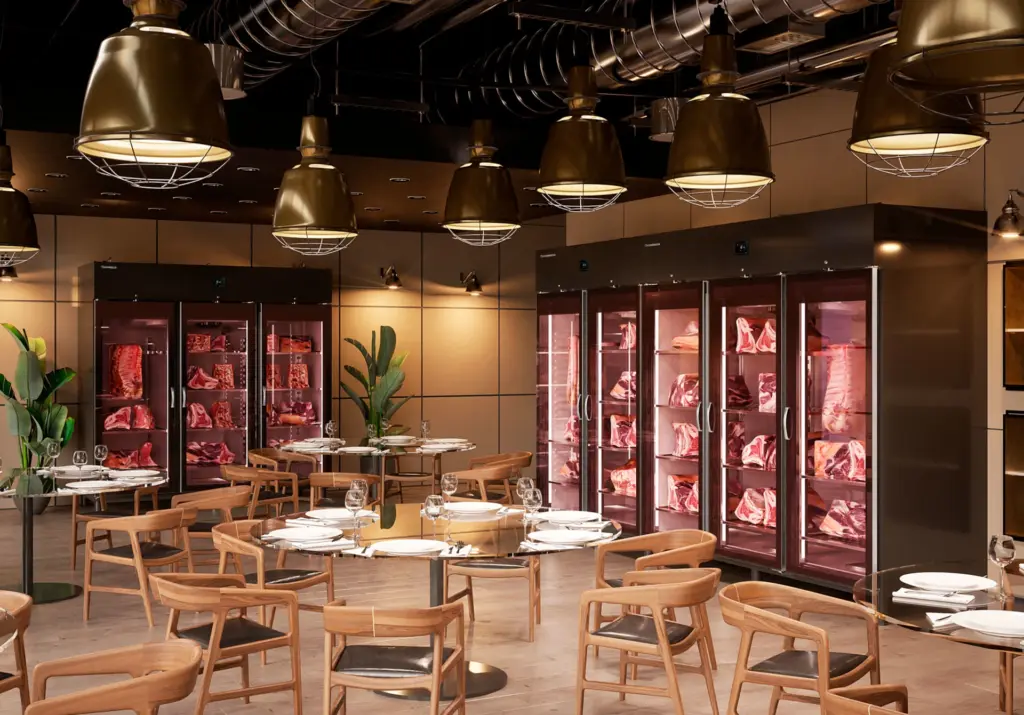
In that context, refrigeration units are no longer tucked away in a back room. The following are displayed, are integrated in a prominent area of the restaurant or gourmet shop. Son and is now part of the culinary scene.
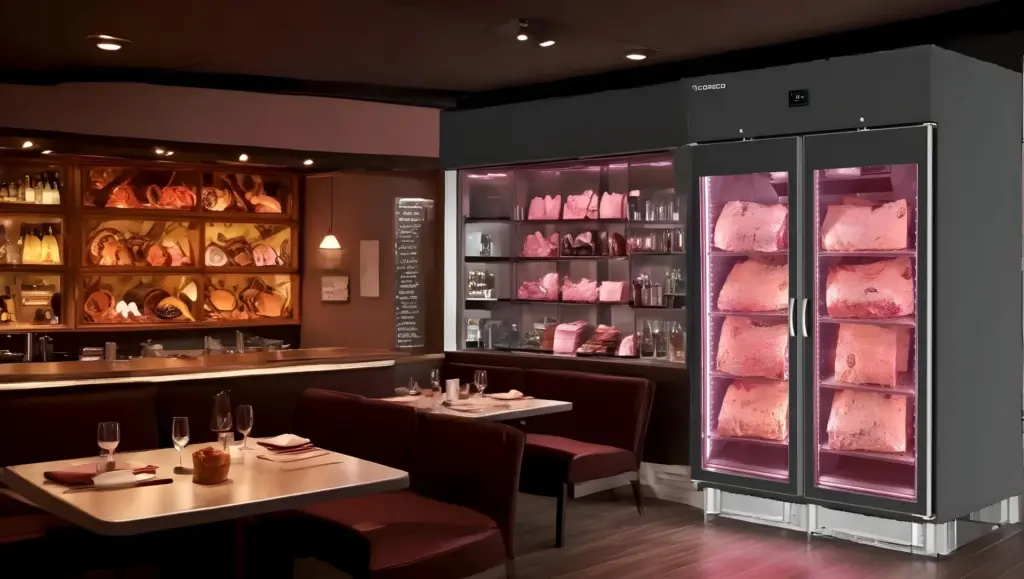
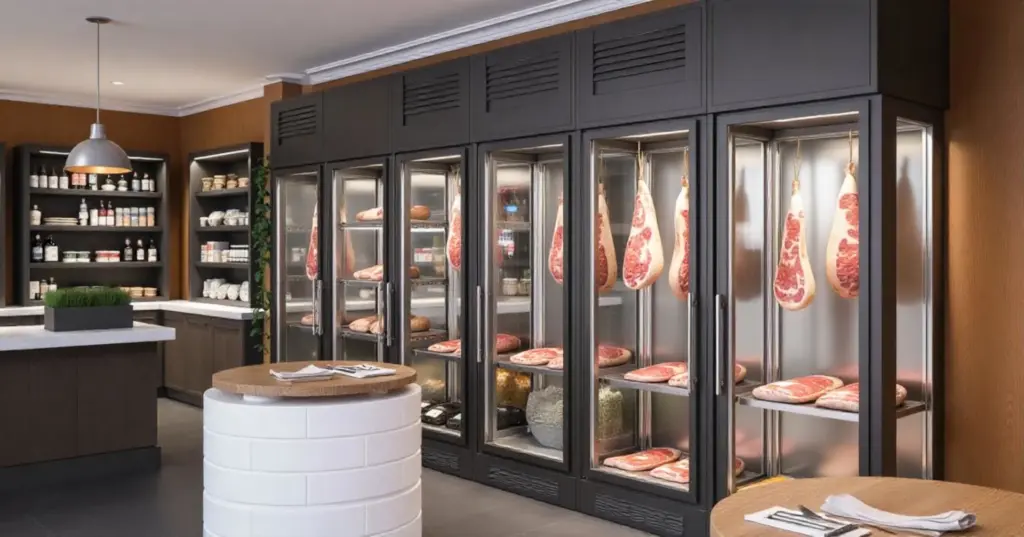
This is no small change. It involves redesigning the standards. Teams such as the DAV-400 Meat Aging Cabinets or the DAW-200 Refrigerated Wine Cabinets from Coreco Gourmet They have been developed not only to ensure thermal performance, but also to blend in visually with environments of high aesthetic value, such as restaurant dining rooms, tasting areas, or gourmet corners.
LED lighting, triple-pane glass, professionally finished stainless steel, and minimalist profiles allow this premium industrial refrigeration equipment to play an active role in the customer experience. Because what you see, you value. And what you value, you pay for.
Engineering Applied to Flavor: The New Luxury Lies Within
Although the design is appealing at first glance, It is engineering that upholds the promise of quality. And in the case of premium industrial refrigeration for gourmet kitchens, that engineering translates into temperature control, relative humidity, ventilation, air distribution, energy efficiency, and microbiological stability.
An exceptional example of this engineering applied to flavor is the system Master Ageing Controller, exclusive to Coreco and included in its Dry Aged line of aging cabinets. This controller precisely manages up to seven critical variables to ensure uniform and safe ripening of the product:
- Temperature
- Relative humidity
- Ventilation Rate
- Exposure time
- Oxygen Level
- Airflow
- Internal Gas Monitoring
Thanks to this level of precision, waste is reduced to remarkably low levels (below 10% under controlled conditions), resulting in meat that is more tender, more flavorful, and more profitable. The Master Ageing Controller is not just a technological gimmick, is the heart of a precision culinary tool.
🔗 Learn more about the Master Ageing Controller and how it optimizes the aging process
This technology transforms industrial refrigeration into a premium product—a chef’s ally. Just another element of their mise en place. Because in modern gourmet cuisine, Every degree counts. Every variable adds up. And every visible process adds value.
What role do aesthetics, design, and functionality play in premium industrial refrigeration?
Aesthetics are no longer just a whim. They are a differentiating factor. A visible refrigeration unit should be consistent with the establishment's visual identity. It must speak the same language as the brand. It must complement the sensory narrative.
And that can only be achieved when the design is tailored to professional use. Coreco Gourmet cabinets—both for aging and display—are built with highly durable, easy-to-maintain materials:
- AISI-304 stainless steel with rounded edges
- Triple-pane glass with low-emissivity coating
- Automatic locking systems with recessed profiles
- LED lighting adjusted to enhance the product's color and texture
- Ergonomic opening and loading features designed for continuous use
Teams like the DAV-400 or the DAV-200 Not only do they meet the highest technical standards, but they can also be integrated into customer service areas without disrupting the visual harmony of the space.
Design isn't just what you see. That's what makes it possible to show what matters. And in the gourmet sector, that means flavor, origin, and care.
Visible Sustainability: Energy Efficiency as Part of Luxury
In today's hospitality sector, luxury must also be sustainable. Energy efficiency, the use of eco-friendly gases, and a low carbon footprint are not just technical considerations, These are commitments that the end customer recognizes and values.
Coreco Gourmet has developed its product line in compliance with the 2024 F-Gas Regulation, which prohibits the use of refrigerants with high global warming potential. All of its equipment uses natural refrigerants such as R290 and R600a, which guarantee:
- Reduction of Harmful Emissions
- Lower electricity consumption (with potential savings of up to 55%)
- Alignment with corporate environmental sustainability policies
👉 You can find out how the F-Gas Regulation affects the industry in this article:
🔗 The Industrial Refrigeration Industry Faces Change: The 2024 F-Gas Regulation for 2025
When the cold becomes part of our commitment to the planet, It also becomes part of the brand's storytelling.
When Design Helps Boost Sales (Yes, Literally)
Well-designed premium industrial refrigeration systems not only preserve, but also They attract customers, justify prices, and increase the average check. Especially in direct-to-consumer retail settings (restaurants, gourmet butcher shops, specialty stores), a visible and attractive display case sparks conversation, generates content, sparks interest, and drives the desire to buy.
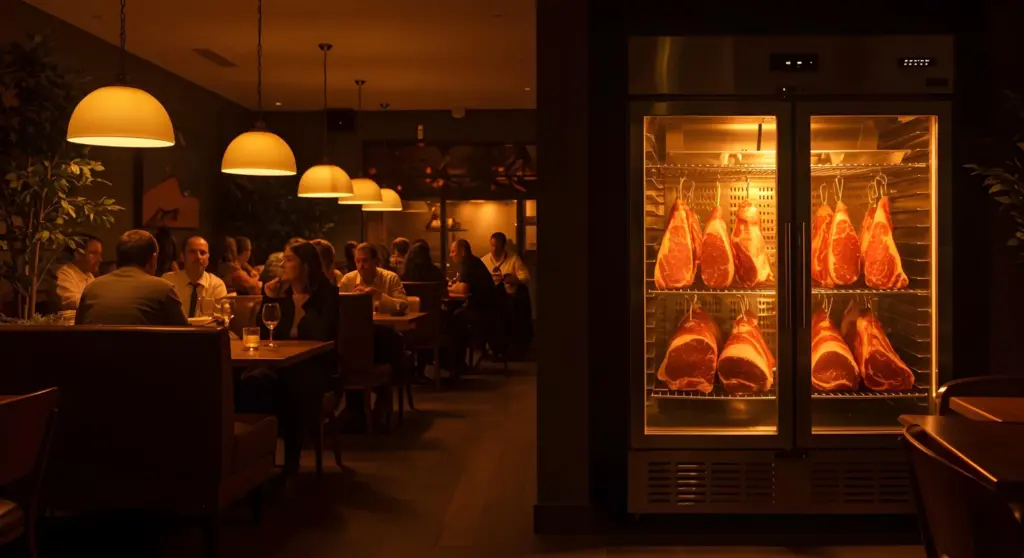
Many establishments have succeeded in positioning themselves as «temples of flavor» thanks to the visible presence of their aging or display cases. Because customers don’t just want to eat well—they want to see that the product has been handled with precision, patience, and respect.
A display case in the dining room, lit up and featuring a piece of aging meat, sells itself. And it justifies the price of the dish without the need for technical explanations.
Recommendations for Distributors and Sales Technicians
Selling professional refrigeration equipment to the high-end Horeca sector requires a combination of technical knowledge, business acumen, and storytelling skills. Here are some practical tips for improving your sales pitch when dealing with different buyer profiles:
For independent or family-owned restaurants:
- Connect with the end customer's experience: What will diners see when they walk in? How do you justify that €48 dish?
- Use design as a differentiating factor: “This equipment is going to be part of your menu. Literally.”
- He speaks in terms of profitability and efficiency: reduced shrinkage, lower consumption, and higher average check.
For restaurant chains or groups with an international presence:
- Emphasizes standardization and quality control: “This equipment guarantees the same results in any country.”
- Focus on sustainability and regulatory compliance: F-Gas, ISO, natural refrigerants.
- Support your argument with figures and return on investment: It provides comparisons of fuel consumption, depreciation, and maintenance costs.
Key consultative selling techniques:
- Listen before you speak: determines whether the customer values efficiency, design, compliance, or user experience more.
- Turn every feature into a personalized benefit: triple-pane glass → better visibility of the product, no condensation.
- Use applied storytelling: “One of your customers might post a photo of this cabinet on social media before they even eat.”.
- Prepare visual materials: product photos, how-to videos, technical specifications in PDF or 3D.
Industrial refrigeration is no longer sold through printed catalogs. It is sold through Brand projects, experiential spaces, and customized concepts.
🚫 Common Mistakes When Purchasing Industrial Cooling Without Considering the Design
Many businesses lose profitability even before they open their doors. These are the most common decisions that end up costing a lot:
| ❌ Common mistake | ✅ Solution with Coreco Gourmet |
|---|---|
| Shopping Based Solely on Price | Durable, energy-efficient equipment with greater perceived value |
| Hide the equipment for aesthetic reasons | Designs crafted to look great without sacrificing efficiency |
| Ignoring Regulatory Sustainability | Full compliance with F-Gas 2024 and natural refrigerants |
| Using noisy equipment in the room | Low decibels, ideal for gourmet settings |
| Failing to explain the value of the equipment to the customer | Applied Storytelling: The Cold Tells a Story, Too |
Design That Sells: Table of Real Benefits
| Design element | Direct impact on sales |
|---|---|
| Warm LED Lighting | Improves the visual appeal of the product |
| Condensation-Free Glass | Boosts confidence and a feeling of cleanliness |
| Visible stainless steel finish | It conveys professionalism and perceived quality |
| Display cabinets with visible products | They justify premium prices and increase the average receipt amount |
| Digital Control Panels and Displays | They convey precision and a commitment to traceability |
Customer Testimonial
“Ever since we put the display case in the main dining room, customers have been asking more questions, showing more interest, and appreciating the dishes more. It’s even helped us justify raising the price of our dry-aged cuts without losing customers. It’s our best salesperson—and it doesn’t even speak.”
— Boutique Restaurant Manager, Valencian Community
Integrating Premium Technology into the Gourmet Kitchen
Precision and Advanced Control
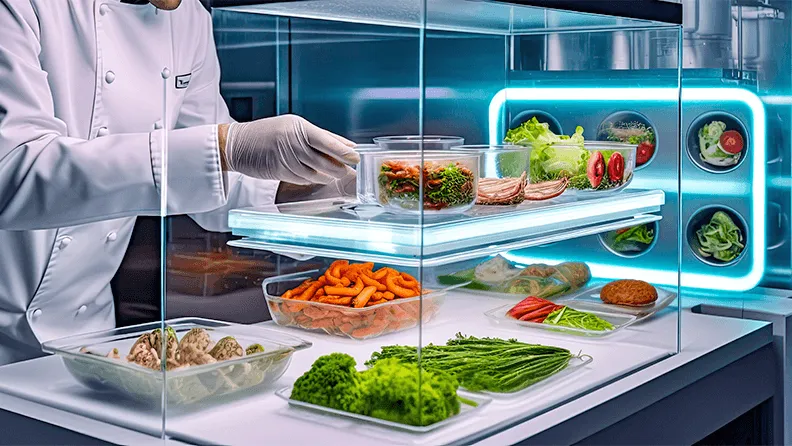
- Premium technology allows for the precise management of critical parameters such as temperature, humidity, and ventilation, ensuring that each ingredient retains its organoleptic qualities and reaches its optimal point of ripeness or readiness for service. Equipment such as ripening cabinets and refrigerated wine cellars uses digital control and remote monitoring systems to maintain ideal conditions at all times.
Automation and Efficiency
- Automation, through robots and intelligent systems, has revolutionized gourmet cuisine by handling repetitive and precision-based tasks, freeing chefs to focus on creativity and presentation. Centralized systems allow all equipment to be controlled from a single interface, optimizing management and improving operational efficiency.
Versatility and flexibility
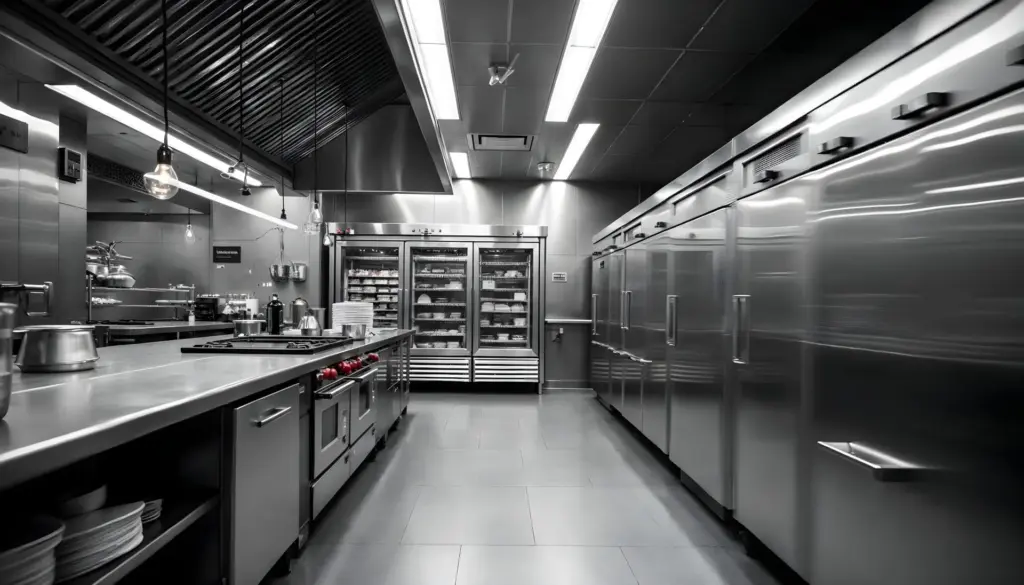
- Premium equipment tends to be multifunctional and modular, allowing chefs to adapt the kitchen to different needs and maximize space. Combination ovens, food processors, and reconfigurable modules are examples of how premium technology provides flexibility and versatility in gourmet settings.
Innovation in the Sensory Experience
- Technologies such as 3D food printing make it possible to create customized shapes, textures, and nutritional compositions, opening up new possibilities for the presentation and customization of gourmet dishes. In addition, augmented and virtual reality are used to enrich the diner’s experience by integrating visual narratives and historical contexts into the dining experience.
Sustainability and Energy Efficiency
- Premium equipment incorporates hygienic materials, natural refrigerants, and energy-efficient systems, complying with environmental regulations and contributing to the sustainability of the gourmet business1.
Product Transformation and Optimization
- Beyond preservation, premium technology transforms and optimizes products, enabling processes such as dry-aging meat or the controlled drying of cured meats, thereby enhancing the quality and final value of gourmet products1.
The integration of premium technology into gourmet kitchens not only improves efficiency and quality but also redefines the dining experience, enabling chefs and businesses to offer innovative, sustainable options that are highly valued by the most discerning customers.
Frequently Asked Questions That Arise When Evaluating Design and Technology
Does the design shown affect thermal efficiency?
No. Thanks to materials such as low-emissivity glass and triple-pane doors filled with inert gas, Coreco units maintain thermal performance while providing maximum visibility.
How does the F-Gas Regulation affect long-term investment?
Compliance with F-Gas 2024 starting today ensures equipment that is more durable, sustainable, and compatible with future regulations, thereby avoiding retrofitting costs.
What if I want to integrate the equipment into a space with a specific aesthetic?
Coreco models are designed to blend seamlessly into premium spaces without altering their visual style. They can also be customized with certain finishes.
What is the estimated service life of this equipment?
With proper maintenance, Coreco equipment has an operational lifespan of well over 10 years, with low operating costs and high reliability.
Premium industrial refrigeration as a silent luxury item
Today, culinary excellence isn’t something that happens by chance. It’s designed. It’s controlled. It’s communicated. And in this new paradigm, industrial refrigeration has gone from being a supporting player to becoming an invisible—yet crucial—protagonist.
The new luxury isn't ostentatious. It's refined, sustainable, and sensory. And it starts from within.
At Coreco Gourmet, we design equipment that does more than just preserve the product. They protect our clients' reputation. And they enhance it.
If you're a distributor: sales pitches to close more deals
In the gourmet hospitality sector, the distributor's role is no longer limited to supplying equipment. Today, you are expected to act as technical advisor and brand ambassador. Your customers—from chefs to architects to purchasing managers—are looking for more than just a display case: they want safety, efficiency, design, and cost-effectiveness. Here are the key selling points you can use to highlight Coreco Gourmet’s display cases and cabinets compared to other options on the market.
🔷 1. Turn technical features into concrete benefits
The most common mistake in a technical sales pitch is to simply recite specifications without translating them into real value for the customer. In the Horeca channel, every detail must be aligned with a tangible improvement: lower cost, higher perceived quality, or greater operational ease.
Here are some examples for your sales pitch:
| Technical Specifications | Benefits for Your Customer |
|---|---|
| Natural refrigerant R290 or R600a | Comply with F-Gas 2024, avoid penalties, and reduce CO₂ |
| Low-E triple-pane glass | Condensation-free visibility = more appealing in the room |
| Master Ageing Controller | Tenderer meat, less shrinkage, higher profitability |
| Fanless Cooling | Less noise = perfect for experience rooms |
| AISI-304 stainless steel and professional finishes | Long-lasting hygiene and premium aesthetics with no maintenance required |
| Warm-spectrum LED lighting | Enhances the product's color and texture, boosts sales |
| Digital remote control and Wi-Fi (optional) | Precise Monitoring for Chefs and Multi-Level Chains |




 Español
 English
 Français
 Deutsch
 Italiano