







Trends in commercial refrigeration in 2026 are being shaped by three very specific forces: efficiency and regulations, smart control (monitoring and data), and business expectations (flexibility, operational speed, and demonstrable sustainability). The practical implication is that it is no longer enough to simply “cool effectively”: the equipment must consume less, be more manageable, and provide a more responsive service in the kitchen, dining room, and operations.
The essentials in 30 seconds
- The most realistic “trend”: measurable efficiency (kWh, efficiency, stability) and equipment compliant with regulations)
- The kitchen and the point of sale request control and traceability: more thoughtful management of temperatures, alarms, and maintenance.
- The influence of operating formats With dark kitchens and more fragmented production, you need flexibility and speed.
- Sustainability is no longer just a slogan: we have to be able to explain and justify technical decisions and costs.
- If you're buying for business, the winning approach is: Choose the right size, prioritize reliability, and work with a distributor that provides support.
In this article, you'll learn:
• Which trends in commercial refrigeration will take hold in 2026.
• What has changed in 2025 and will be a key factor in 2026 (regulations, energy, new HORECA models).
• How this affects restaurants, gourmet shops, dark kitchens, and food halls.
• Proposals for distributors, end customers, and manufacturers to ensure they don't fall behind.
At Coreco Gourmet, we work with precisely that idea in mind: that refrigeration should no longer be just a line item in the specifications but should become part of each client’s business strategy.
A New Horizon for Commercial Refrigeration
The commercial refrigeration is experiencing a pivotal moment within the HORECA sector. For years we have been talking about energy efficiency, sustainability, and better conservation, but in 2026 the situation will change: energy will be more expensive, and European regulations on Ecodesign, Energy Labeling, and F-Gas hardens, and the Hospitality business models are evolving toward dark kitchens, food halls, gourmet experience stores, and hybrid retail concepts.
In this article, we analyze which trends in the industrial refrigeration They’ve come a long way; what will really change starting in 2026; what restaurants, gourmet shops, central kitchens, etc., need to consider when investing in commercial refrigeration; and how this also shapes the role of distributors and manufacturers.
As a manufacturer with more than four decades of experience focused on the Professional refrigeration for the hospitality and food industries, Coreco is experiencing this transformation firsthand: it works daily with HORECA distributors, who know their customers—central kitchens and gourmet businesses that need blast chillers—very well, display cases, wine cellars y meat aging cabinets capable of responding to this new context.
From the line Coreco Gourmet, the focus is no longer solely on industrial robustness and reliability, but on how each refrigeration solution helps enhance the customer’s culinary offering, optimize their internal operations, and ensure that the investment in refrigeration makes sense in the medium and long term in an increasingly demanding and diverse HORECA sector.
Many “trends” didn’t start in 2026… but they’re taking hold now
If you've been in the commercial refrigeration industry for a while, it's normal to feel a sense of déjà vu. The same messages keep coming up:
- “Greater energy efficiency”
- “More sustainability”
- “Better preservation and less waste”
- “Equipment that is better integrated into the store’s design”
And it's true: none of that came about in 2026. The Eco-design for the Regulation of Sustainable Productsand European energy-labeling standards have been pushing the market toward more efficient and climate-friendly equipment.
The difference now lies not so much in the trend's name as in:
- The Severity of the Economic Impact (very high electricity bills).
- Regulatory Pressure on efficiency and fluorinated gases.
- Consumer Maturity, much more eco-conscious and willing to paymore in favor of sustainable options.
- The Emergence of New HORECA Formats that didn't exist a decade ago and require a different cold map.
In other words: the main points of the speech by the Professional HORECA Refrigeration They're the same… but today they are fewer options and much more strategic.
2. Underlying trends in the professional cold sector that had already been emerging
Before delving into what's new, it's worth acknowledging which trends have been taking hold for years and will continue to be relevant in 2026 and beyond.
2.1. Energy Efficiency as a Minimum Standard
Since 2021, European standards for Ecodesign (EU 2019/2024) And the energy-labeling rules for commercial refrigeration equipment have established minimum efficiency requirements and driven the most energy-inefficient solutions out of the market.
As a result:
- improve the insulation,
- the design of evaporators and condensers is optimized,
- more efficient compressors and controls are introduced.
What was a high-end technical feature years ago is now mandatory starting point.
2.2. Sustainability and Refrigerant Replacement
At the same time, the review of the F-Gas Regulation and the EU's climate goals have driven the replacement of many HFCs with natural refrigerants or one with a lower GWP.
As we mentioned in our article on the industrial refrigeration industry in the face of climate change, the main objective of the F-Gas Regulation is to reduce greenhouse gas emissions by promoting the use of refrigerants with a low GWP. The hydrocarbons R290 and R600a are viable alternatives that offer an environmental advantage because they have a significantly lower GWP compared to traditional refrigerants, such as HFCs. (values well above 1,400). This measure is in line with the European Union's commitment to reduce its carbon footprint and promote sustainability in the industry.
This has forced manufacturers and designers to rethink:
- refrigeration circuit designs,
- refrigerant charges,
- safety and handling,
- technical training.
It's not new in 2026, but it is entering a phase in which It will be rare to see teams that don't follow this logic.
2.3. Better preservation = less waste = higher profit margin
The idea that “investing in a good refrigeration system reduces waste” is not new either, but it can now be better quantified: every kilogram of product that doesn’t spoil means euros that aren’t lost. Against a backdrop of rising raw material and energy costs, cold storage rooms, display cases, and blast chillers that allow for:
- better stabilize the temperature,
- adjust the humidity,
- reduce fluctuations,
have a direct impact on the income statement of the business.
2.4. Equipment Design as Part of Interior Design
In the gourmet sector—including hotels, fine-dining restaurants, and wine bars—the aesthetic integration of professional refrigeration has been gaining prominence for years: materials, design, lighting, fog-free glass, etc.
The difference from previous phases is that this is no longer limited to a few “designer” venues: it now extends to many options for food halls, concept stores, and gourmet shops offering a unique experience.
If you'd like to learn more about these regulatory and refrigerant changes, you can also check out our resources on F-Gas and energy efficiency on the Coreco Gourmet blog.
3. What Will Actually Change Starting in 2026
From here on, we get to the interesting part: what will carry the most weight in reality and how it intersects with the new HORECA sector.
3.1. Sustainability as a criterion for choice, not just a slogan
Several studies show that a growing proportion of customers is willing to pay more for restaurants and offerings perceived as sustainable, with price premiums ranging from 10 % to 20 % of the price, especially among younger generations.
That means that, for many businesses:
- reduce food waste,
- use less energy,
- demonstrate transparency in processes,
It is no longer just a moral or regulatory obligation: it is a competitive advantage.
And the commercial refrigeration is a key part of that equation:
- efficient equipment = lower energy consumption,
- better food preservation = less food waste,
- Durable and repairable solutions = a smaller life-cycle footprint.
3.2. Digitization of the Back-of-House and the Connected Kitchen
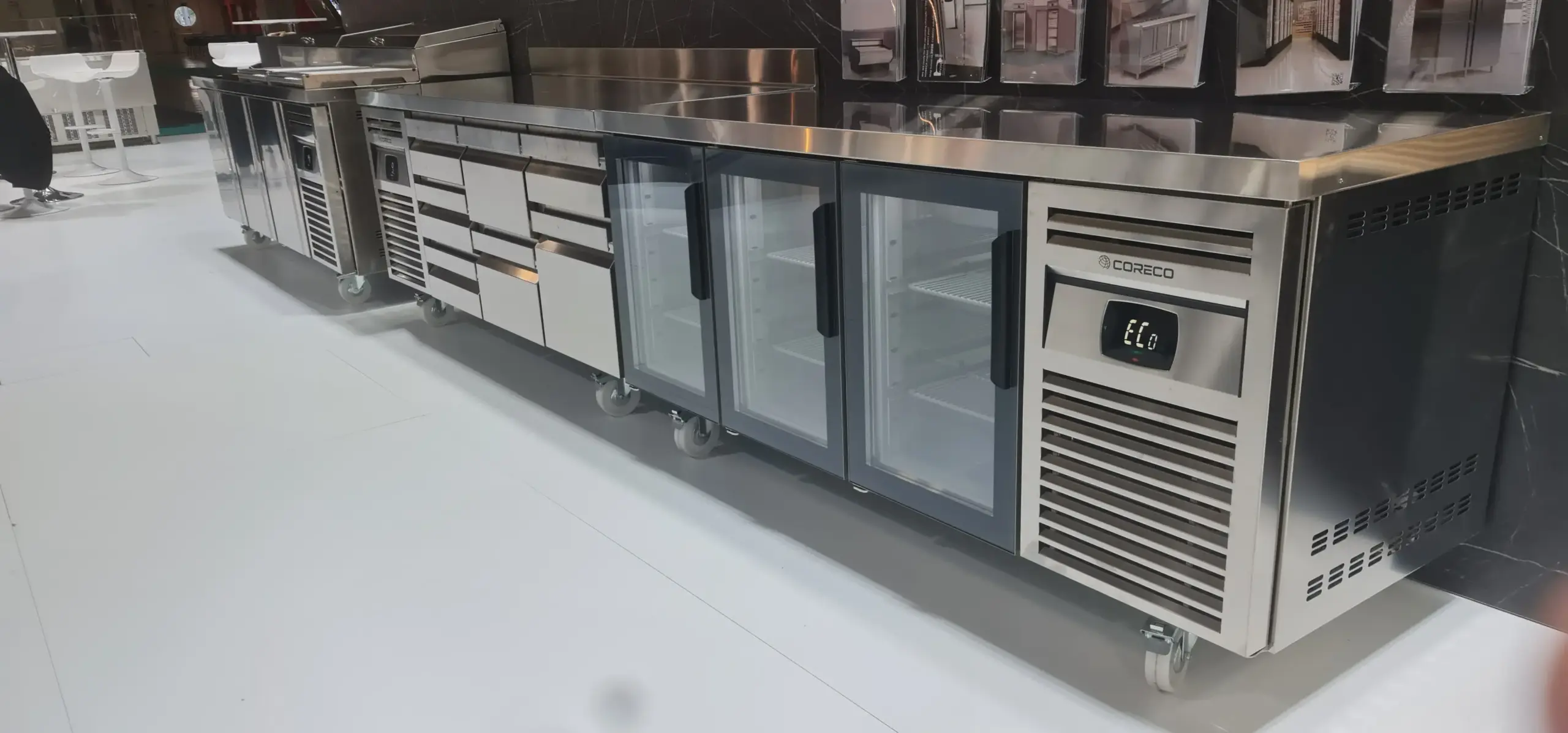
Digitization is no longer limited to reservations or point-of-sale systems. There is increasing talk of smart kitchens: devices that transmit data on usage, malfunctions, energy consumption, and temperatures, and that integrate with management platforms.
In the case of professional refrigeration, this means:
- remote temperature control,
- alerts in case of deviations,
- automatic logging for audits,
- Smarter preventive maintenance.
Not all businesses will use all the advanced features, but more and more will require that “the system be ready” for them, even if they start out with just basic use.
3.3. The Culinary Experience as the Central Theme: Showing the Cold, Not Hiding It
The European hospitality industry is moving toward experiential eating: It's not just about eating—it's about experiencing a story, an atmosphere, and a setting.
In that context, professional detachment:
- Stop always hiding in the back room,
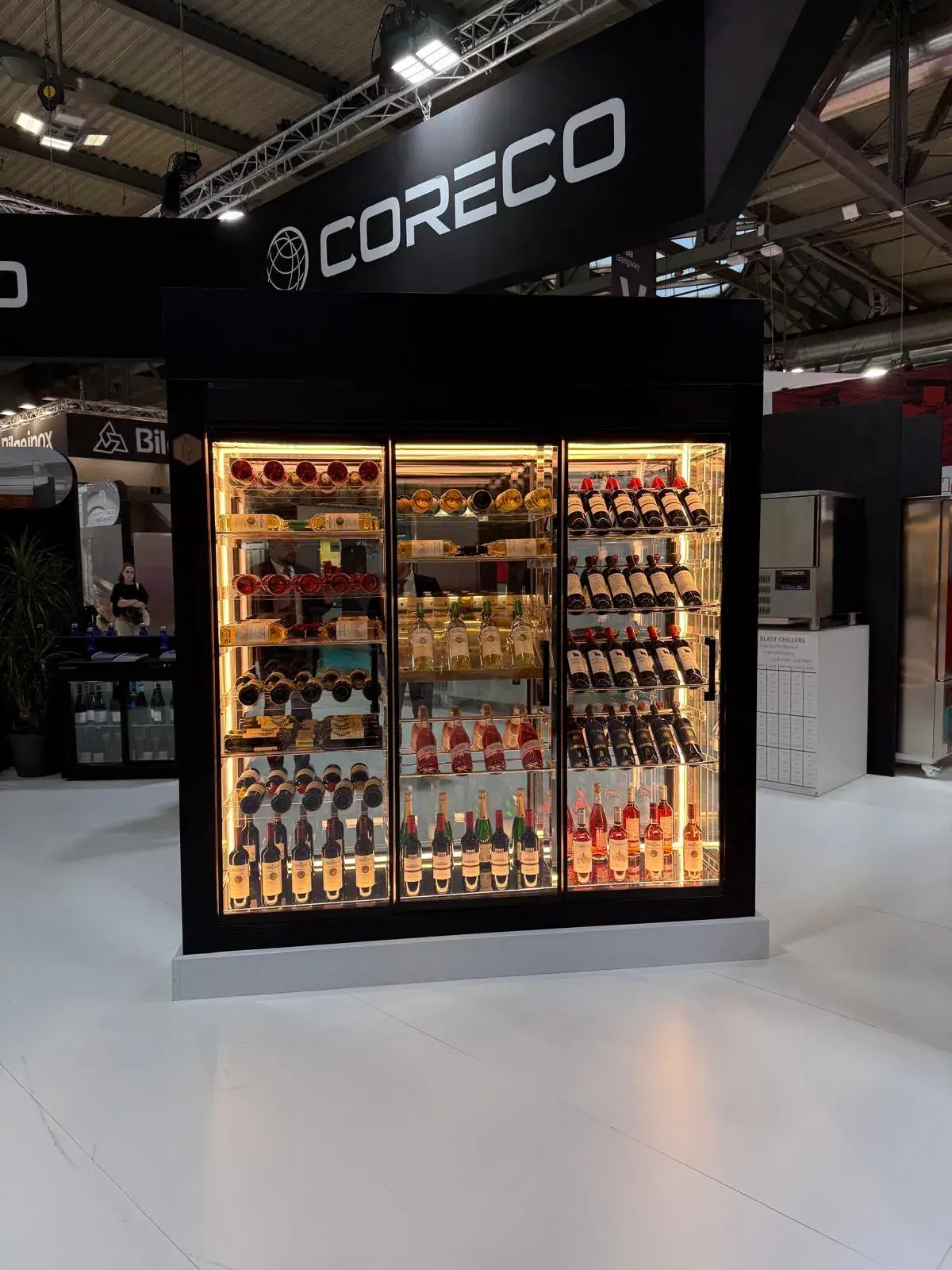
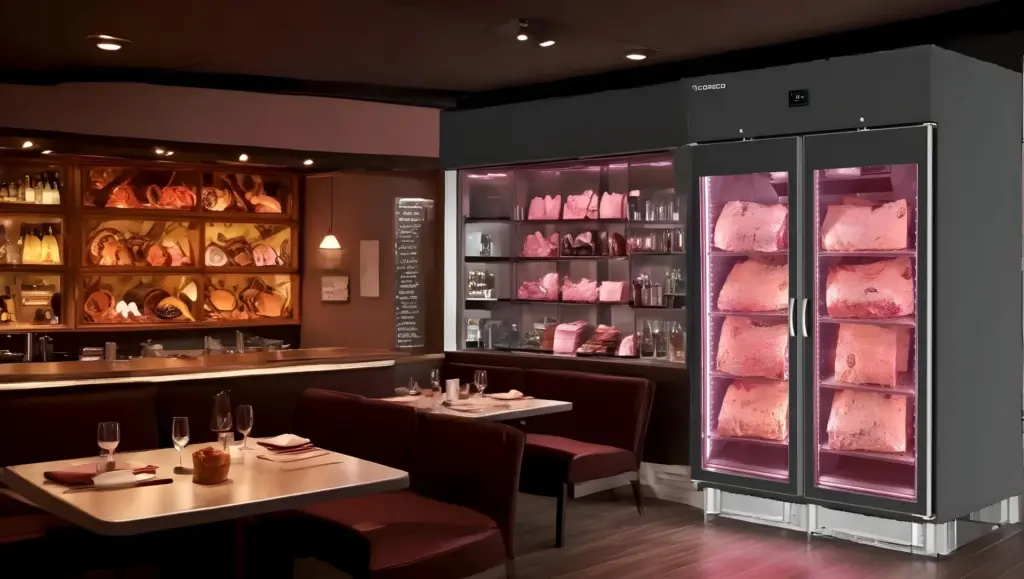
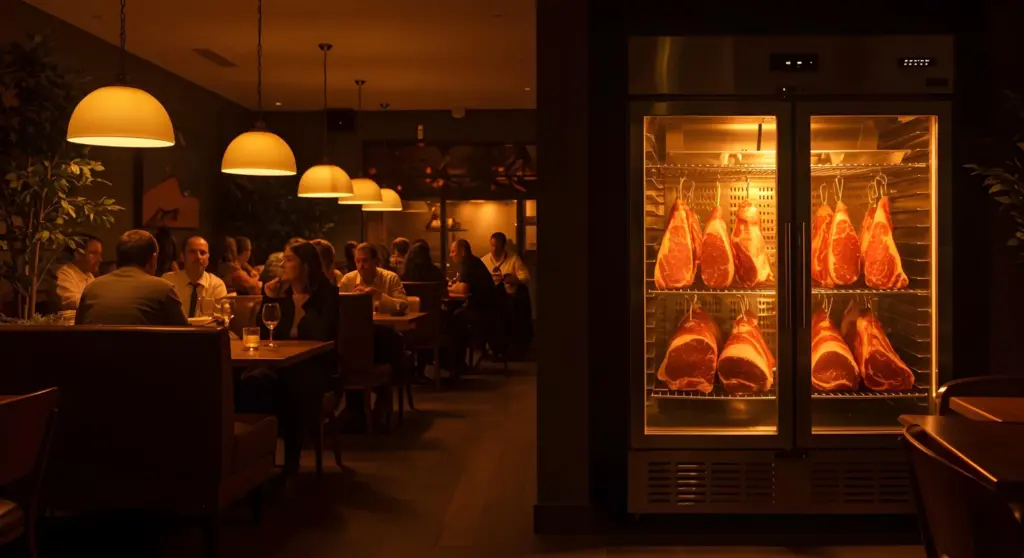
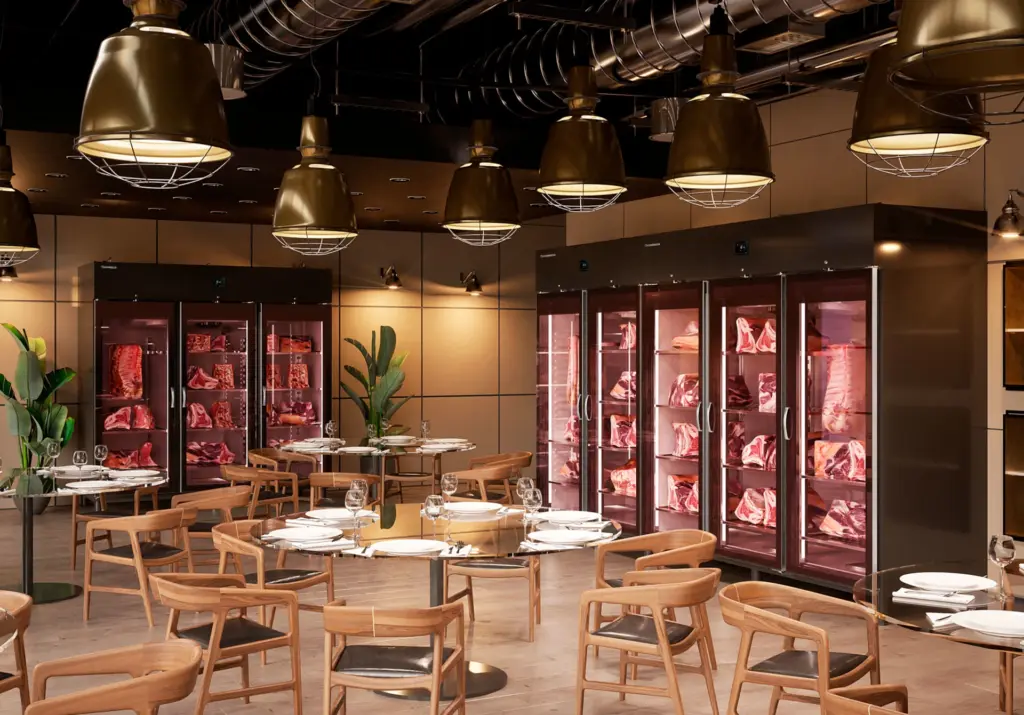
- It becomes part of the storytelling: aging racks in plain view, product display cases, and wine cellars built into the dining room.
This requires equipment:
- visually appealing,
- easy to keep spotless,
- with lighting that highlights the product,
- with glass and finishes that match the concept's standard.
3.4. The Proliferation of HORECA Formats and Hybrid Models
The global HORECA market It is growing not only in volume, but also in variety of formatss: It is expanding into dark kitchens, food halls, advanced delivery models, hybrid retail-and-tasting concepts, and highly specialized concepts (single-product, wine bars, wellness spaces, etc.).
Each of these formats has its own “cold map”:
- different abilities,
- different product flows,
- varying visibility requirements,
- specific combinations of back and front.
Starting in 2026, the discussion will shift from being general (“efficient cooling”) to something much more specific: What combination of equipment do these new concepts require to function properly?.
If you're an HORECA distributor and want to stay ahead of these trends in commercial refrigeration, we can help you create the right industrial refrigeration ecosystem for your customers. Contact the Coreco Gourmet team, and let's discuss your projects.
4. New HORECA Concepts and Their Impact on Professional Refrigeration
Let's take a closer look at how these models affect the design of chambers, cabinets, blast chillers, ripening rooms, wine coolers, and display cases.
4.1. Dark Kitchens and Virtual Brands: Power, Consolidation, and Control
The dark kitchens / Cloud kitchens have established themselves as a key model linked to the growth of food delivery in Europe.
Its features:
- limited and expensive spaces,
- several brands sharing a kitchen,
- extreme dependence on peak demand,
- Virtually no interaction with customers on the floor.
What do you expect from a professional refrigeration system?
- High-capacity chambers and cabinets in a compact design.
- Blast Chillers that allow for working with large batches and ensure food safety in early production.
- Very clear product flow: receiving → chamber → preparation → blast chiller → storage → shipping.
- Rugged equipment that is easy to clean and provides convenient access to critical components.
- Ideally, remote monitoring of temperatures and alarms to prevent massive, unseen losses.
4.2. Food Halls and Gastronomic Markets: Modularity and Visual Harmony
The food halls Food markets bring together a wide variety of concepts under one roof: from premium burgers to sushi, including bakeries, Latin American cuisine, specialty coffee shops, and cocktail bars.
Implications for cold weather:
- need for solutions modular that can be relocated or repurposed,
- a relatively neutral yet refined aesthetic that does not clash with diverse identities,
- display cases and exhibition walls with high visibility and accessibility,
- the option for shared or multi-user cameras, with intelligent partitioning.
The key word here is flexibility, without compromising durability or regulatory compliance.
4.3. Gourmet Experience Stores: Cold as the Centerpiece of the Storefront Display
More and more gourmet stores are operating as mixed-use spaces:
- sale of delicatessen products,
- tasting at the bar or at tables,
- tastings, small events, and food and wine pairings.
These are places where customers shop product + story + presentation.
In this context, professional detachment must serve a dual purpose:
- Preserve to the highest degree: cheeses, cold cuts, meats, fish, pastries, chocolates, wines… each category has its own criteria.
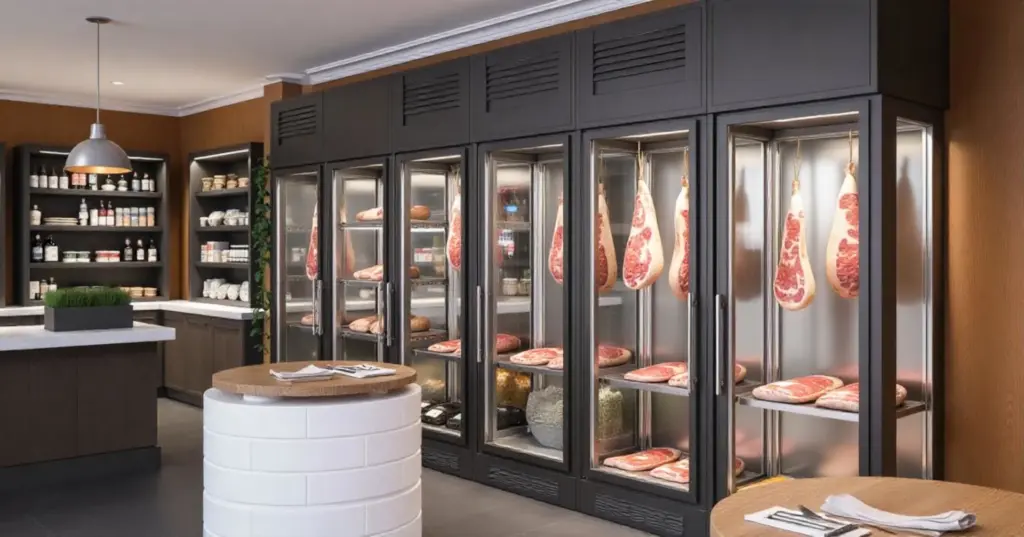
- Communicating Value: visible meat and fish aging racks, wine cellars that showcase a carefully curated selection, refrigerated display cases that invite exploration, and display cases that almost look like jewelry boxes.
Here, a poorly positioned camera or a dimly lit display case not only results in poorer preservation: breaks with the gourmet narrative.
4.4. Wellness, health-focused, and plant-based restaurants
The restaurant industry focused on health, wellness, and plant-based products continues to grow, with an emphasis on:
- fresh ingredients,
- homemade recipes,
- toppings and bases that are replenished throughout the day,
- Menus that should look light and “lively.”.
For professionals in the refrigeration industry, this means:
- chambers and storage units with a high turnover of fresh produce,
- the great importance of the blast chiller in ensuring the safety of sauces, bases, and prepared foods,
- refrigerated display cases designed for the service line (salads, bowls, cold dishes),
- Pay special attention to product visibility and internal organization.
The challenge is to preserve and organize everything properly without losing the sense of extreme freshness that the customer expects.
4.5. Single-product and ultra-specialized concepts
Gourmet fried chicken, smash burgers, bars specializing in wine, desserts, cheese, or seafood, etc. These ultra-specialized concepts are spreading throughout Europe and have one distinctive feature: They live and die by the perceived quality of a certain type of product.
Therefore, the cold associated with that product:
- it has to be very well tuned,
- It often combines the back and front (prep stations + display cases or aging cabinets in the dining room),
- It must be scalable: it should be easy to replicate the mix of equipment if the concept opens new locations.
Here, professional refrigeration isn't just a support system—it's one of the pillars of the brand promise.
5. What a refrigeration system needs to offer today if it wants to remain relevant in 2030
If a business is going to invest now in cameras, cabinets, wine coolers, or blast chillers, the question can't be the same as it was in 2010. It has to be:
“What do I need from this team to support my business model over the next 5–10 years?”
5.1. Adaptability to Changes in the Menu and Model
Most businesses are no longer static:
- expand the menu,
- offer delivery,
- test events,
- They combine retail and dining.
The refrigeration system must allow for:
- reconfigure interiors (shelves, rails, GN containers),
- change part of the use (for example, from a simple storage room to a semi-open room or to accommodate display cases),
- be incorporated into potential reforms without becoming incompatible.
5.2. Regulatory Planning for the Entire Decade
Given the current context of Ecodesign, Energy Labeling, and F-Gas, the company can't risk buying something that will be obsolete in a few years.
That's why, when choosing refrigerators, display cases, or wine coolers, it makes sense to ask:
- What refrigerant do you use, and what is your regulatory outlook?
- Does it already meet the efficiency standards required for new equipment?
- Is there transparency regarding its efficiency and consumption ratings?
5.3. Basic Data and Simple Alarms
Not all businesses want “Big Data on the cold,” but they do want to avoid surprises:
- basic temperature log,
- alarms for an open door or a serious malfunction,
- the option to connect to monitoring systems as the business grows.
This not only helps prevent losses due to incidents; it also simplifies internal and health and safety audits.
5.4. Cold that adds to the experience, not detracts from it
Whether in gourmet concepts, high-end restaurants, or experiential spaces, cold must also serve an aesthetic purpose:
- well-lit display cases,
- clean, fog-free windows,
- integration into the store's design,
- a sense of order and neatness.
A closet or storage room that is visually unappealing can undermine the message of quality that the rest of the space is trying to convey.
5.5. Work Organization and Stress Reduction
Last but not least: a good professional cooling system helps to better organize production:
- allows you to prepare your mise en place calmly and safely,
- reduces the strain on high-volume services,
- makes it easier to separate in-store and delivery orders,
- frees up counter and kitchen space.
Here is the blast chiller It becomes a central component of many models: without it, it is difficult to work reliably on advanced productions and complex charts.
6. The New Role of the HORECA Distributor: From Selling Machines to Designing Refrigeration Ecosystems
In this scenario, the specialty retailer becomes more than just an intermediary: it becomes a partner that helps define the cold chain ecosystem for each business.
6.1. Understand the business model before looking at the catalog
The distributor who adds the most value isn't the one who rattles off product specifications, but the one who asks:
- What percentage of your revenue comes from delivery?
- Are you considering adding in-store product sales?
- How many strong serves do you have per day?
- Do you want part of the product to be visible from the living room?
From there, develop a proposal for:
- cameras,
- cabinets,
- blast chillers,
- display cases,
- cellars,
that makes sense for that specific model, not a generic list.
6.2. Translating Technical Concepts into Business Impact
The key is to move from:
- “This unit has such-and-such a compressor, so many watts, and such-and-such a gas”
to:
- “This device will reduce your power consumption by approximately X % compared to what you have now,”,
- “You’ll waste less product thanks to this temperature stability,”,
- “You’ll be able to showcase this product in a much more appealing way.”.
In other words: Turn specifications into results.
6.3. Anticipate trends and avoid short-sighted decisions
A good distributor also protects the customer from:
- to buy something cheap that will fall short or become noncompliant in a short time,
- unnecessarily oversizing equipment,
- choosing solutions that are inconsistent with the business's evolution.
In a HORECA market that is growing but becoming more competitive and saturated, this advisory role is key.
On the Coreco Gourmet blog, we continue to analyze how industrial refrigeration is evolving in the HORECA sector and what implications this has for professional equipment. If you want to stay up to date, bookmark this page and check back often: upcoming articles will delve into specific solutions for dark kitchens, gourmet stores, and food halls.
7. The Role of Manufacturers: Refrigeration Designed for the Future of the HORECA Sector
For manufacturers of Industrial Cooling and Commercial Refrigeration The challenge is twofold:
- Technical and regulatory: design efficient equipment that is compatible with future refrigerants and compliant with Ecodesign and labeling requirements.
- Concept and Design: understand that their machines are part of complex ecosystems and increasingly sophisticated culinary concepts.
7.1. Specific product lines by product type and business model
It will make less and less sense to talk about:
- “A closet for everything,”,
- “a standard camera.”.
And more from:
- specific solutions for aged meat,
- display cases for bakeries or ice cream shops,
- wine cellars and premium beverages,
- cabinets for drying sausages,
- equipment designed for dark kitchen back-of-house areas,
- Aesthetic designs for gourmet storefronts.
7.2. Digital Integration and Connected Services
It's not just about adding an IoT module; it's about:
- facilitate easy integrations with monitoring platforms,
- provide clear documentation of data and alarms,
- Support distributors and major customers in the implementation of connected kitchens.
8. Conclusion: Commercial Refrigeration as the Infrastructure of the New HORECA Sector
In short: many of the ideas we hear about Professional refrigeration for the hospitality industry They've been on the table for years. But the 2026–2030 context takes them to a whole new level:
- energy is more expensive,
- European standards are more stringent,
- End customers value and reward sustainability,
- HORECA models are much more diverse and complex.
In this scenario, the cold ceases to be “an unavoidable cost” and instead becomes business infrastructure:
- determines which card you can keep,
- how much waste you have,
- How consistent is your in-theater experience,
- how much you can grow in delivery, events, or retail,
- and what the actual profit margin is for each line.
That's why talking about 2026 Trends in Commercial Refrigeration It's not just about new technologies, but about something deeper: understanding what kind of hospitality industry we want to build, and what refrigeration systems we need to ensure that model remains profitable, sustainable, and credible for years to come.
For distributors, manufacturers, and HORECA operators, the opportunity lies precisely there: in moving from selling or buying “refrigerators” to designing cold-chain ecosystems that keep pace with the actual evolution of the business.
Checklist 2026: How to Choose Professional Refrigeration Without Making a Mistake
Efficiency and Costs
- I'm clear on the goal: reduce consumption, increase capacity, improve stability, or reduce waste?
- I compare devices based on criteria measurable (estimated consumption, stability, recovery, isolation, control).
- I evaluate the total cost: energy + maintenance + downtime + service life (not just the price).
Actual operation
- The team fits right in with my workflow: opening up/serving, stocking, restocking, cleaning, and peak times.
- The solution is modular and scalable if the business grows or changes its format.
Control and Traceability
- Temperature control is clear, stable, and easy to audit (if applicable).
- There is an option for alarms and monitoring to prevent incidents (if the environment requires it).
Service and Network
- I have defined who performs the installation, who handles maintenance, and what the response times are (SLA).
- I confirm the availability of replacement parts and support through distributor.
Sustainability (without pretentiousness)
- I can explain why this equipment reduces environmental impact: energy consumption, refrigerant use, durability, and maintenance.
- Documentation ready: fact sheets, manuals, best practices for use.
Frequently Asked Questions (FAQ)
1) What is the most important trend in commercial refrigeration for 2026?
The combination of efficiency + control: equipment that consumes less energy while also providing greater stability, more data, and better-planned maintenance.
2) What should I look at first if I want to lower my electricity bill?
Proper sizing, type of use (peak loads/opening times), insulation/doors, control systems, and operating practices. Actual efficiency usually comes from equipment + use, not just from the file.
3) Is “monitoring” worth it for a HORECA business?
It depends on the risk: if an incident costs you product, service, or reputation, monitoring (alerts/logging) may be worth it. If your operation is simple, robust controls and good routines may be enough.
4) What changes with dark kitchens and more fragmented production?
Greater value is placed on the modularity, the ability to keep up with the pace, and solutions that can withstand intensive cycles. The key criterion is that the equipment adapts to the workflow, not the other way around.
5) How can “sustainability” be demonstrated in a serious way?
With decisions that can be justified: energy consumption and performance, durability, scheduled maintenance, and technical documentation. “Fewer kWh and fewer incidents” is better than generic claims.
6) What role does the distributor play if there are no direct sales?
This is the element that turns the equipment into a real solution: guidance on sizing, proper installation, support, and continuity. The key is to work with a network that guarantees a response.
7) How do I know if I'm overestimating or underestimating?
Monitor actual peaks, product turnover, store openings, ambient temperature, daily load, and objectives (storage vs. display). If you have any questions, ask your distributor for a proposal with clear criteria and assumptions.
8) What should a “well-prepared” professional refrigeration proposal include?
Needs, usage context, assumptions, recommended model, why it's a good fit, installation requirements, maintenance plan, and support terms. Without that information, it's easy to make a mistake.
Glossary (Key Terms)
- HORECA: hotels, restaurants, and catering; a professional setting with peak periods and high operational demands.
- Cold chain: Continuous maintenance of safe temperatures from storage through service.
- Energy efficiency: cooling capacity with lower energy consumption; this must be evaluated under real-world conditions, not just in theory.
- Temperature control: A system that controls and stabilizes temperatures; essential for quality and safety.
- Monitoring/telemetry: logging and alerts (temperature, malfunctions, doors, etc.) to prevent incidents.
- Preventive maintenance: Scheduled maintenance to prevent downtime and extend service life.
- Predictive maintenance: Predicting failures based on data/usage (when sensors are in place).
- Dimensions: Adjust the equipment's capacity and configuration to match actual usage (product, turnover, peak periods).
- Modularity: the ability to scale or adapt the solution in modules without having to rebuild the entire system.
- Recovery time: how quickly the team returns to formation after opening moves or charging.
- Refrigerated display case: Equipment designed to display products while maintaining their temperature and appearance.
- Dark kitchen: A kitchen geared toward delivery and production, with a fast-paced environment and specific requirements.




 Español
 English
 Français
 Deutsch
 Italiano