







One dry ageing cabinet for restaurants It should not be chosen solely based on aesthetics, capacity or visual impact. The decision must be based on actual use: what meat will be processed, what rotation will it have, where the equipment will be installed, who will manage it and what role it will play within the restaurant’s gastronomic offering.
Key data
A restaurant maturation cabinet must be chosen based on the menu, rotation, location, and work routine. It should be chosen not only based on capacity or visual presence in the dining room, which undoubtedly plays an important role, but it should be a factor, albeit not the key factor.
Quick response
A restaurant needs a maturation room when matured meat forms a real part of its menu, its operation, and the way it explains the product. If the team views the room as just a decorative element, it is easy to over-size it, choose the wrong location, or create unrealistic expectations.
In a few words
- The wardrobe should respond to the letter, not just the design of the premises.
- Location influences service, maintenance, and customer perception.
- The planned rotation is key to choosing wisely.
- Cleaning must be planned from the very first day.
- Distributors and installers should review actual usage before recommending it.
To whom it is addressed
This article is intended for distributors, installers, technical managers and HORECA professionals who need to evaluate a project involving matured meat in a restaurant.
It can also help restaurants, steak houses and hotels that want to incorporate Dry Aged meat with a professional approach, without making the decision solely based on image.
The starting point: what role will matured meat have in the restaurant?
Before choosing a wardrobe, it is advisable to answer a simple question:
Will the matured meat be a central product on the menu or a special feature?
It is not the same thing to have a restaurant specializing in meat as to have a place that occasionally includes one or two references. It is also not the same thing to work on visible pieces in the dining room as to maintain the process in a technical area.
The wardrobe should accompany that decision. In our experience, when the project is ordered from the letter and the operational side, the choice of the team is much clearer.
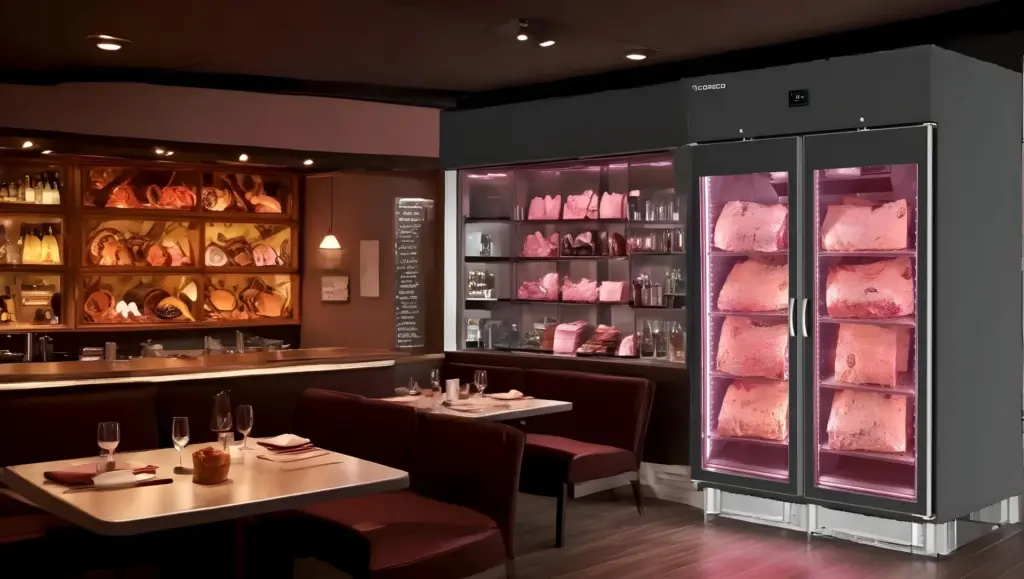
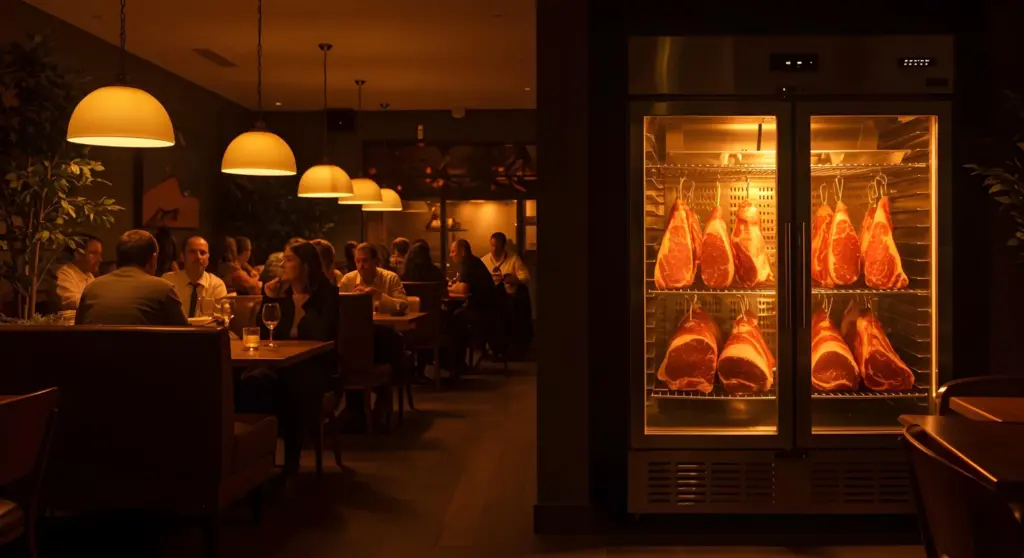
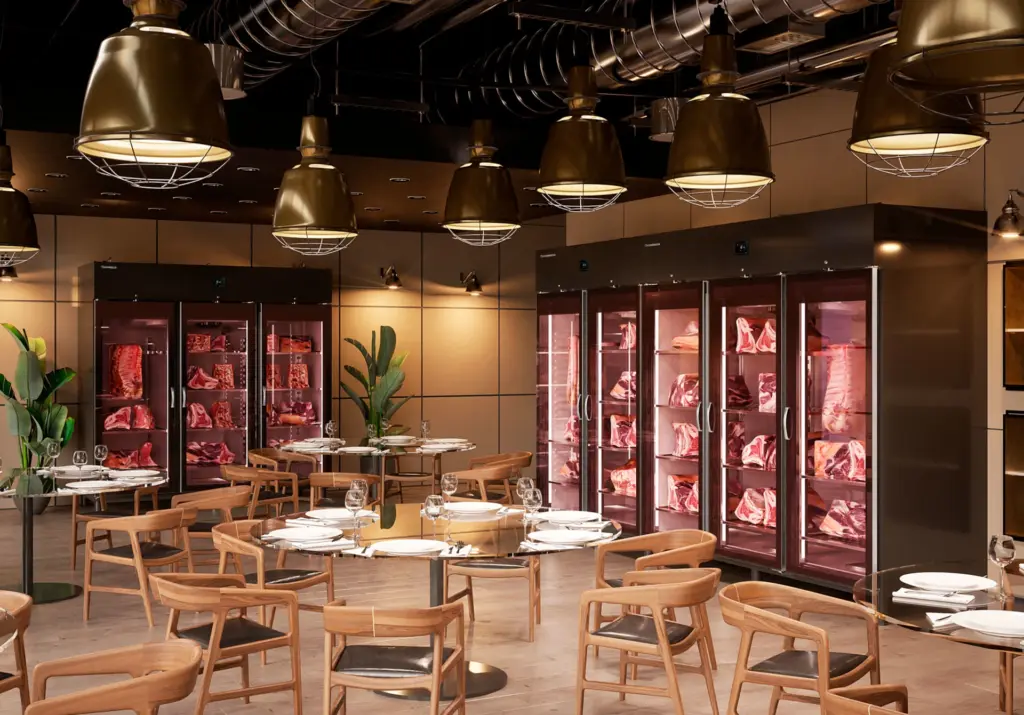
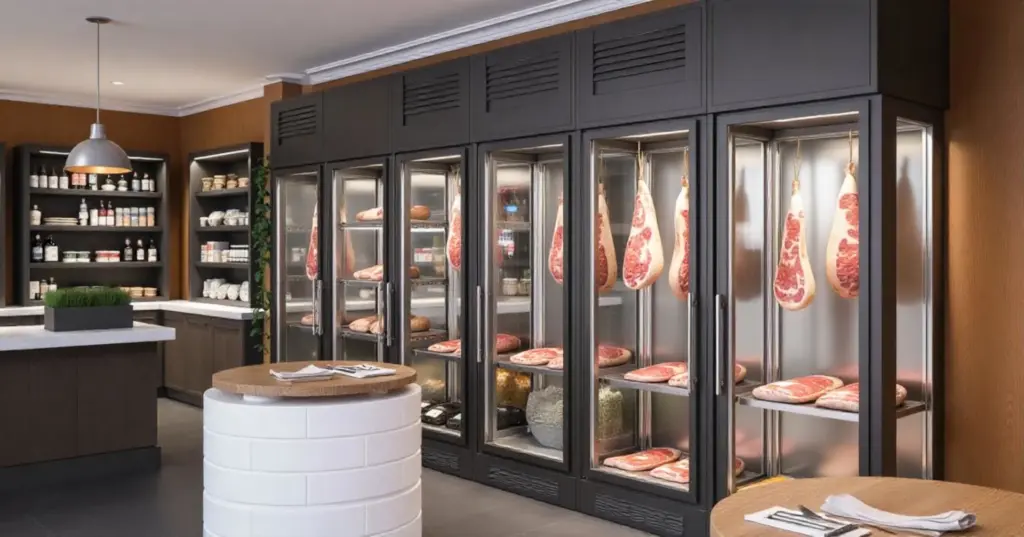
A visible wardrobe is not just an exhibition stand
In a restaurant, the wardrobe can have an important visual function. It can help explain the product, generate trust, and reinforce the perception of specialization.
But it's not worth reducing it to that.
A meat maturation cabinet has to work properly. Visibility counts when the process is well-planned. If there is no product criteria, rotation, cleaning, and monitoring, the visual part does not solve the problem.
| If the closet is in the living room | If the closet is in a technical area |
|---|---|
| It should be integrated into the customer experience | It should facilitate work, access and maintenance |
| The product presentation is gaining in importance | Internal operations are gaining in importance |
| Visible cleanliness is especially important | The organization of the process is a priority |
| It can help the room staff explain the letter | It can support cooking and preparation |
The decision is not better or worse in itself. It depends on the concept of the restaurant.
What Master Ageing Controller brings to a restaurant
In a restaurant, the Master Ageing Controller helps the maturation cabinet work with a more orderly control of the environment. Its value lies not in replacing the culinary judgment, but in facilitating temperature, humidity, air, and time to be part of a more stable and adjustable process.
For the distributor or installer, this point is useful when explaining that a restaurant maturation cabinet should not be chosen solely by its capacity or its presence in the room. It should also meet the level of control required to work with dry aged meat professionally.
What to check before choosing a maturation cabinet for a restaurant
1. Type of restaurant
The first criterion is the type of business.
A steak house, a gastronomic restaurant, a hotel or a butcher shop don't work the same way. Each one will have a different rotation, a different level of exposure and its own way of explaining the meat to the customer.
Before recommending a team, it is advisable to understand the concept of the restaurant.
2. Role of matured meat in the menu
Maturation must be linked to the gastronomic offer.
If the card revolves around the meat, the wardrobe will have a more strategic role. If the matured meat is a specific reference, a more tailored solution may be needed.
The useful question is not just “what size wardrobe fits”, but “what role the product will play”.
3. Planned rotation
Rotation influences the team's selection, the planning of purchases, and the way the product is handled.
It is worth reviewing:
- how many pieces are expected to mature;
- How often will they be replenished;
- what cuts will be made;
- there will be seasons with higher demand;
- if the equipment is intended for exhibition, processing or both functions.
It’s not about asking for a perfect forecast. It’s about avoiding a decision based solely on a visual idea.
4. Team location
Location conditions daily use.
It needs to be reviewed:
- access for loading and unloading;
- opening of doors;
- distance from the kitchen or living room;
- visibility for the customer;
- ease of cleaning;
- environmental conditions;
- Future maintenance.
For the installer, this point is especially important. A good choice of equipment can be affected by a location that is not practical.
5. Cleaning and maintenance routine
Cleaning should not be left for later.
During the maturing process, hygiene is part of the operations. The restaurant must provide for who cleans, when they clean, and how the equipment is inspected.
It is worth explaining this point from the very beginning, without sounding alarmist or blaming the customer. It simply forms part of professional work that has matured over time.
You can expand on this topic in the guide on cleaning a Dry Aged cabinet.
6. Team room and explanation to the customer
If the wardrobe is visible, the room staff must be able to explain the basics:
- what is matured meat;
- why it is in the closet;
- what the process brings;
- what a difference there is compared to meat that has simply been preserved;
- why the restaurant has added that product to the menu.
The wardrobe can help to better present the product, but it does not replace professional explanation.
If the customer needs an introductory base, they can consult the article about Meat maturation Dry Aged.
Common mistakes in restaurants
Choosing a wardrobe just because it looks good in the living room
Aesthetics matter, but they cannot be the sole criterion. The team must fit in with the process, the space, and the way of working.
Buying more capacity than necessary
An oversized wardrobe may seem like a prudent decision, but if rotation isn’t accompanied by proper organization, it can complicate operations.
Not coordinating kitchen, living room and installation
The project affects several areas. Cocina works with the product, Sala explains it, installation conditions the use, and direction defines the gastronomic proposal.
No provision for cleaning from the beginning
If the cleaning is not organized, the problem will appear later. It is advisable to discuss it before installation.
Promising results without knowing the product
Maturity depends on the meat, the process, the equipment, the handling and the operation. That is why it is advisable to avoid closed promises.
Key data before making a decision
Before recommending a maturation cabinet for a restaurant, it is advisable to ask the customer for this information:
| Data to be reviewed | Why it matters |
| Type of restaurant | Define the real role of matured meat |
| Planned letter | Helps to assess rotation and usage |
| Location of the closet | It affects the living room, kitchen, cleaning and maintenance |
| Visibility to the customer | It conditions design, presentation and explanation |
| Volume of parts | Orients the necessary capacity |
| Cleaning routine | Avoid subsequent operational problems |
| Previous experience | It allows you to adjust expectations |
| Installation available | Helps the installer to assess feasibility |
For distributors and installers
For a distributor, the key is not to sell the cabinet as a standalone piece. The value lies in coordinating the decision with the restaurant.
It is advisable to ask first:
- what the restaurant wants to achieve with the matured meat;
- whether the cabinet will have a visible or technical function;
- what rotation they expect;
- what pieces he will be working on;
- what space is available;
- who will manage the product;
- who will take care of the cleaning;
- What information do you need to compare with the technical data sheet or the manufacturer's support?.
For the installer, the most important points are usually in the real space: location, access, ventilation, maintenance, and conditions of use.
CORECO works through distributors and installers. In restaurant development projects, the professional channel helps to translate a culinary idea into a coherent technical solution.
You can consult the range of CORECO Gourmet meat maturation cabinets or expand criteria in the guide on Meat maturation cabinets and professional use.
Technical closure
One dry ageing cabinet for restaurants It must be chosen based on the reality of the business: letterhead, rotation, location, room, cleaning and maintenance. When these points are clear, the team ceases to be just a visible element and becomes part of a better-organized professional decision.
Meat maturation in restaurants can add value to the product and the customer experience, but only if it is done using a method, with control and technical expertise.




 Español
 English
 Français
 Deutsch
 Italiano