







Changes in Meat Maturation
Welcome to the Coreco blog. Today we’d like to give a brief overview of the history of meat aging. This article aims to provide a comprehensive look at the origins, evolution, and current techniques of aging, inviting you to discover how this ancient practice has become one of the most highly valued in today’s culinary world.
The Evolution of Meat Aging: The Tradition of Dry-Aging
In Europe, dry-aging beef has a long tradition, especially in countries such as Germany, where it is known as «Reifung» or «Trocknung.» In France, dry-aged beef is known as «viande maturée,» and in Italy as «carne stagionata.».
However, in the United States, dry-aging beef was developed in the early 20th century, first as a preservation method and later as a way to improve the quality and flavor of the meat. American butchers and chefs continue to experiment with different dry-aging techniques to achieve a meat with better organoleptic characteristics.
Dry-aged beef has become increasingly popular in recent decades. More and more restaurants and steakhouses are offering their customers various cuts aged between 30 and 240 days—or even longer.
People who enjoy this dish are turning to this type of meat more and more often, which has also led supermarkets and butcher shops to offer it as an option to buy and prepare at home.
The History of Dry-Aged Beef
The aging of beef is not a modern practice, as it might seem. It was already being done in the Middle Ages to improve tenderness and flavor. In the 19th century, French chefs and gourmets such as Antonin Carême practiced dry aging, known as “mortification,» leaving the meat at room temperature for days or weeks until the surface spoiled. Carême recommended keeping it “as far away as possible” (McGee, 2007).
In the late 19th century, Charles Tellier developed refrigerated storage units. He installed them on a ship and transported beef from Rouen to Buenos Aires, keeping it at temperatures between -2 and 0 °C for 105 days. The meat arrived in perfect condition, marking a milestone in beef aging.
About 50 years ago, dry curing was replaced by vacuum packaging because of its efficiency in processing and storage (Dashdorj et al. 2016). However, it fell out of use in the 1960s and was revived in the 1990s.
According to Richard H. Turner in his 2017 book *«Top-Quality Meat»*» He considers the aging process of meat to be essential for improving its quality and flavor. He also explains that meat from calves with more developed muscle mass is more tender than that of ordinary calves, even with shorter aging periods.
In his book, Turner also criticizes intensive livestock farming, arguing that it results in meat with less flavor, even though many ranchers are forced to resort to this type of production.
Technological Advances in Ripening
In recent decades, advances have been made in refrigeration technology to help ensure that the rigorous aging process is safe and stable enough to create suitable aging conditions. Temperature, humidity, and airflow must be monitored and controlled at specific levels so that the meat can be processed. With dry-aging chambers, restaurants, stores, and butcher shops can age beef safely and naturally.
Coreco's Contribution to Meat Aging in Refrigerators
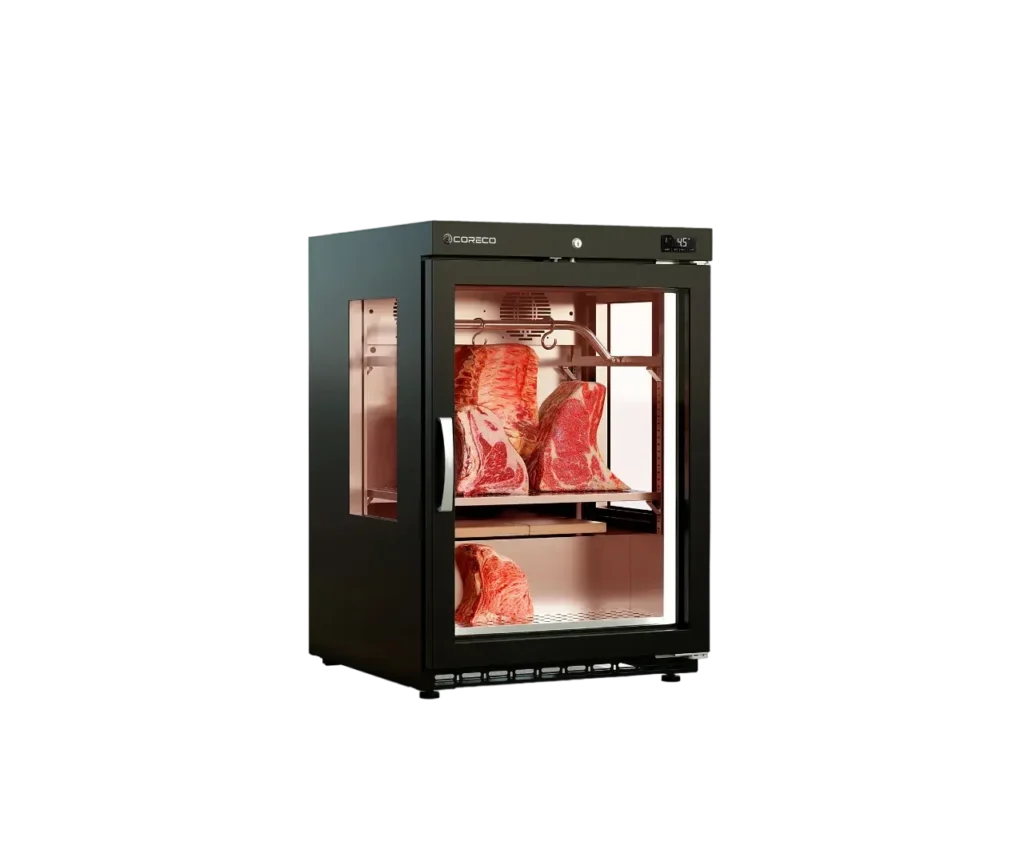
Coreco has developed and patented the ‘Master Ageing Controller,’ an advanced system that ensures precise control of all critical parameters during the meat aging process.
This device allows for more precise monitoring of temperature, humidity, and airflow, ensuring an optimal environment for aging. Thanks to this technology, moisture loss is reduced, tenderness is improved, and flavors are enhanced, enabling meat professionals to offer high-quality products to their customers.
If you need more information or would like to learn more, please feel free to contact us by following this link, and we'll be happy to assist you and answer any questions you may have.
Aging as a Preservation Technique
Aging is the controlled breakdown of meat, which is used as another method of preserving it. Without refrigeration, hunters and farmers stored cuts of meat in cold, dark cellars or caves, where mold, microbes, and enzymes tenderized and preserved the meat.
Undoubtedly, one advantage of the preservation process was that the meat tended to become more flavorful and tender as it aged. Like cheese, the earliest aged meats were naturally inoculated with strains of Penicillium mold and other microbes that create the umami flavor so highly prized today.
Impairment Management
The aging process begins the moment an animal dies. Enzymes in the muscle tissue begin to break down long chains of glucose molecules called glycogen. Enzymatic digestion produces lactic acid within the muscle, which maintains a low pH level that is inhospitable to harmful bacteria and microbes.
However, when an animal becomes stressed just before death, its body uses up the excess glycogen stored in its muscles. This leaves nothing for enzymes to break down, creating an environment within the tissue that could allow bacteria to grow.
Rigor mortis sets in between one and four hours after death, depending on the animal's size. Hanging an animal before rigor mortis sets in allows the muscles to remain stretched out rather than bunching up into a tight ball that will be difficult to cut and unpleasant to eat.
Approximately 48 hours after the onset of rigor, enzymes called calpain and cathepsins begin to break down the proteins that bind muscle filaments and break down connective tissues, thereby ending the rigor.
The Science of Flavor and Tenderness
As the aging process progresses, enzymes inside the muscles create molecules that enhance the flavor and tenderness of the meat. Proteins break down into amino acids, such as glutamate (also found in monosodium glutamate), which we perceive as savory or umami.
Glycogen breaks down into glucose molecules, which are the sugars that create the caramelized browning on seared meat—also known as the Maillard reaction. Fats are converted into aromatic fatty acids.
The length of time a cut of meat can be aged depends on the type and amount of fat present in the animal. More fat allows for a longer aging period due to the slow loss of moisture and a more substantial protective barrier around the meat.
Minimizing exposure to oxygen and light is key to preventing fat from becoming rancid, especially in animals with unsaturated fat, such as pigs and fish.
Healthy Aging
During the dry-aging process, humidity, temperature, and air circulation can be critical to the final product. It is important to leave enough space between the pieces to allow for the necessary air circulation.
The ideal environment for dry aging is a temperature between 1.5° and 3°C and a humidity level of 50 % to 60 %. Ideally, the meat should have a thin outer crust that protects it and allows for continued enzymatic activity while letting water escape. This, in turn, concentrates the flavors in the meat and reduces the risk of bacterial overgrowth.
Aging Technologyin the refrigerator
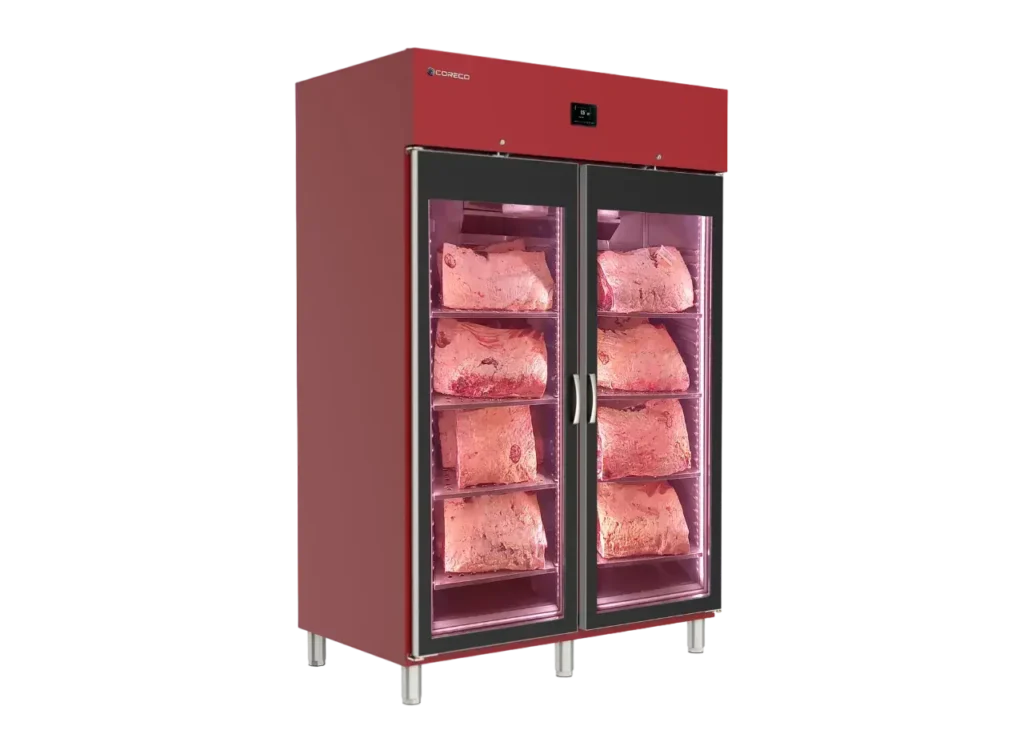
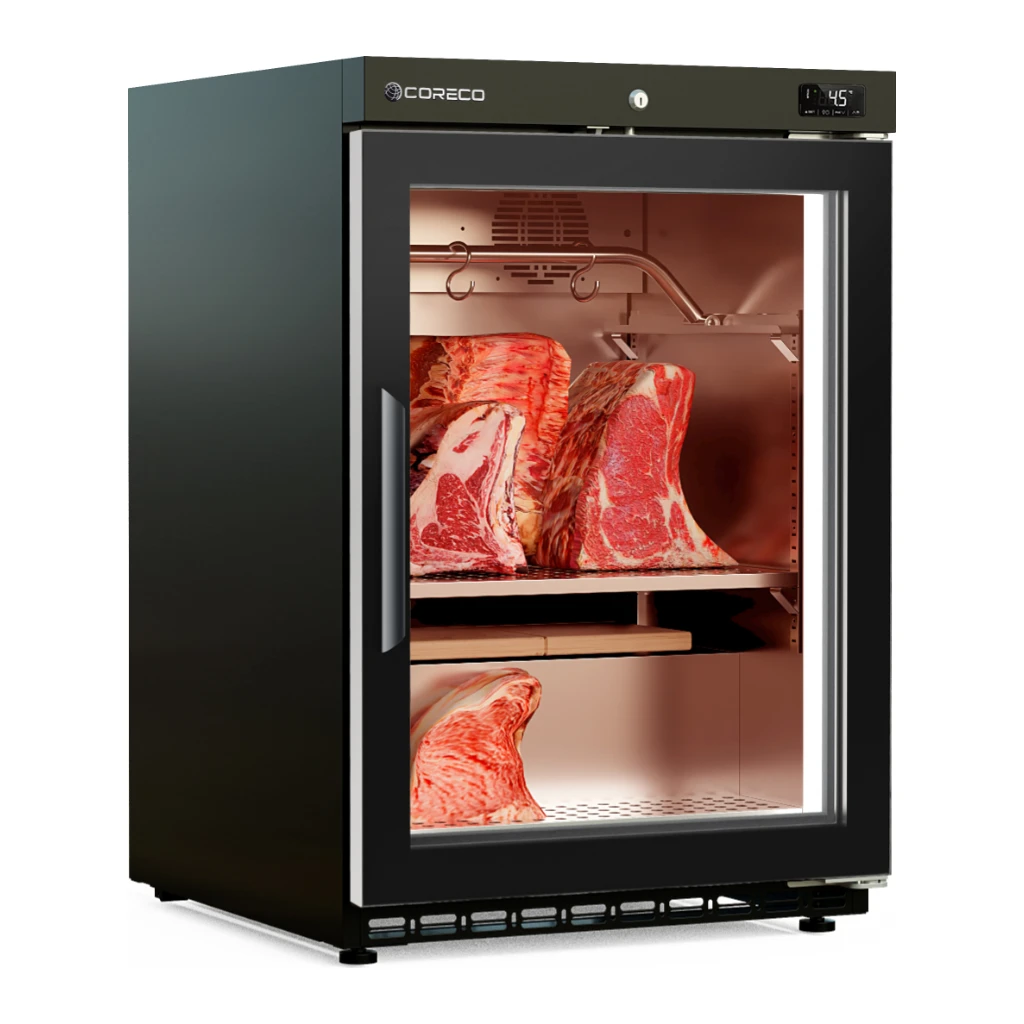
Currently, this process is most commonly carried out in a meat aging cabinet. The process is very simple: the meat is left to rest inside the cabinet, where it is exposed to a constant flow of air, humidity, and temperature, creating a controlled environment that prevents the growth of mold and bacteria.
Proper aging draws moisture out of the meat and allows molds such as Penicillium to grow. Penicillium molds are the basis for antibiotics, which means that a layer of spores on the meat not only adds flavor but also protects against harmful bacteria.
To Grow Old or Not to Grow Old
So why do we pay so much for one of the oldest foods known to humankind? Dry-aging meat is a process that requires a great deal of care and attention to detail for those who want to do it right—and it also takes time.
Perfectly aged cuts of meat begin with proper cutting and chilling from the moment the animal is slaughtered. A poorly cut carcass or a poorly managed refrigeration system can ruin the aging potential of even the most perfectly marbled beef.
Aged meat also loses weight as it ages, meaning that the cost of that steak is concentrated into an increasingly smaller package the longer it spends in the refrigerator. These labor-intensive and carefully controlled processes undoubtedly produce meat that is more flavorful, tender, and valuable than unaged meat.
Cultural and Culinary Evolution meat aging
Meat aging has not only been a technical process but also a cultural phenomenon. In ancient times, aged meat was considered a luxury reserved for the upper classes due to the complexity and time required for its preparation. Over time, this technique has been adopted and refined by various cultures, each adding its own unique touch.
Today, dry-aged meat has become a key element in haute cuisine menus, reflecting a growing appreciation for the complex flavors and textures that can only be achieved through this process.
Impact on Modern Gastronomy
Today, many nationally and internationally renowned chefs at high-end restaurants incorporate dry-aged meat into their menus. This process, as we have seen, not only enhances the meat’s flavor but also allows chefs to experiment with new flavor combinations and preparation techniques.
The dry-aging process is the preferred method when it comes to meat, as are the various degrees of doneness, and this is increasingly encouraging all kinds of restaurants to purchase aging cabinets.
The improved texture and richer flavors make dry-aged beef an attractive option for both seasoned diners and those seeking an exceptional culinary experience. Restaurants that offer dry-aged beef often highlight it on their menus to emphasize the unique characteristics this premium meat acquires.
Scientific and Technological Aspects
Technology has played a very important role in the evolution of meat aging. Advances in the regulation of temperature, humidity, and airflow have enabled precise control of the process, improving both the safety and quality of the final product.
Coreco's ‘Master Ageing Controller’ is an example of how technological innovation can optimize every stage of the meat aging process, ensuring consistent, high-quality results.
Frequently Asked Questions About the Maturation Process of Meat
Dry-aging meat dates back hundreds of years. In those days, cuts of meat were hung in cool, dark places to preserve them and enhance their flavor and tenderness. This technique, known as «hanging» the meat, was the precursor to modern dry-aging.
With advances in vacuum-packing technology in the 1960s, wet aging replaced dry aging. This method was faster and more cost-effective because it allowed for greater water retention, although it did not offer the same depth of flavor and tenderness as dry aging.
Before the invention of refrigeration, meat aging faced significant challenges due to unstable temperatures, which could lead to contamination by dangerous bacteria. Meat was stored in cellars or caves, which did not always guarantee a safe and controlled environment.
With the invention of refrigeration and advances in temperature, humidity, and airflow control technology, meat aging has evolved significantly. Today, dry-aging cabinets allow restaurants, butcher shops, and specialty stores to age meat safely and under controlled conditions.
Dry-aging involves hanging the meat in a controlled environment, which allows the flavors to intensify and the texture to become more tender.
On the other hand, wet aging involves vacuum-sealing the meat, which retains moisture but does not provide the same depth of flavor or tenderness as dry aging.
Meat aging improves the tenderness and flavor of the final product. In addition, Coreco’s ‘Master Aging Controller’ technology ensures precise control of essential parameters, resulting in high-quality meat that meets the expectations of even the most discerning consumers.
Dry-aged meat offers unmatched flavor and texture—qualities that are highly valued by chefs and meat enthusiasts. In addition, the artisanal process and the time invested in dry aging add premium value to the product, making it highly sought after in restaurants and specialty stores.
Coreco Gourmet: Solutions for Proper Meat Aging
If you would like more information about our advanced meat aging solutions and how they can improve the quality of your products, download our catalog and discover everything Coreco can offer you. You can also contact our sales team for personalized advice.
We hope this article has provided you with a detailed and useful overview of the process and stages of meat aging, as well as the benefits of using our specialized cabinets.
At Coreco, we are committed to quality and innovation, and we would be delighted to be your trusted partner. Thank you for joining us today, and we look forward to seeing you in our future posts.
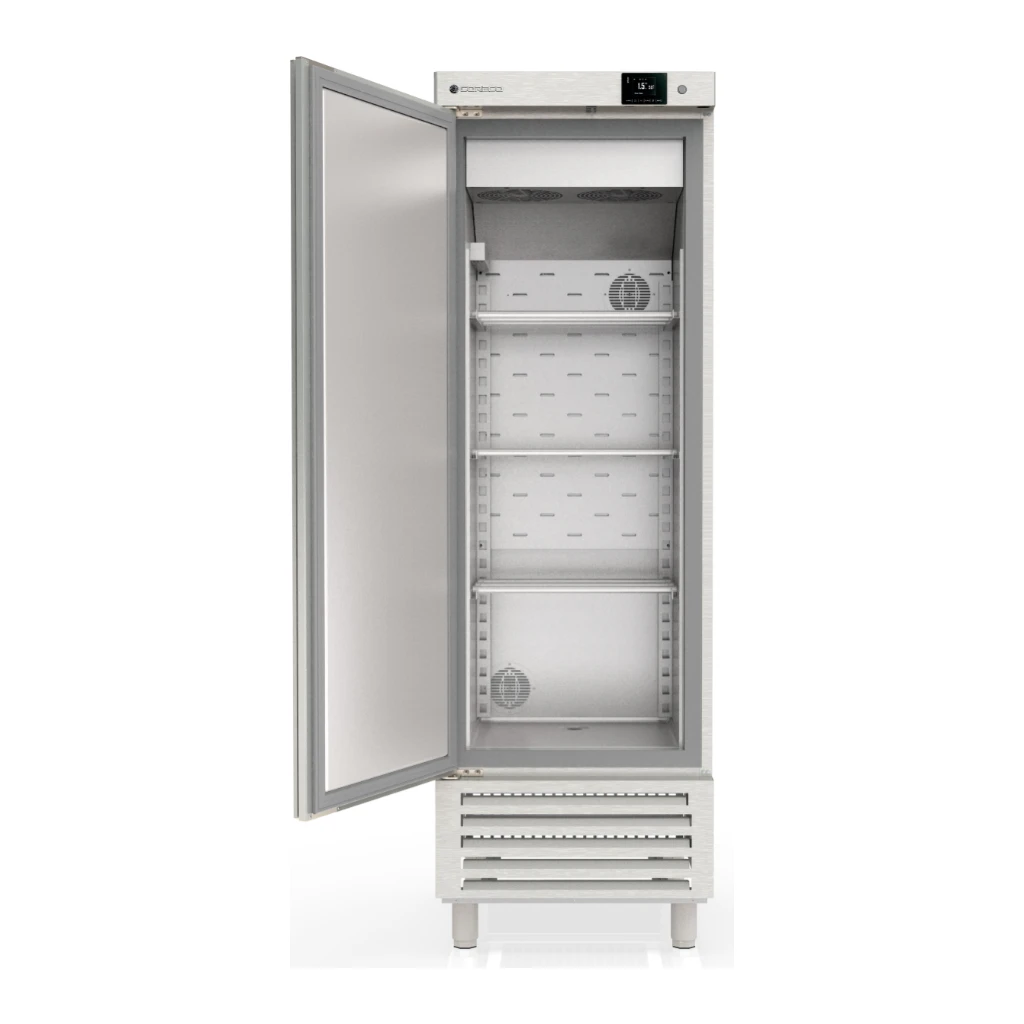
The aging cabinets from the Manufacturer Coreco incorporate these technological advances.
Check out the line of meat aging cabinets.




 Español
 English
 Français
 Deutsch
 Italiano