







The Profitability of Professional Refrigeration in the HORECA Sector It doesn't depend solely on the price of the equipment. In practice, factors such as continuous operation, thermal stability, reduced energy losses, and reliability over the years all play a role. When refrigeration systems operate 24/7, even small technical decisions end up having a sustained economic impact.
In our experience as a professional refrigeration manufacturer that works with distributors and installers, it’s often the case that the cooling system is decided on at the end of the project. And yet, it’s one of the few systems that never shuts off.
Professional Refrigeration and Profitability in 5 Points
- Professional refrigeration is a continuous fixed cost, not a one-time expense.
- Energy consumption is concentrated over the long term and depends on the design, not just the compressor.
- One stable temperature reduces waste and protects the business's profit margin.
- The total cost of ownership is usually more important than the purchase price.
- To make the right decision, you need to discuss actual usage with the distributor—not just the technical specifications.
¿Why This Issue Matters Now?
There are three practical reasons why it's a good idea to examine how cold weather affects profitability:
- More expensive and volatile energy. Continuous consumption amplifies any inefficiencies.
- More streamlined HORECA models. Less leeway to absorb losses and downtime.
- Greater operational demands. Long shifts, high turnover, and peak workloads.
According to recent studies, refrigeration equipment can account for nearly one-third of energy consumption in a professional kitchen, which helps explain why cold storage has such a significant impact on the business's annual bottom line.
Cold as an invisible fixed cost
Professional refrigeration systems do not “come online”: is always on duty. This changes the way we assess its economic impact. When analyzing Cold as a fixed cost that operates 24/7, it becomes clear why even small inefficiencies have a lasting economic impact. (cluster1)
What makes up that fixed cost:
- Continuous electricity consumption, even during off-peak hours.
- Extra effort due to poor ventilation or location.
- Increased fuel consumption due to dirt or wear and tear.
- Unplanned downtime and associated losses.
A unit can function properly and still consume more energy than necessary. In older or poorly maintained units, various industry sources report increases in energy consumption of up to 40% compared to current models. Source: Jumafri's industry analysis.
How to explain it to the customer in one sentence:
If the equipment runs year-round, what matters isn't how much it costs to buy, but how much it costs to keep it running.
Energy consumption and design matter more than they seem
Not all energy consumption depends on the energy label. The overall design determines actual spending:
- Insulation and panel quality.
- Condenser ventilation.
- Adjustment based on the actual product load.
- Frequency of openings and internal organization.
In studies on the return on investment for cold storage facilities, emphasis is placed on analyzing the Annual kWh and not just the rated power. ROI calculation guides, such as those from Linble Coldroom, show that sustained energy savings are one of the main factors contributing to a return on investment.
Diagnostic questions
- Is the camera designed for peak loads or for average use?
- Is there actually enough space to ventilate the equipment?
- Are hot products routinely introduced?
Thermal stability, shrinkage, and margin
Profitability isn't just lost on the electric bill. It's also eroded by avoidable losses. This effect explains the relationship between thermal stability, shrinkage, and margin which many businesses only notice once the product has already been lost. (cluster 2)
Unstable temperature:
- It accelerates the product's deterioration.
- It shortens the service life.
- It forces you to rule out a gender too early.
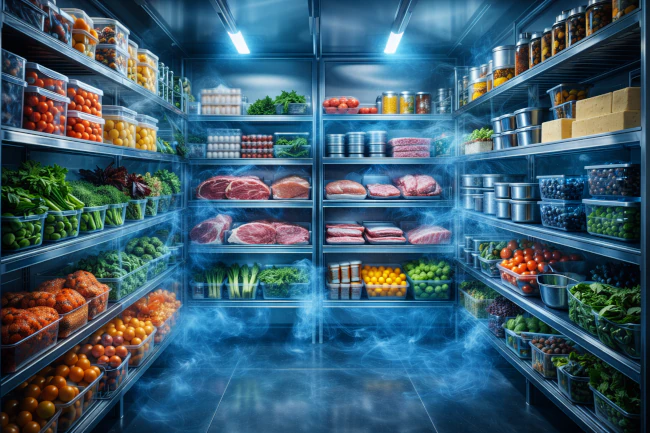
Technical guides on ROI in refrigeration indicate reductions in spoilage ranging from 10–30%, depending on the product, when thermal stability and organization are improved.
This is not a universal figure. It depends on the product, the flow, and the control. That is why it should be treated as a general guideline rather than a specific figure.
It is reasonable to assume that the reduction in shrinkage will be greater in businesses with high turnover of fresh produce and inadequate prior control.
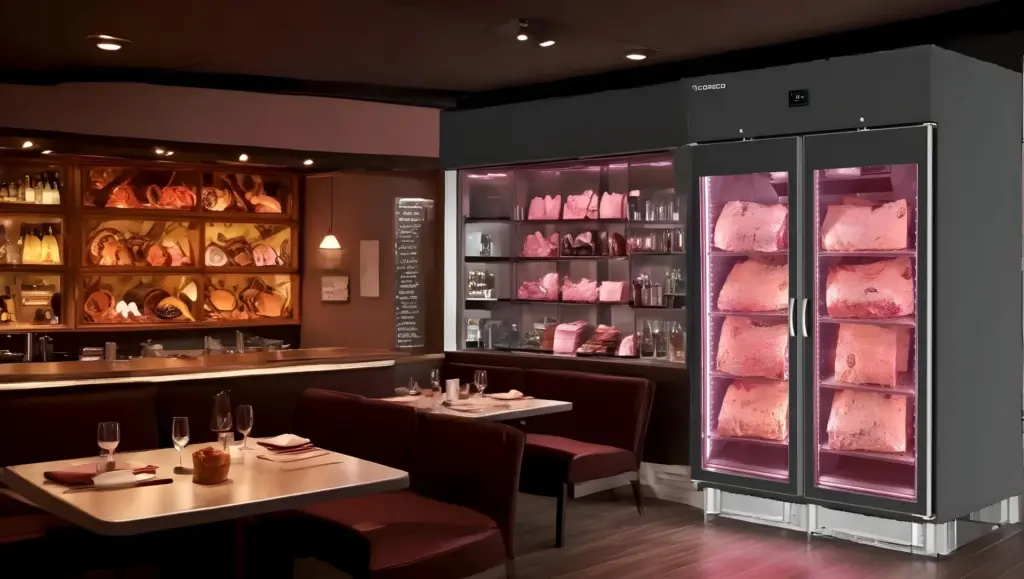
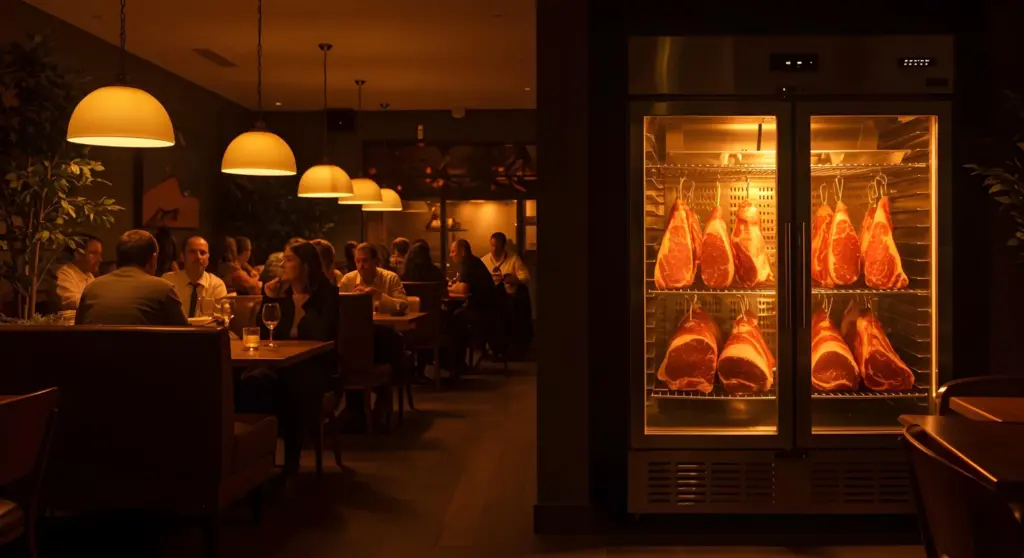
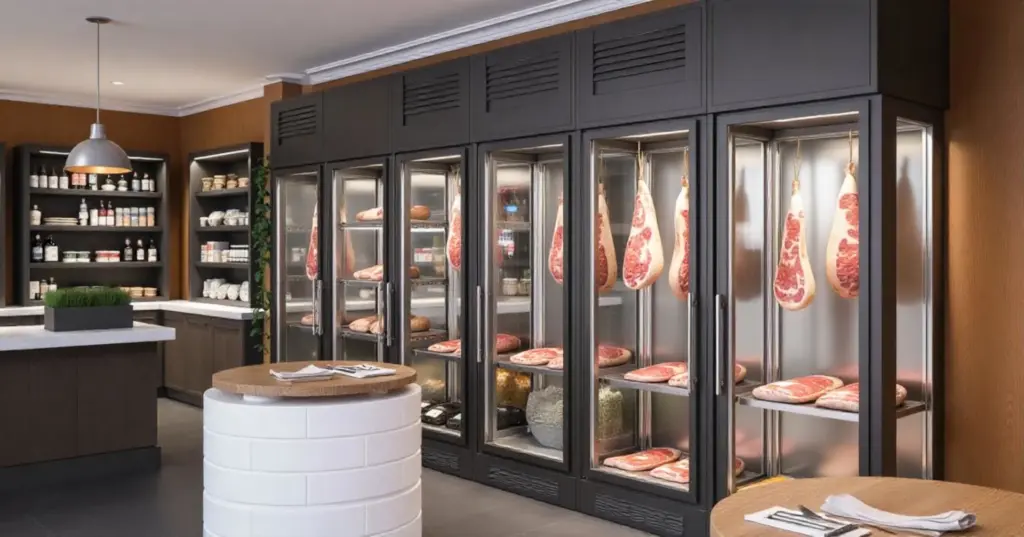
For example, in the case of our Master Ageing Controller: that loss in aged meats is above 10%, as we explain in this article.
In businesses with high turnover of fresh produce and a disorganized starting point, The combination of efficient professional refrigeration and strict waste control turns every euro invested in cooling into several euros of added profit each yearo.
Purchase Price vs. Total Cost of Ownership
One of the common misunderstandings is to equate price with cost. That is why it is worth analyzing The total cost of ownership in commercial refrigeration, and not to limit the decision to the initial budget (cluster 3).
In commercial refrigeration, the total cost of ownership includes:
| Element | Impact |
| Initial Purchase | Punctual |
| Energy | Recurring |
| Maintenance | Recurring |
| Malfunctions | Variable |
| Service life | Strategic |
Electrolux Professional insists on evaluating the total cost of ownership and not just the purchase price, because energy-efficient equipment reduces cumulative costs over its useful life.
What to ask for so as not to make a decision blindly
- Estimated annual consumption under actual conditions.
- Maintenance Requirements.
- Accessibility to components.
- Expected service life.
Internal Organization and Day-to-Day Operations
How cold is used also affects profitability:
- Overloading causes the compressor to run longer.
- Poor internal organization hinders heat recovery.
- Worn-out seals can increase fuel consumption by up to 10%. Source: Jumafri.
It's not just a matter of equipment, but of Use and Maintenance. That is why many distributors include operating instructions when they deliver the installation.
What Changes for the HORECA Sector in Practice
- Cold should be analyzed as critical infrastructure, not as an accessory.
- Consumption is assessed in years, not in weeks.
- Stability protects both the product and the income statement.
- ROI depends on a combination of energy, losses, and service life.
- The conversation should include real-world use, not just catalog information.
- The distributor transitions from supplier to technical advisor.
- The right decision is usually the one that prevents future problems.
Frequently asked questions
Yes, because it's one of the few systems that operates continuously. Its impact builds up month after month.
Not always. It depends on whether it is suitable for its intended use and on how well it is maintained afterward.
There are methodologies that combine energy savings, waste reduction, and operational efficiency. The results vary depending on the project.
Oversize or undersize the system and do not provide for ventilation or maintenance access.
It helps, but it does not replace a comprehensive analysis and daily use.
When wear and tear, breakdowns, or losses exceed the cost of a planned renovation.
The distributor or installer who knows the customer's actual usage.
It depends on the workflow and the available space. There is no single answer.
A Brief Glossary
- Total cost of ownership: total cost of purchase, energy, maintenance, and useful life.
- Merma: loss of product due to spoilage or expiration.
- Thermal stability: ability to maintain a constant temperature.
- kWh/year: Estimated annual energy consumption.
- ROI: return on investment over time.
- Thermal load: heat that the system must remove under actual operating conditions.
Profitability in Professional HORECA Refrigeration. Recommendation
The Profitability of Professional Refrigeration in the HORECA Sector It is built on consistent technical decisions and an honest discussion about actual usage. To get it right, we recommend reviewing the project with your regular distributor or installer, analyzing consumption, waste, and maintenance from the very beginning.
In the HORECA sector, the real cost isn't the equipment you invest in today, but the one that takes a toll on your budget every month for ten years.




 Español
 English
 Français
 Deutsch
 Italiano