







The professional refrigeration for artisan workshops It is changing because many bakery, pastry and café businesses no longer operate on a single selling moment. Today they coexist with breakfast, brunch, snacking, take-out products, display cases and pre-production.
This forces us to look at refrigeration in a different way.
Cold is no longer just a camera at the back of the store. It also organizes the work, maintains the stock, helps to preserve the product better, and is part of how the customer perceives the product.
Direct answer
The professional refrigeration for artisan workshops It should be chosen based on the actual use of the business: what is produced, when it is served, what is displayed, what is restocked and where the markdown appears. In bakery, pastry, brunch and snacking, the decision should not be based solely on capacity or measures, but on workflow, batch rotation, visible exposure and ease of replenishment.
The essentials in 30 seconds
- Brunch and snacking multiply the moments of consumption in bakeries, pastry shops and cafes.
- The workshop no longer just produces: it also conserves, exhibits, repairs, and adapts products by size range.
- The cold must be separated by function: production, storage, display, and support for service.
- A bad choice can lead to loss of efficiency, chaos, slow replacements, and more door openings.
- The distributor gains value when they help design the cold map, not just choosing a reference.
Who is this article for
This article is intended for:
- HORECA distributors;
- professional refrigeration installers;
- technical personnel;
- bakery-confectionery;
- workers;
- cafeterias with brunch;
- sweet or savory snack businesses;
- professionals who work on projects related to CORECO Artisan.
The goal is not to present a specific machine. It is to order the criteria that are worth reviewing before recommending, installing, or choosing a cooling solution.
Why professional cold is important for workers now
For years, many workers worked with a simpler sequence: produce, preserve, sell, and produce again.
Today the pattern is different.
A bakery-confectionery can sell coffee in the morning, pastries in the middle of the day, savory products at noon, custom-made cakes, cold drinks, take-out items, and a brunch offer on weekends.
That change seems commercial, but it has a clear technical consequence: the cold map becomes more demanding.
In practice, there are more references, more rotation, more product on display and more partial replacements during the day. There is also an increased need to maintain good hygiene without losing agility in service.
Therefore, the professional refrigeration for artisan workshops It should be understood as part of the daily operation, not as a separate equipment decision.
What is professional cold for tradespeople
The professional refrigeration for artisan workshops It is the set of refrigeration equipment that helps preserve, prepare, organize, display and replenish product in bakeries, pastry shops, confectioneries, cafes and HORECA businesses with in-house or semi-in-house production.
It can include, according to the project:
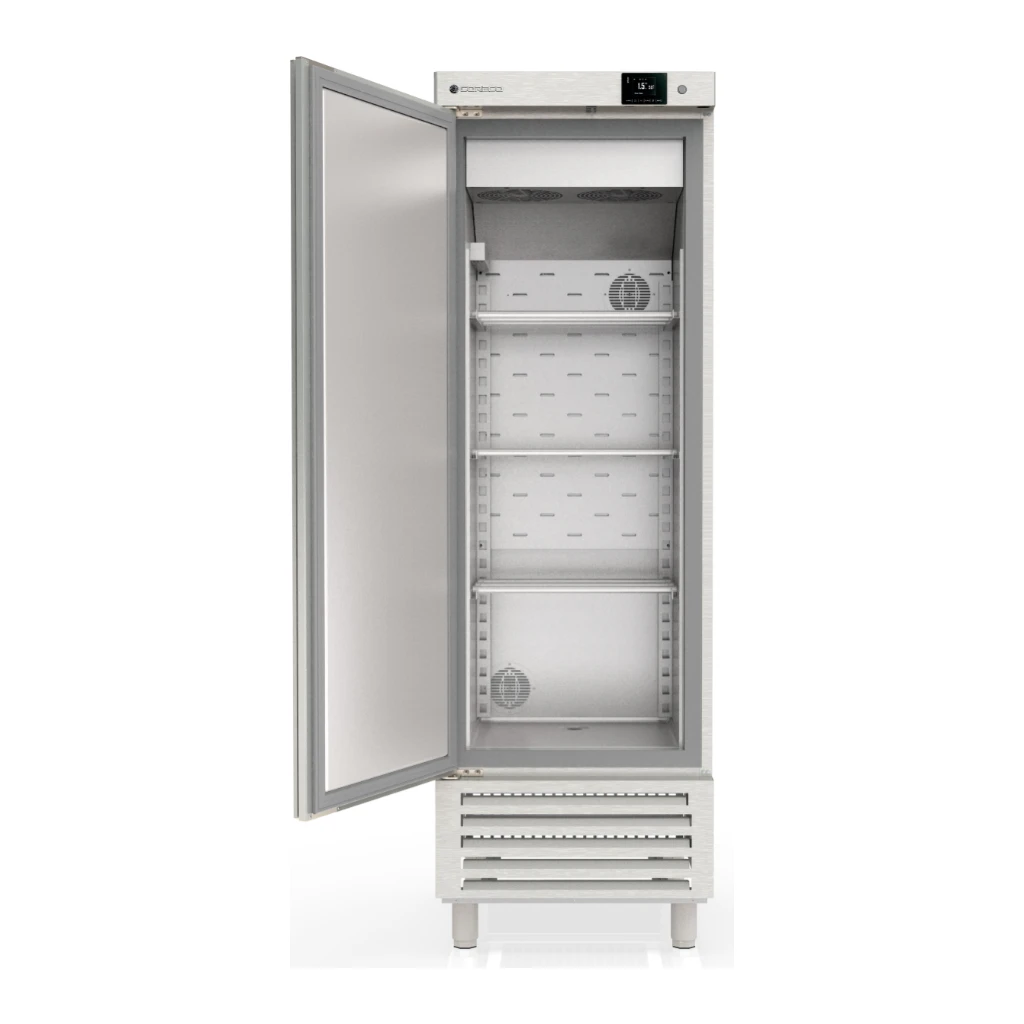
- refrigerated cabinets;
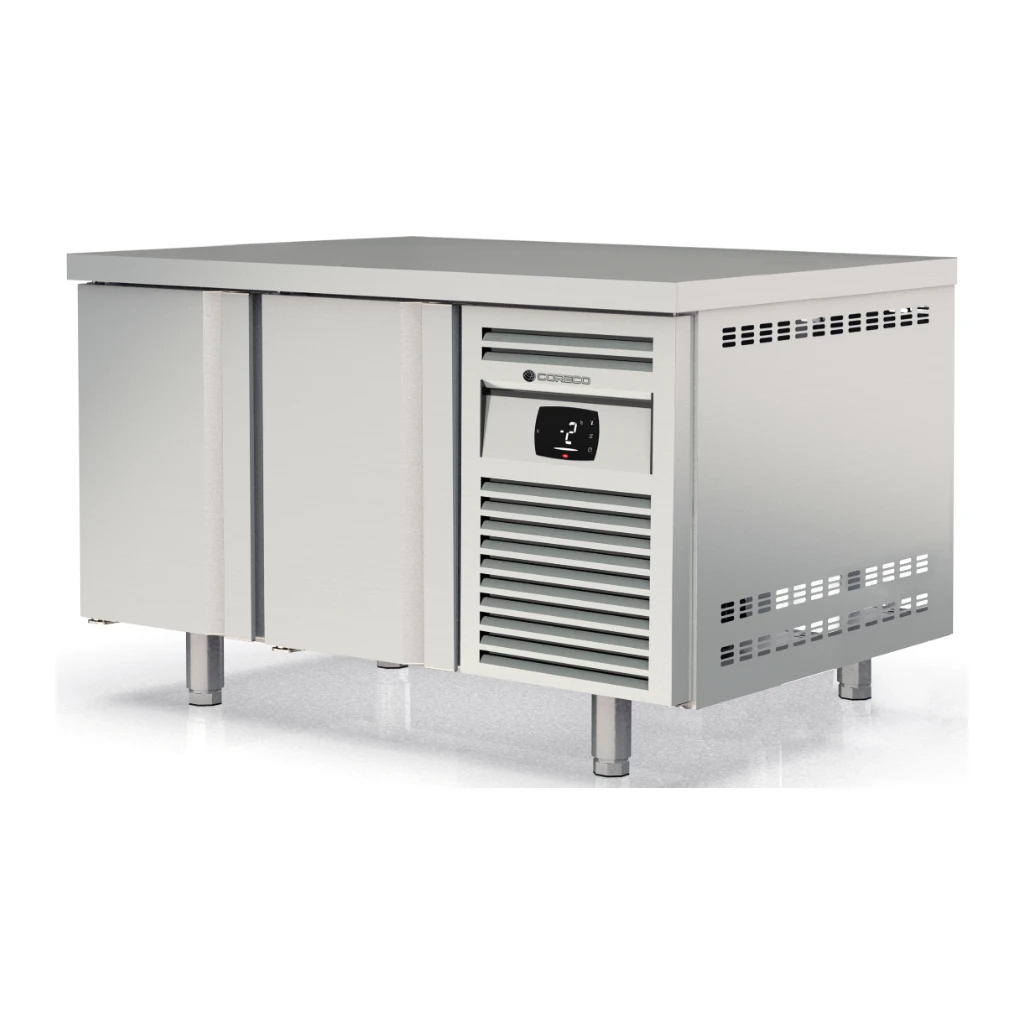
- refrigerated tables;
- cameras;
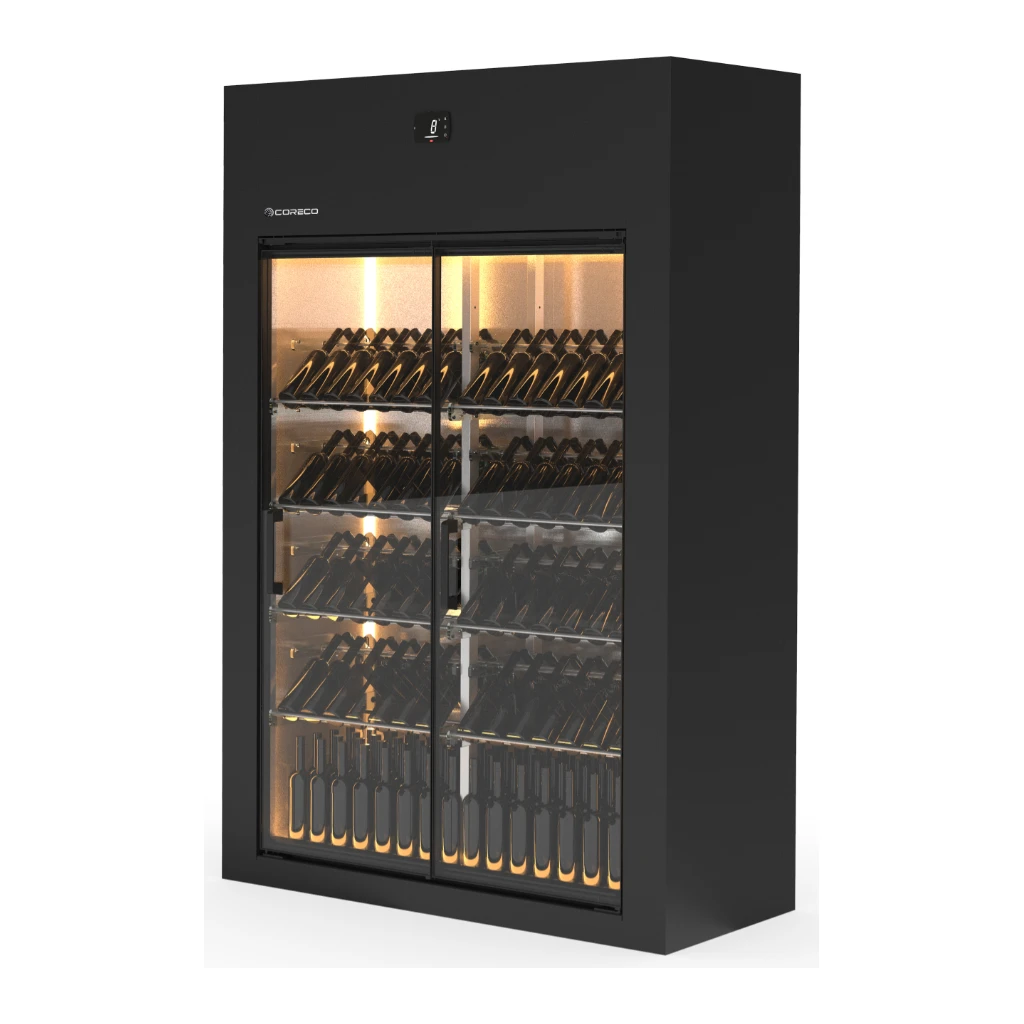
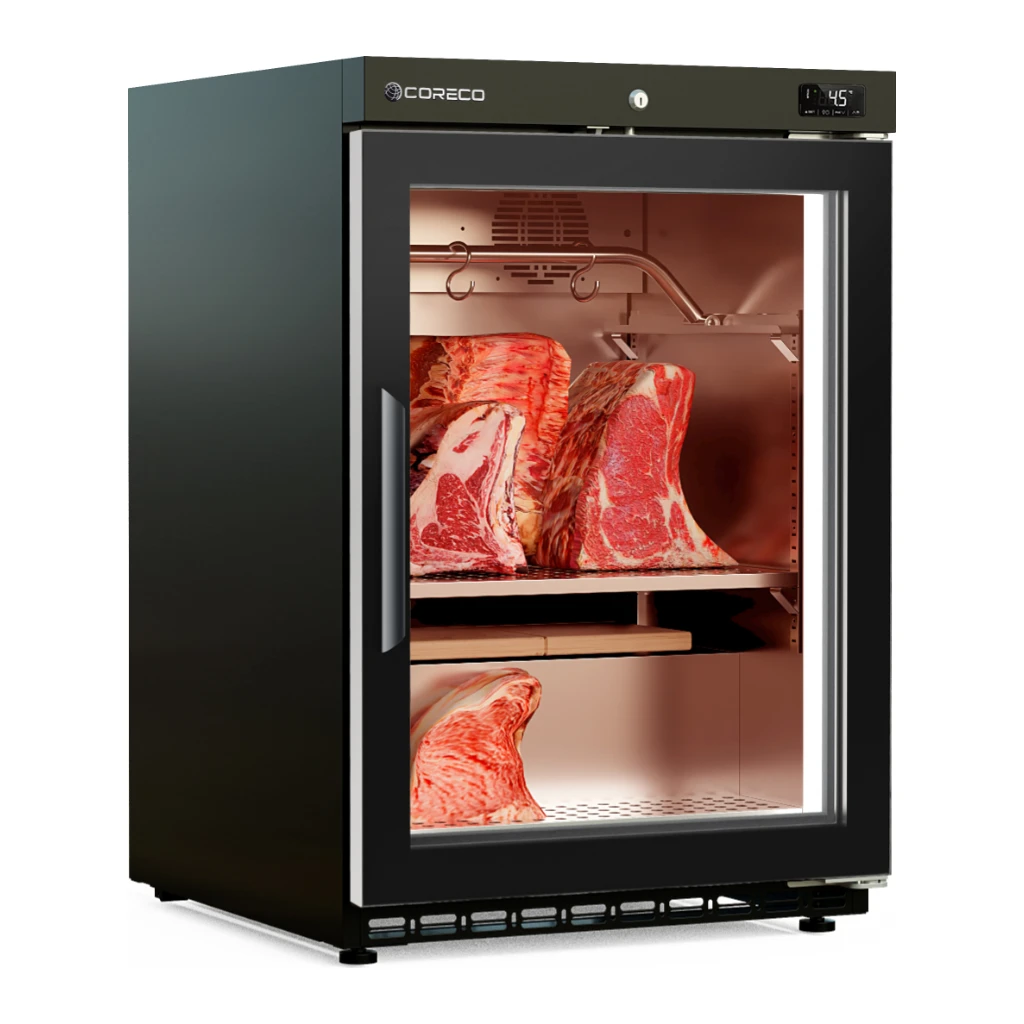
- refrigerated showcases;
- freezers;
- fermenters;
- car cabinets;
- Support teams for finished or semi-finished products.
The key is not in having more teams. The key is for each team to have a clear role within the actual flow of the business.
What changes with brunch, snacking, and take-out products
Brunch and snacking change the shop because they extend the useful sales hours and mix products with different needs.
It’s no longer just about preserving raw material or finished products. It’s about preparing, maintaining, displaying, and replenishing them without disrupting the work flow.
More moments of consumption
Before there could be clear peaks: tomorrow and in the afternoon.
Now more stripes may appear:
- breakfast;
- in the middle of the morning;
- brunch;
- light lunch;
- snack;
- take-out sales;
- custom orders.
Each segment has different products, rhythms, and replenishment needs.
More visible product
In pastry shops, brunch and snacking, an important part of the buying decision happens in front of the display case.
The customer sees the product; they interpret freshness, order, cleanliness and availability. Therefore, refrigerated display is not just presentation; it is also visible preservation.
More product mix
In the same business they can coexist:
- fresh pastry;
- bakeries;
- cakes;
- salted snacks;
- sandwiches;
- drinks;
- semi-processed products;
- masses;
- prepared ingredients;
- frozen product.
Not everything should be kept the same. Not everything should be exposed the same way. Not everything should be restored at the same pace.
More pressure on the decline
The more moments of consumption there are, the more difficult it is to adjust production and exposure.
If too much is produced, there is excess product. If too little is produced, sales are lost. If it is displayed poorly, it deteriorates sooner. If it is returned late, the display loses its commercial appeal.
Cold does not by itself solve planning, but it helps to maintain it.
Real impact in operation
When the cold is designed well, the workshop works more orderly.
When it is designed poorly, problems appear in small signs:
- doors that constantly open;
- product that moves from one team to another;
- saturated or empty showcases;
- slow replenishments;
- cameras used as a disorderly storage room;
- sweet and salty products that are not well separated;
- complicated cleaning;
- teams that work under pressure;
- more dwindle at the end of the day.
The impact is not only technical; it is also economic and operational.
We have already discussed this logic in the article about refrigeration as an invisible fixed cost in HORECA. In a workshop, that cost is felt in energy, labor time, product losses, and the continuity of service.
Diagnostic questions before recommending a solution
Before talking about measures or references, it is advisable to understand how the business works.
These questions help the distributor and installer not to make a decision blindly:
- Does the workshop produce for direct sale, in-house service, delivery, or all of the above?
- Which products need positive refrigeration?
- Which products need freezing?
- Is there controlled fermentation?
- Which part of the product is displayed in the showcase?
- What part remains for conservation for future use?
- How many replacements are made per day?
- What are the best-selling segments?
- Is there a mix of sweet, salty and drinks?
- Who cleans the equipment and how often?
- Is there enough space for ventilation and maintenance?
- Does the customer see the equipment or are they just in the work area?
These questions do not complicate the sale. They are simply ordered.
What you need to know before deciding
Before defining the professional refrigeration for artisan workshops, It is advisable to gather a minimum amount of information.
| Required information | Why it matters |
|---|---|
| Product type | Not all products have the same need for preservation |
| Production schedules | Determines when it is charged, cooled, and replenished |
| Sales lines | Helps predict opening and replenishment peaks |
| Product displayed | It conditions the display cases, lighting, access, and cleaning |
| Product in stock | Define cabinets, tables or support chambers |
| Available space | It affects installation, ventilation and maintainability |
| Cleaning routine | It affects access, joints, shelves and everyday use |
| Predicted growth | Avoid solutions that become too short too soon |
This preliminary work is similar to what we apply when we talk about professional refrigeration by HORECA business modelFirst, the actual use is understood; then the equipment is chosen.
Four functions of cold in a modern bakery
In a café with brunch or snacks, the cold usually serves four functions. Separating them helps you decide better.
1. Cold storage
It is the cold that preserves raw materials, semi-processed products or basic products.
It must answer to:
- volume of purchase;
- frequency of replacement;
- rotation;
- separation of families;
- access for staff;
- internal order.
Cameras, refrigerated cabinets or freezers are usually installed here, depending on the type of product and the size of the project.
2. Cold production
It is the cold that supports the daily work of the workshop.
It can be located near the processing area and must facilitate quick access to ingredients, bases or intermediate preparations.
In many cases, refrigerated counters are helpful because they combine a working surface and close storage. They do not replace primary storage, but they reduce unnecessary trips and openings.
3. Cold exposure
It is the cold that the customer sees.
In pastry, brunch and snacking, the showcase serves a dual function: it conserves and presents. That is why it should not be chosen solely for aesthetics.
It should be evaluated:
- stability;
- visibility;
- lighting;
- ease of loading;
- replenishment;
- cleaning;
- integration into space.
A well-designed display helps to sell better. A poorly sized display can lead to excess product being displayed or a poor reading of the offer.
4. Cold replacement
It is the cold that allows you to have product ready to be taken out at the right time.
Not everything has to be on display from the very beginning. In many businesses it is advisable to work with an organized reserve to replenish the stock by batches.
This helps to:
- not to saturate the exposure;
- to maintain the product's appearance better;
- reduce manipulation;
- adjust production;
- better control the decline.
Basic cold map for brunch and snacking
Each project should be reviewed using real data, but this table helps to organize the initial conversation.
| Need | Function | Solutions to be evaluated |
| Raw material | Maintain the production base | Fridge, cupboard or freezer |
| Masses and processes | Controlling time and temperature | Fermentation tank or specific equipment |
| Daily preparation | Having ingredients nearby | Refrigerated table or support cabinet |
| Finished product | Maintain before the sale | Wardrobe, table or support camera |
| Display | Show and preserve | Refrigerated showcase |
| Repositioning | Serve by strips | Support team near the room |
| Take-out sales | Quick and organized access | Display case, showcase or visible solution |
This table does not replace technical work. It serves to avoid a decision based solely on measurements.
The role of professional refrigeration in the decline
In bakery, pastry and snacking, the decline can occur for many reasons:
- overproduction;
- bad forecast;
- excessive exposure;
- poor rotation;
- constant openings;
- irregular conservation;
- Lack of separation between products;
- Insufficient cleaning.
Professional cold does not by itself eliminate the variance. But it can help reduce deviations when the system is well designed.
A good cold map makes it easier:
- to preserve with greater stability;
- replenish with more discretion;
- separating families from the product;
- reduce unnecessary movements;
- maintain better presentation;
- detect weak points of the operation.
This approach also aligns with the prevention of food waste. Law 1/2025 on food waste and the cold chain It does not oblige to choose a specific model of equipment, but it does reinforce the importance of organizing processes, preventing losses, and managing resources wisely. The official text can be consulted in BOE.
Common mistakes when choosing professional cold for tradespeople
Error 1: choosing only by capacity
Capacity matters, but it is not enough.
A large team may be poorly positioned. A large showcase can invite too much product to be displayed. A cabinet with sufficient volume can be uncomfortable if it does not support the workflow.
The question is not just “how much is there?”. It is also necessary to ask “how is it used?”.
Error 2: failing to differentiate between production, display, and replenishment
In hybrid workers, mixing all the functions into a single team often creates chaos.
Production, exhibition and replenishment have different needs. Separating them allows us to work more clearly.
Error 3: Over-sizing the showcase
A too large showcase may seem attractive at first, but it forces you to fill it up. If the rotation is not in place, the product remains on display longer and the loss can increase.
The display case must respond to the actual sales rhythm, not just to the visual ambition of the project.
Error 4: failure to provide a salty product
Many bakeries and pastry shops are gradually incorporating salty snacks. If not planned from the beginning, the cold can be insufficient or poorly organized.
It is advisable to ask whether the business will be serving sandwiches, quiches, focaccias, salads, cold snacks or other fast-food products.
Error 5: forgetting cleaning and maintenance
In a workshop, the equipment is used many times a day. If cleaning is inconvenient, it delays production. If technical access is difficult, maintenance becomes complicated.
The distributor must review not only the equipment itself, but also its position, ventilation, access points, and usage routine.
Error 6: not thinking about growth
A business that starts with breakfast and pastries can add brunch, drinks, savory products, or take-out sales.
It's not always necessary to over-size things. But it is advisable to leave a reasonable margin of evolution.
What changes in practice
When the professional refrigeration for artisan workshops It is based on real-world usage; several decisions are changed.
- It is better to choose what should go in the camera, wardrobe, table or showcase.
- It is avoided to load the display case with product that should be in stock.
- Unnecessary movements within the workshop are reduced.
- Sweet, salty, finished and semi-finished products are better separated.
- The visual reading of the offer is improved.
- Daily cleaning is provided.
- Continuous openings in main teams are being reduced.
- The investment can be better explained to a professional client.
This approach does not replace the experience of the distributor; it strengthens it.
How to explain it to the professional client
A simple way to explain it would be this:
“Before choosing the team, we will see how the workshop works: what you produce, when you sell it, what you display, what you replenish and where you waste time or product. This way we can define a more coherent cold chain map.”
This argument helps to get out of the direct price comparison.
It also avoids a focus on measurements, liters, or aesthetics that can lead to overconsumption. In bakeries, brunches, and snacks, the value lies in the overall functionality of the product.
What information should the distributor request?
To better size it, the distributor should ask:
- letter or family of products;
- production schedules;
- sales hours;
- products that go on display;
- products that remain on reserve;
- estimation of daily replenishments;
- peaks of demand;
- plan or photos of the premises;
- planned location of equipment;
- cleaning needs;
- growth forecast;
- whether there will be room service, take away or both.
With this information, the proposal gains precision and reduces risks.
CORECO Artisan within this approach
CORECO Artisan fits into this type of project because it responds to an increasingly common reality: artisans, bakeries, pastry shops and cafes that need equipment designed to produce, preserve, replenish and work more efficiently.
The line can be related to solutions such as work tables, 60×80 cabinets, pass-through cabinets, fermenters, cabinets for carts or support equipment for ice cream shops and pastry shops, always depending on the project.
The idea is not to add complexity. It is to adapt the cold to the professional's daily use.
In our experience, when distributor, installer and manufacturer work with that logic, the result is usually clearer: less improvisation, better flow and a proposal that is easier to defend to the customer.
Quick checklist before closing a proposal
Before recommending professional refrigeration for artisan workshops, Please review these points:
- Is the business model clear?
- Is there a brunch, snacking, or take-out service?
- Which products need positive refrigeration?
- Which products need freezing?
- What products are on display?
- Which products are kept in stock for reordering?
- How many replacements are made per day?
- Is the display case dimensioned for real rotation?
- Is there a separation between sweet, salty and semi-processed foods?
- Do the teams provide cleaning services?
- Is there space for ventilation and maintenance?
- Can the solution be adapted if the supply grows?
FAQ about professional cold for tradesmen
What is professional cold for welders?
The professional refrigeration for artisan workshops It is the set of refrigeration equipment that helps preserve, prepare, display and replenish products in bakeries, pastry shops, cafes, confectioneries and HORECA businesses with in-house or semi-in-house production.
Why does brunch change the refrigeration of a bakery?
Because it adds more moments of consumption and more product variety. A bakery with brunch needs to preserve ingredients, prepare dishes, display finished products, and replenish supplies without losing order.
Does a refrigerated showcase only serve to display products?
No. A refrigerated showcase must also be maintained. In pastry shops, snacks and brunches, the showcase is part of the visible cold chain and must balance presentation, stability and replenishment.
What is the difference between production cold and exposure cold?
The cold production process supports internal work: preparation, ingredients, semi-finished products and replacement products. The cold display showcases the product to the customer and must take care of both preservation and visual perception.
What kind of bakery-pastry shop needs snacks?
It depends on the product, the rotation, and the space. You may need cabinets, refrigerated tables, showcases, cameras, freezers, or fermenters. The decision should be based on the actual flow, not just the available surface area.
How does cold help reduce atrophy?
It helps to preserve with greater stability, organize replenishment better, separate products with different needs, and reduce unnecessary handling. It does not replace planning, but maintains a more controlled operation.
Should the team be chosen solely by liters or measurements?
No. Liters and measurements are important, but not enough. It is also necessary to consider openings, location, replenishment, cleaning, ambient temperature, product family, and the projected evolution of the business.
What role does the distributor play in these projects?
The distributor helps translate the business model into a coherent cold map. Its value lies in understanding the actual customer flow and proposing a solution that combines conservation, display, replenishment, and maintenance.
Short glossary
Professional cold for workers: a set of refrigeration equipment oriented to production, preservation, display, and restocking in warehouses and similar businesses.
Obrador: space where bakery, pastry, confectionery or food products are prepared, prepared or finished.
Brunch: a moment of consumption that combines breakfast and lunch, with a sweet and savory menu, drinks and prepared products.
Snacking: rapid consumption of sweet or salty products, usually outside of a full meal.
Cold production: Refrigeration is used to support the internal work of the workshop.
Cold exposure: visible cooling for the customer, usually through showcases or display stands.
Repositioning by bands: replenishment system adapted to schedules with greater or lesser demand.
Merma: loss of product due to deterioration, poor planning, poor storage, or a lack of rotation.
Rotation: the speed with which the product is sold, replenished, or consumed.
Maintainability: Ease of cleaning, checking and maintaining a device in real conditions of use.
Conclusion
Brunch, snacking, and new bakery-pastry formats are changing the way workers work. Cooling can no longer be thought of as just storage. It also influences production, display, replenishment, cleaning, shrinkage, and the customer experience.
Therefore, the professional refrigeration for artisan workshops It must be designed based on the actual use of the business.
What happens. When it is sold. What is exhibited. What is restored. What is preserved. Where time is wasted. Where the decline may appear.
For distributors and installers, this approach allows them to bring more expertise and build more solid proposals. It’s not about selling more equipment. It’s about better defining the cold-chain system that each workshop needs.
CORECO works through distributors and installers. To evaluate a solution tailored to bakeries, pastry shops, brunch restaurants, snack bars, or professional bakers, consult with your specialized distributor or the CORECO professional channel.




 Español
 English
 Français
 Deutsch
 Italiano